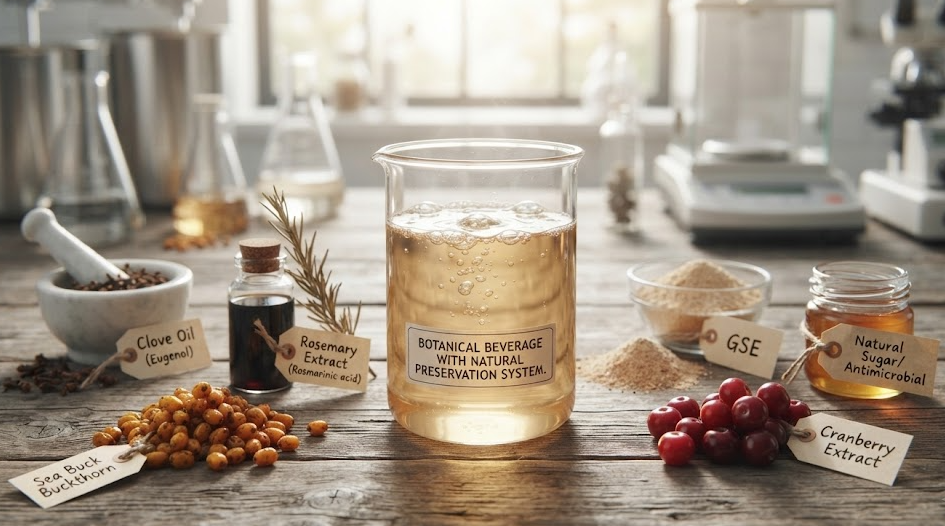
The beverage industry is undergoing a massive shift. Today’s consumers aren't just glancing at the front of a bottle—they’re scrutinizing ingredient labels with a fine-toothed comb. Synthetic chemical preservatives like sodium benzoate and potassium sorbate are taking a backseat as shoppers demand transparency.
For formulators, this creates a classic engineering puzzle: How do you extend shelf life and prevent oxidation without ruining clean-label credentials or altering the taste?
Meeting this challenge requires smart biochemical innovation, and companies like Yonkerchem are leading the charge. By utilizing advanced green extraction technologies and synergistic antimicrobial matrices, they offer high-performance natural preservatives that protect product integrity while keeping labels clean.
The Real Threats: Spoilage and Oxidation in Drinks
Before diving into natural preservation, R&D teams need to look at the primary vectors of beverage degradation. Whether you’re working with functional juices, plant-based milks, RTD teas, or sodas, aqueous environments are prime targets for microbial proliferation:
-
Microbial Spoilage: Acid-tolerant molds, osmotolerant yeasts (like Zygosaccharomyces bailii), and lactic acid bacteria (Alicyclobacillus) can ruin a batch fast—causing off-flavors, turbidity, gas production, and bloated packaging.
-
Oxidative Degradation: Sensitive vitamins (like Vitamin C), natural colorants, and botanical extracts fall prey to free radical oxidation, leading to browning, nutrient loss, and rancid profiles.
-
The Multi-Mechanism Need: You can't rely on a single defense line. Advanced systems combine natural organic acids, plant-derived phenolic extracts, and fermentation metabolites to hit both microbes and oxidation at the same time.
What to Look for in a Natural Preservative Supplier
When you’re sourcing natural preservatives for new beverage lines, price is only part of the equation. A strong supply partner should bring a lot more to the table:
-
Ingredient purity, specifications, and batch-to-batch consistency
-
Complete regulatory documentation and technical support
-
Solubility, handling properties, and pH compatibility
-
Organoleptic neutrality (making sure it doesn't mess with the taste)
-
Supply chain reliability
How Engineered Natural Systems Work
The big hurdle with many raw botanical extracts is that they carry harsh tannins and bitter plant volatiles that ruin the beverage's taste. Commercial-grade systems solve this through precise engineering:
-
Broad-Spectrum Efficacy: Disrupts microbial cell membranes and blocks key enzymatic pathways across a versatile pH range (pH 3.0 to 6.5).
-
Organoleptic Neutrality: Advanced purification strips out unwanted colors and bitterness so your drink’s original flavor profile stays pristine.
-
Thermal Stability: Built to survive heavy-duty industrial pasteurization and UHT processing without losing antimicrobial power.
Where It Works: Applications Across Beverage Categories
Yonkerchem’s preservation portfolios are built for seamless integration across popular market segments:
-
Functional Juices & Smoothies: Protects nutrient-dense botanical blends from enzymatic browning and yeast blooms without synthetic crutches.
-
Plant-Based & Dairy Alternatives: Extends refrigerated shelf life for oat, almond, and soy drinks while preserving smooth mouthfeel and colloidal stability.
-
RTD Teas & Coffees: Keeps neutral or low-acid brewed drinks safe from post-processing microbial growth under ambient storage conditions.
Final Thoughts
The move away from synthetic chemical additives isn't a temporary fad—it’s the new baseline for modern beverage manufacturing. By blending rigorous science with advanced botanical extraction, formulators can finally drop artificial ingredients while keeping products stable on the shelf.
Are you currently working on a clean-label formulation project, or dealing with a specific preservation challenge in your current lineup? Let’s discuss it in the comments below!