Homeowners usually pay attention to visible plumbing problems, but underground sewer pipes deserve attention too.
A sewer line can deteriorate gradually, and the first obvious symptom may be a serious backup.
Why Inspect the Sewer Line?
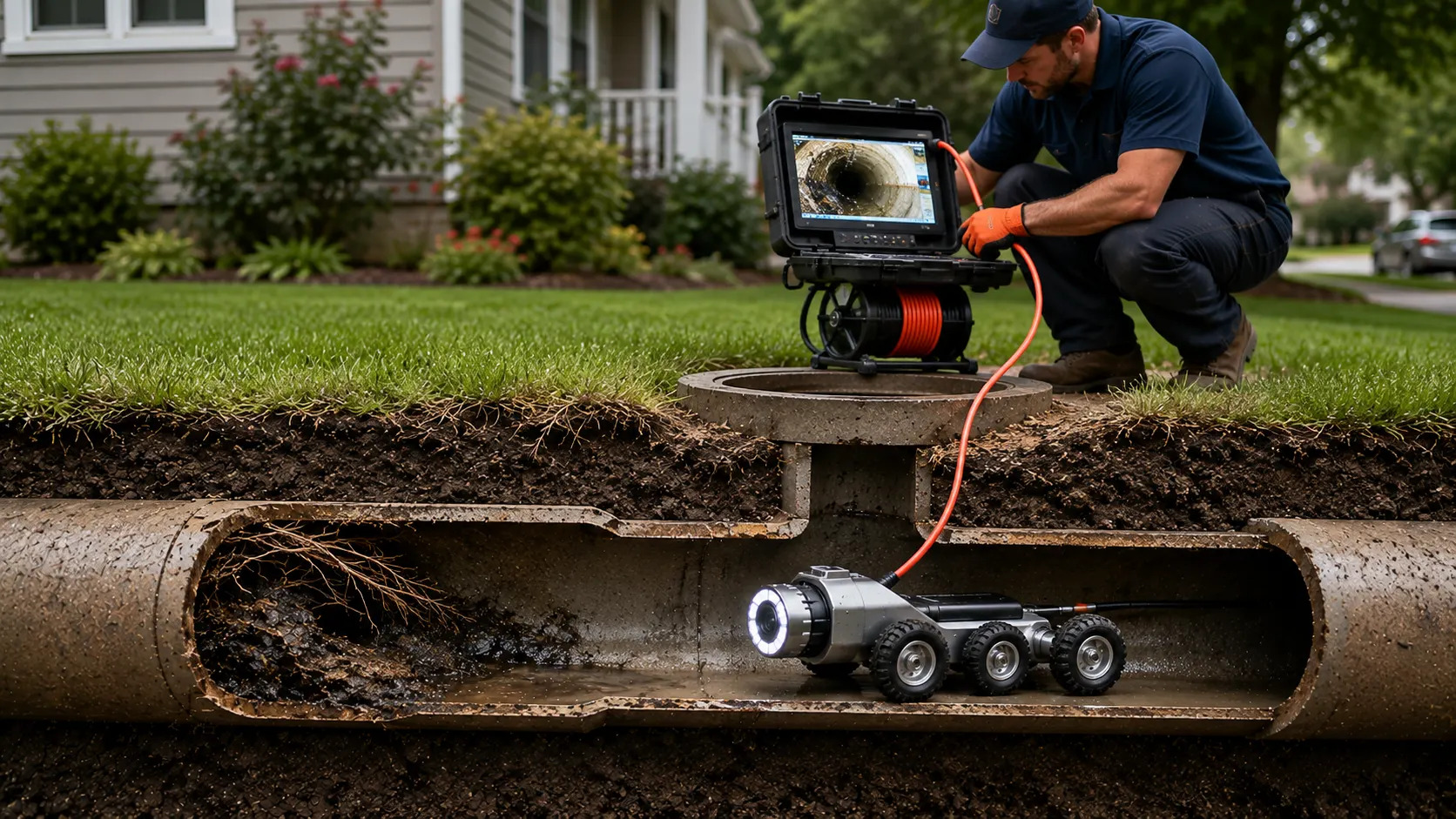
Camera inspections provide a way to examine the inside of a pipe without digging up the property.
A plumber can guide a waterproof camera through the line and watch the interior on a monitor.
This may reveal tree roots, cracks, corrosion, grease, foreign objects, misaligned joints, standing water, or collapsed pipe sections.
Warning Signs
Homeowners should pay attention when several drains become slow simultaneously.
Other signs include recurring backups, gurgling toilets, sewage odors, and wastewater appearing in unexpected places.
These symptoms do not automatically prove that the main sewer line is damaged, but they can justify further investigation.
Older Homes and Trees
Older properties may have aging sewer materials that are more susceptible to deterioration. Large trees near underground plumbing can also increase the possibility of root intrusion.
Routine inspections can help homeowners understand the condition of these hidden systems before a major failure occurs.
What Happens After an Inspection?
The plumber reviews the camera footage and explains what was found. Some issues may be minor enough to monitor, while others may require cleaning, repair, or replacement.
Having documentation of the inspection can also be useful when buying or selling property or seeking a second opinion.
For homeowners interested in sewer line inspections, this detailed resource explains the process, common problems, inspection duration, and cost factors.
Regular awareness does not guarantee that plumbing emergencies will never happen, but it can help homeowners identify developing problems earlier and make better decisions about maintenance.