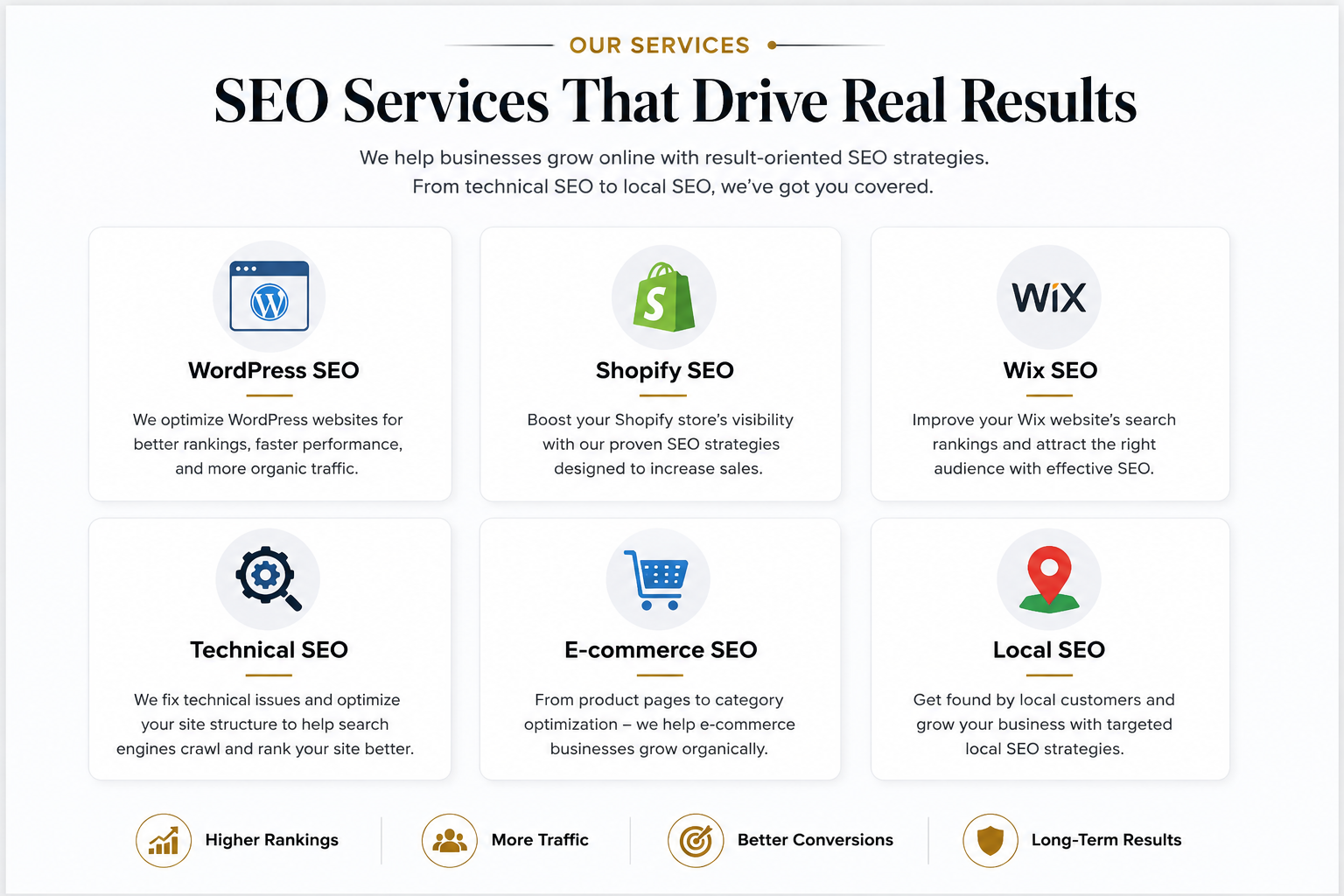
Getting your website to rank higher on Google is not only about adding keywords to your pages. A successful SEO strategy requires a well-optimized website, useful content, good user experience, and a strong technical foundation. Many website owners focus heavily on content while overlooking simple SEO mistakes that can negatively affect their visibility. Whether you are working on local SEO WordPress websites or trying to attract customers from a specific location, avoiding common optimization errors can make a significant difference. In this guide, we will discuss ten SEO mistakes that can hurt your Google rankings and explain how you can fix them.
1. Ignoring Keyword Research
One of the biggest SEO mistakes is creating content without understanding what people are actually searching for. Keyword research helps you discover the words and phrases your target audience uses when looking for products, services, or information.
Instead of choosing keywords based only on what you think is relevant, analyze search intent, competition, and relevance. Long-tail keywords can also be useful because they are often more specific and can attract visitors who are closer to making a decision.
For example, a business selling SEO services should not only target a broad term such as “SEO.” It can also target more specific phrases related to its services and audience.
2. Keyword Stuffing
Using keywords is important, but repeating the same keyword excessively can make your content difficult to read and may create a poor user experience. Search engines are increasingly capable of understanding topics and context rather than relying on exact keyword repetition.
If you are working on ecommerce SEO , avoid placing the same keyword unnaturally in every product description, heading, URL, and paragraph. Instead, write naturally and include relevant terms where they genuinely help the reader.
A good approach is to focus on the main topic and naturally use related phrases, synonyms, and variations. Your priority should always be providing useful information to visitors.
3. Publishing Thin or Low-Quality Content
Another common mistake is publishing short or unhelpful content simply to target a keyword. Google aims to provide users with useful results, so pages should offer value rather than existing genuine only for search engines.
Before publishing an article, ask yourself:
- Does this content answer the user's question?
- Does it provide useful and accurate information?
- Is it easy to read?
- Does it offer something valuable compared with competing pages?
- Does it satisfy the search intent?
Long content is not automatically better. A well-written 800-word article can be more useful than a poorly written 2,000-word article.
4. Neglecting Title Tags and Meta Descriptions
Title tags help search engines and users understand what a page is about. A weak or unclear title can reduce clicks even when your page appears in search results.
Create descriptive titles that accurately represent the page. Keep them concise and place the primary topic naturally in the title.
Meta descriptions should also encourage users to click without misleading them. Although meta descriptions are not simply a direct ranking factor, an attractive search snippet can improve click-through rates.
For example, instead of:
“SEO Services”
you could create a more descriptive title such as:
“Professional SEO Services to Improve Google Rankings”
5. Forgetting Mobile Optimization
A website may look perfect on a desktop computer but still provide a poor experience on smartphones. Since many users browse the internet through mobile devices, mobile optimization is essential.
Make sure your website:
- Works properly on different screen sizes
- Has readable text
- Uses buttons that are easy to tap
- Loads quickly
- Does not contain unnecessary pop-ups
- Provides simple navigation
A responsive website helps visitors navigate your content comfortably and can contribute to a better overall search experience.
6. Ignoring Technical SEO
Technical SEO is the foundation that allows search engines to crawl, understand, and index your website. Problems such as broken links, incorrect redirects, duplicate pages, poor site structure, and indexing issues can make it harder for search engines to access your content.
Regularly check your website for technical problems. Google Search Console can help identify indexing and performance issues.
You should also make sure important pages can be crawled and indexed properly. A technically healthy website gives your content a better opportunity to appear in relevant searches.
7. Using Poor Internal Linking
Internal links connect different pages on your website. They help visitors discover additional information and help search engines understand the relationship between your pages.
For example, if you have an article about local search optimization, you can naturally link it to another relevant page about WordPress local SEO. This can help users find related information while creating a logical structure throughout your website.
Avoid adding internal links randomly. Use descriptive anchor text and link pages when the connection is genuinely useful to the reader.
8. Ignoring Local SEO
Businesses that serve specific cities or areas should not overlook local search optimization. If your customers are located in a particular geographic area, your website should clearly communicate where your business operates.
Local SEO can include optimizing location pages, maintaining accurate business information, earning relevant local mentions, and creating useful content for your target area.
For businesses using WordPress, combining a technically optimized website with WordPress local SEO strategies can help create a stronger local search presence.
However, avoid creating dozens of low-quality location pages with almost identical content. Each location page should provide genuinely useful and locally relevant information.
9. Building Low-Quality Backlinks
Backlinks can help establish authority, but not every backlink is valuable. Purchasing large numbers of irrelevant or low-quality links can create unnecessary risks.
Instead of focusing only on the number of backlinks, focus on relevance and quality. A useful guest article on a relevant website can be more valuable than dozens of unrelated links.
When building backlinks, consider:
- Website relevance
- Content quality
- Editorial standards
- Reputable websites
- Natural anchor text
- Genuine value for readers
Guest posting can be an effective part of an SEO strategy when the goal is to publish useful content for a relevant audience rather than simply creating links.
10. Not Monitoring SEO Performance
SEO is not a one-time activity. Publishing an article and never checking its performance means you may miss important opportunities.
Use tools such as Google Search Console and analytics platforms to monitor your website. Pay attention to impressions, clicks, search queries, indexed pages, and changes in organic traffic.
If an article receives many impressions but very few clicks, you may need to improve its title or search snippet. If a page receives traffic but visitors leave quickly, review its content and user experience.
Regular monitoring allows you to identify problems and improve your strategy over time.
Conclusion
SEO mistakes can prevent a good website from reaching its full potential in Google search results. From keyword stuffing and thin content to technical problems, poor internal linking, weak mobile optimization, and low-quality backlinks, small mistakes can add up over time.
The best approach is to build your SEO strategy around useful content, strong technical foundations, natural keyword usage, quality backlinks, and a positive user experience . Whether you are optimizing a WordPress website, an online store, or a local business website, consistent optimization and performance monitoring can help you build a stronger search presence.
Remember that SEO is a long-term process. Instead of looking for shortcuts, focus on creating a website that truly helps your visitors. When users can easily find, understand, and benefit from your content, you create a much stronger foundation for sustainable Google rankings.