A conveyor system only works when its moving surface can handle the job assigned to it. That surface might carry crushed rock in one application and cartons in another. A Rubber conveyor belt sits at the center of this process, linking the drive system with the material being transported.
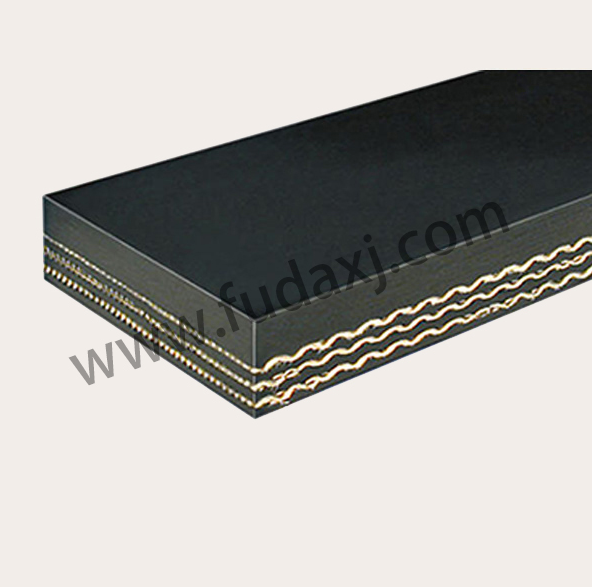
The construction is more interesting than its appearance suggests. Inside the belt is a reinforcing layer that gives it tensile strength. Rubber covers surround this internal structure and create the surface that contacts the transported material. Different combinations of carcass materials and rubber compounds produce belts for different working conditions.
For a Rubber conveyor belt, width and thickness are closely related to the intended load. A belt carrying heavy bulk materials needs a suitable reinforcement structure, while a conveyor handling smaller products may use a lighter construction. Conveyor length and belt speed also influence the selection because they affect the forces acting on the belt.
Surface texture can change how material behaves during transport. A smooth surface may work well for certain packaged goods. A patterned cover can provide additional grip when materials move along an inclined conveyor. Some applications use raised profiles or cleats to keep materials positioned during upward movement.
Then there is abrasion. Sand, gravel, crushed stone, and other rough materials can repeatedly contact the belt surface. In such applications, the rubber cover needs to be selected according to the material characteristics and conveying conditions. A different formulation may be suitable for applications involving oil or elevated temperatures.
The conveyor structure also shapes belt performance. Drive pulleys provide movement, idlers support the loaded section, and return rollers guide the empty belt on its way back. Tensioning equipment keeps the belt under suitable tension. A Rubber conveyor belt therefore operates as part of a mechanical system rather than as an independent component.
Splicing is another practical detail. Belts can be joined using mechanical fasteners or vulcanized joints, depending on the belt construction and application. The selected joint method needs to correspond to the belt's reinforcement and operating conditions.
Different industries use different belt configurations. Mining and quarrying systems can transport bulk minerals, agricultural equipment can move grain and other materials, and logistics systems can handle packaged products. Recycling facilities may use conveyors to move mixed materials through sorting stages.
When selecting a Rubber conveyor belt, buyers can look at belt width, carcass material, tensile strength, cover thickness, surface pattern, temperature range, application type, and joint configuration. The conveyor's drive arrangement and load conditions should also be considered.
What makes a Rubber conveyor belt interesting is the balance between flexibility and strength. It must bend around pulleys, carry a moving load, tolerate repeated tension, and maintain contact with the material. All of that happens on a continuous loop that may look deceptively simple from a distance.