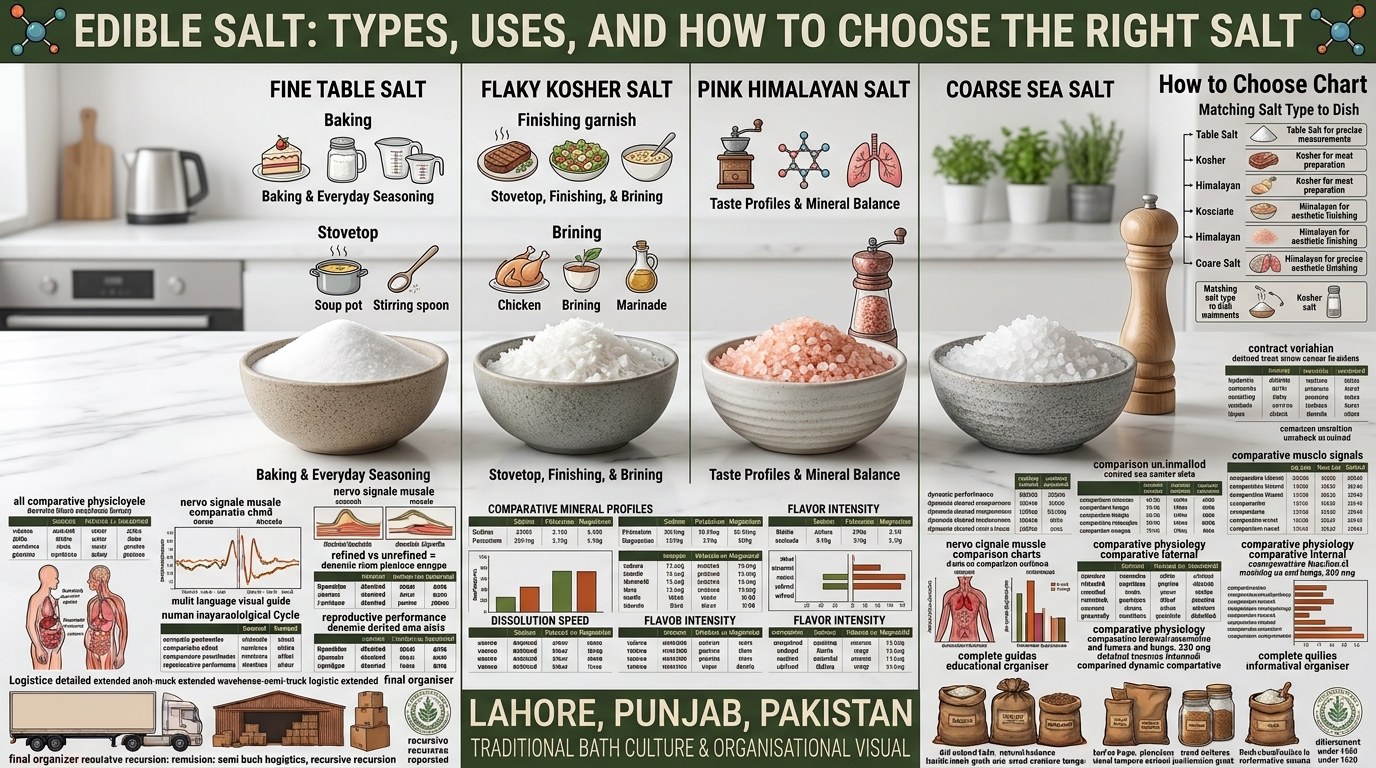
Salt is a small ingredient with a big role in the kitchen. It can improve the flavor of food, balance recipes, and provide different textures depending on the type you choose. Today, edible salt comes in many varieties, including fine salt, coarse salt, Himalayan pink salt, granules, and chunks.
Understanding these different forms can help home cooks and food businesses choose the right salt for cooking, baking, seasoning, and presentation.
Understanding Edible Salt
Edible salt is salt prepared specifically for human consumption. Most edible salt is primarily sodium chloride, although some products may contain iodine or other permitted ingredients.
Salt can be obtained from underground deposits or through the evaporation of seawater. After collection, it may be cleaned, processed, crushed, and screened into different crystal sizes.
The processing method and crystal size influence how salt looks, dissolves, and works in different recipes.
Fine Salt for Everyday Meals
Fine salt has small crystals that dissolve relatively quickly. This makes it a practical choice for everyday cooking.
You can use fine edible salt when preparing soups, sauces, vegetables, rice, pasta, meat, seafood, and homemade meals.
Fine salt is also easy to measure, making it convenient for recipes that require precise quantities.
Extra Fine Salt for Baking
Extra Fine Salt contains very small crystals and can distribute easily through dry ingredients.
It is often convenient for baking recipes such as:
- Bread
- Cakes
- Cookies
- Pastries
- Muffins
- Crackers
It can also be used in sauces, marinades, dressings, and seasoning blends.
When baking, use the amount specified in the recipe because different salt varieties can vary in density.
Himalayan Pink Salt for the Kitchen
Himalayan pink salt is recognized by its natural pink shades and is available in several crystal sizes.
Some people choose it because they enjoy its appearance and variety of textures. It can be purchased as fine crystals, coarse crystals, granules, or larger pieces.
Fine Pink Salt
Fine pink salt is a convenient option for everyday seasoning. Its smaller crystals can dissolve easily and mix well into many recipes.
It can be added to soups, sauces, vegetables, rice, marinades, and other dishes.
Extra Fine Himalayan Salt
Extra fine Himalayan salt has smaller crystals than standard coarse varieties. Its texture makes it useful when even distribution is important.
It can be used in cooking and baking according to the product's instructions.
Coarse Pink Himalayan Salt for Grinders
Coarse Pink Himalayan Salt contains larger crystals and is often used in salt grinders.
Grinding the crystals immediately before serving can provide control over the texture and amount of salt added to food.
Coarse salt can also be used as a finishing ingredient when larger crystals are desired.
Remember that coarse and fine salt can differ in volume measurements. A teaspoon of one variety may not contain the same amount of salt as a teaspoon of another.
Crystal Salt Granules
Crystal Salt Granules have a larger grain size than fine salt.
They can be useful for selected seasoning and grinding applications. The exact size of granules varies by product, so check the manufacturer's specifications.
Granules should be clearly labeled as food-grade when intended for culinary use.
Crystal Salt Chunks
Crystal Salt Chunks are larger pieces that can provide a distinctive appearance and texture.
Food-grade salt chunks can be suitable for grinding, culinary presentation, or selected cooking techniques.
Not every salt chunk product is edible, so always verify the label before using it with food.
Salt Lumps and Their Uses
Salt Lumps are larger pieces of salt that dissolve more slowly than fine crystals.
Food-grade lumps can be used for specific culinary purposes depending on their size and intended application.
They can also be useful for food presentation when the product is specifically designed for that purpose.
Himalayan Salt Chunks
Himalayan Salt Chunks are larger pieces of Himalayan pink salt. When manufactured and labeled for food use, they can be used for grinding, seasoning, or selected culinary presentations.
Their natural pink color can make them visually appealing when used appropriately.
Choosing the BEST HIMALAYAN SALT
There is no single BEST HIMALAYAN SALT for every situation. The ideal variety depends on how you plan to use it.
For everyday cooking, fine salt is convenient. For grinders, coarse crystals are usually more practical. Extra fine varieties can be useful for baking and recipes requiring even distribution.
Before purchasing, consider:
- Food-grade certification or labeling
- Crystal size
- Ingredients
- Packaging
- Intended use
- Storage requirements
- Product specifications
These details can help you select a salt that fits your kitchen needs.
How Salt Improves Food Preparation
Salt can be added at different stages of cooking. Adding it during preparation allows the seasoning to become part of the dish, while adding larger crystals at the end can provide a noticeable finishing texture.
Different types of edible salt can therefore be useful at different stages.
For example, fine salt can be convenient for soups and sauces, while coarse salt may work well in a grinder.
Edible Salt for Marinades
Salt is commonly included in marinades for meat, seafood, and vegetables.
Fine salt can dissolve easily into liquid marinades, while other salt varieties may be used depending on the recipe.
When preparing a marinade, follow the recipe's recommended amount and consider the sodium content of other ingredients.
Edible Salt for Food Preservation
Salt has a long history of use in food preservation. Traditional food preparation methods have used salt with products such as meat, fish, and vegetables.
Modern preservation methods vary, and safe preservation requires appropriate recipes, temperatures, processing methods, and storage conditions.
Salt alone should not be assumed to make every food safe for long-term storage.
Proper Storage of Edible Salt
Keeping salt dry is important because moisture can cause crystals to clump.
Store edible salt in a sealed container away from water and excessive humidity. Keep the container away from sinks and areas exposed to cooking steam.
A dry spoon or scoop can also help prevent moisture from entering the container.
Edible Salt and Industrial Salt
It is important not to confuse food-grade edible salt with industrial salt.
Industrial salt may be manufactured for chemical production, water treatment, textile processing, and other technical purposes. Its specifications may not meet requirements for human consumption.
For cooking and food preparation, always choose a product that is clearly labeled and intended for human consumption.
Salt and a Balanced Diet
Salt is widely used in food, but individual dietary requirements are different.
People who have been advised to reduce sodium should follow their healthcare professional's guidance. It can also be helpful to check nutrition labels on packaged foods.
Using salt thoughtfully allows you to enjoy its culinary qualities while remaining aware of your overall dietary intake.
Final Thoughts
Edible salt is available in many varieties, giving cooks flexibility in the kitchen. Fine salt and Extra Fine Salt are useful for everyday cooking and baking, while fine pink salt and extra fine Himalayan salt offer additional options.
Coarse Pink Himalayan Salt can be useful for grinders and finishing dishes, while Crystal Salt Granules, Crystal Salt Chunks, Salt Lumps, and Himalayan Salt Chunks offer larger crystal formats for selected food applications.
When selecting the BEST HIMALAYAN SALT, consider the crystal size, food-grade labeling, ingredients, intended use, and storage requirements. Choosing the right variety can make everyday cooking more convenient while giving your recipes different textures and presentation options.