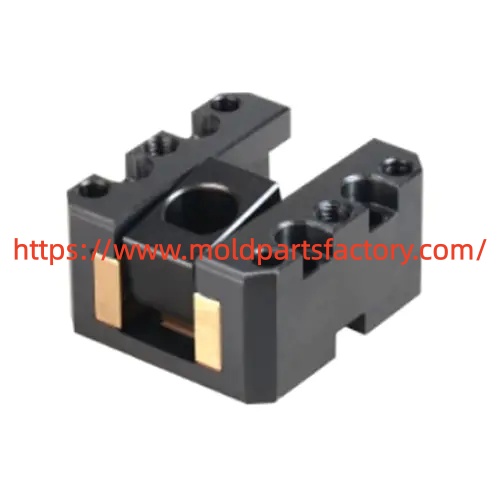
Inclined Ejector Slide selection deserves careful attention when a mold contains internal undercuts, angled surfaces, clips, ribs, or other features that cannot be released through a simple vertical movement. For mold designers, the key question is not only whether the component can fit into the tool, but whether its movement matches the part geometry and the available space. A well planned mechanism should work together with the mold structure rather than create additional interference during opening and release.
The molded part should be reviewed before any component is selected. Designers need to identify areas that may remain locked after the mold opens. Internal ribs, hooks, recessed areas, and angled walls can create release challenges. The direction of mold opening should also be checked because changing the orientation of a part can sometimes reduce structural complexity without adding another mechanism.
Contact position is another important point. The force applied during release should reach a suitable area of the molded component. Thin walls or delicate features may not tolerate concentrated pressure. A broader contact area can help distribute the load and reduce unnecessary stress on the finished part.
Movement planning is central to the selection process. The designer should calculate how far the contact point needs to travel before the undercut is fully cleared. The available mold space must then accommodate this movement without interference.
Angle selection also deserves attention. A suitable angle should provide enough lateral movement while maintaining smooth operation. If the geometry is not coordinated correctly, the mechanism may experience friction, binding, or uneven movement. The relationship between ejection travel, lateral movement, and the selected angle should therefore be reviewed during the design stage.
This is especially relevant in Ejector Injection Molding where the ejection sequence needs to coordinate with the mold structure and the shape of the finished component.
Available space inside the mold can strongly affect component selection. Designers should check the thickness of the core, ejector plate arrangement, guide areas, nearby pins, cooling channels, and other moving components. A component that appears suitable from a dimensional perspective may still cause interference after the entire mold assembly is considered.
A three dimensional layout review can make this stage easier. Simulating the movement before machining allows designers to check clearance at different positions. This can help identify potential conflicts between moving and fixed areas before they become production issues.
Material selection also matters when a component will move repeatedly under load. Sliding surfaces should be considered together with hardness, wear resistance, lubrication, and expected operating conditions. The surrounding guide surfaces should receive similar attention.
For molds used over extended production cycles, routine inspection can help identify early signs of wear. Scratches, uneven contact, increased resistance, or unusual movement may indicate that alignment or lubrication needs attention. A maintenance plan can therefore be considered during the design stage rather than after a problem appears.
Dimensional accuracy affects how well the complete mechanism works. The mating surfaces, holes, guide areas, and contact sections should be manufactured according to the required tolerances. Poor alignment may create additional friction and influence movement consistency.
Designers should also consider how easily the component can be installed, inspected, adjusted, and replaced. A practical structure can save time during mold maintenance because technicians can access important areas without unnecessary disassembly.
For buyers, supplier communication can be just as important as the component itself. Before confirming an order, it is useful to provide drawings, part geometry, required dimensions, expected movement, material requirements, and application details. These details give the manufacturer a clearer basis for checking compatibility.
Moldpartsfactory provides mold components for practical applications in injection tooling. By reviewing product requirements together with the mold layout, designers can make more informed decisions about dimensions, movement, materials, and installation conditions.
A thoughtful selection process starts with the part, continues through the mold structure, and ends with production and maintenance considerations. When these factors are reviewed together, designers can create a clearer path toward stable mold operation and easier maintenance. Product information, component options, and manufacturing support are available at https://www.moldpartsfactory.com/