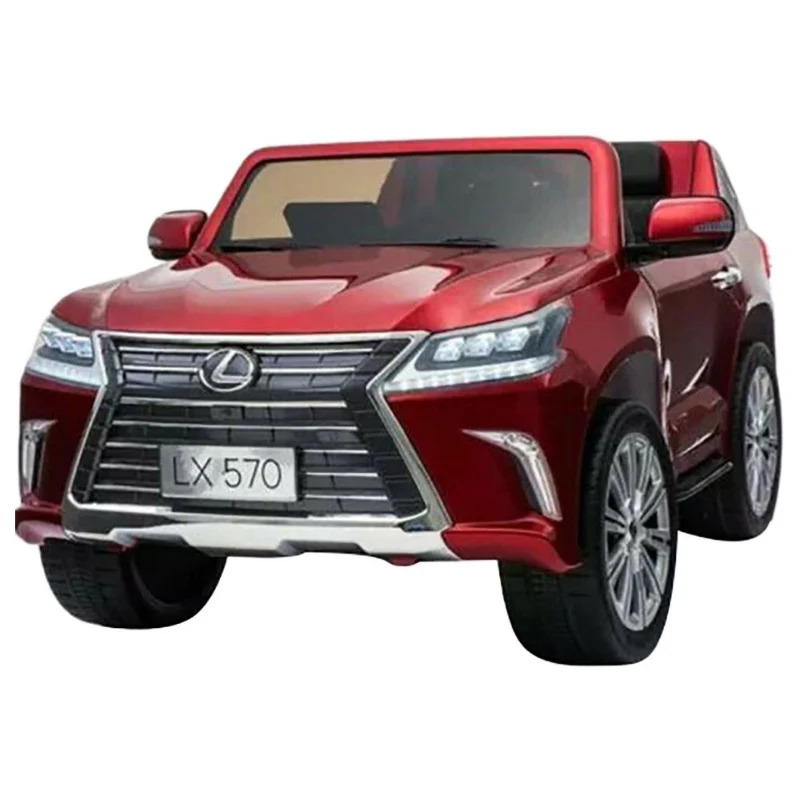
Buying a ride-on vehicle for a child can look simple at first. You choose a design your child likes, check the price, and place the order. But once you start comparing different models, you'll quickly notice that children's ride-on vehicles can vary considerably in terms of size, battery, motors, speed, controls, safety features, seating, and additional functions.
For parents, this can make the buying process more complicated than expected.
A vehicle that looks impressive in a photograph may not necessarily be the best option for your child. Likewise, the most expensive model isn't automatically the most suitable one.
The better approach is to understand the important specifications and decide which features actually matter for your child's age, size, experience, and intended use.
If you're currently comparing kids car options, this guide will walk you through the most important features to consider before making a purchase.
From battery voltage and motor configuration to parental controls, seating, tires, and storage, we'll cover the factors that can help you make a more informed decision.
Why Choosing the Right Kids Car Matters
A ride-on vehicle is more than a toy that moves around.
It combines elements of imaginative play, physical interaction, coordination, and outdoor entertainment. Children have to interact with the steering wheel, understand movement, and learn how different controls work.
This makes the vehicle's design particularly important.
A model that is too large, too fast, too small, or unsuitable for the intended riding surface can make the experience less enjoyable.
The goal isn't to find the vehicle with the longest feature list.
Instead, parents should look for a model where the size, performance, controls, safety features, and design are appropriate for the child.
Start With Your Child, Not the Vehicle
One of the easiest mistakes to make is to begin shopping by looking at vehicle designs.
A child sees a sports car.
Another child wants an SUV.
Someone else wants a police car.
The design naturally attracts attention.
But parents should begin with a few basic questions:
- How old is the child?
- How much does the child weigh?
- How tall are they?
- Have they used a ride-on vehicle before?
- Where will they ride it?
- Will they ride alone or with a sibling?
- How much storage space is available?
Once you answer these questions, it becomes much easier to narrow down suitable models.
Check the Recommended Age Range
The manufacturer's recommended age range should be one of the first specifications you check.
Different vehicles are designed for different developmental stages.
A smaller model may be intended for younger children, while larger vehicles with more powerful motors may be designed for older riders.
Age recommendations can help parents understand the intended user, but they shouldn't be treated as the only deciding factor.
Two children of the same age can have very different:
- Heights
- Weights
- Coordination
- Confidence
- Riding experience
Use the age range as a starting point, then check the other specifications.
Check the Maximum Weight Capacity
Weight capacity is one of the most important specifications.
The vehicle has to carry both the child and its own weight.
As the rider approaches the maximum recommended capacity, performance can change.
You may notice differences in:
- Acceleration
- Battery consumption
- Ability to move on grass
- Performance on inclines
- Overall responsiveness
If you are considering a two-seater, the total weight of both riders becomes particularly important.
Never assume that two children can ride simply because there are two seats.
Always check the manufacturer's recommended maximum load.
Understand Battery Voltage
Battery voltage is another specification that frequently appears when comparing ride-on vehicles.
You may see:
- 6V
- 12V
- 24V
The higher voltage generally indicates greater electrical potential available to the system, but it doesn't mean the vehicle will automatically be twice as fast or twice as powerful.
Motor configuration, gearing, controller settings, battery capacity, and vehicle weight all influence performance.
For younger children or basic riding on flat surfaces, a suitable 12V vehicle may be sufficient.
Larger vehicles designed for older children may use 24V systems.
The right choice depends on the individual model and the intended rider.
Battery Capacity Is Also Important
Voltage isn't the same thing as battery capacity.
A battery's capacity affects how much energy it can store, while voltage describes the electrical potential of the system.
When comparing models, look for information about:
- Battery type
- Battery voltage
- Battery capacity
- Charging time
- Estimated runtime
Actual runtime can vary depending on:
- Rider weight
- Terrain
- Speed
- Driving habits
- Temperature
- Battery condition
A child riding slowly on a smooth surface may get a different runtime from one driving continuously on grass.
Look at the Motor Configuration
The motor is one of the most important components in a ride-on vehicle.
Different models may use:
- One motor
- Two motors
- Four motors
More motors can provide greater driving capability, but the overall performance still depends on the motor specifications and vehicle design.
A heavier SUV-style vehicle may need more motor power than a small compact car.
When comparing two models, don't look only at battery voltage.
Check the complete power system.
Single Motor vs Multiple Motors
A single-motor vehicle can be perfectly suitable for basic riding.
Multiple-motor systems may be beneficial when the vehicle is:
- Larger
- Heavier
- Designed for older children
- Intended for outdoor use
- Designed to carry more weight
However, more motors can also mean greater energy consumption and potentially higher maintenance requirements.
Again, the best system is the one that matches the vehicle's intended use.
Consider the Speed
Children may naturally be attracted to the fastest-looking vehicle.
Parents should approach speed differently.
A younger or inexperienced child generally needs a vehicle they can comfortably control.
Look for information about:
- Maximum speed
- Speed settings
- Slow-start functions
- Forward and reverse
- Braking system
Some models provide different speed modes, allowing parents to introduce children to riding gradually.
Controlled speed can be particularly useful during the first few sessions.
Forward and Reverse Functions
Forward and reverse may seem like basic features, but they can significantly improve usability.
A reverse function allows children to reposition the vehicle without needing an adult to move it manually.
However, younger children may need to learn how to use the function correctly.
Parents should demonstrate:
- Stop the vehicle.
- Select reverse.
- Check the surrounding area.
- Move slowly.
- Return to forward mode when finished.
Simple habits like these can make riding more controlled.
Parental Remote Control
A parental remote control is one of the most useful features for younger children.
It gives an adult the ability to intervene when necessary.
Depending on the model, the remote may allow parents to:
- Start or stop the vehicle
- Control direction
- Adjust movement
- Take over when necessary
This can be particularly helpful when a child is still learning.
However, a remote control should be considered an additional safety feature—not a replacement for adult supervision.
Why Remote Control Is Useful for Beginners
Imagine a child driving for the first time.
They may:
- Turn the steering wheel too sharply
- Forget how to stop
- Drive toward an obstacle
- Become distracted
- Accidentally press the accelerator
A parent holding the remote can intervene quickly.
As the child becomes more confident, parents can allow them greater control while keeping the remote available.
Steering System
Steering is another feature parents shouldn't overlook.
A child should be able to comfortably reach and operate the steering wheel.
Check whether:
- The steering wheel is appropriately positioned
- The child can turn it comfortably
- The vehicle responds predictably
- The steering doesn't require excessive force
A vehicle that is physically too large for a child can make steering difficult.
This is one reason size should be considered alongside age.
Tire Design
Tires affect how a ride-on vehicle interacts with the surface.
Different models may feature:
- Plastic wheels
- EVA-style tires
- Rubber tires
- Treaded tires
The appropriate choice depends on where the vehicle will be used.
For smooth indoor or driveway surfaces, basic wheels may be sufficient.
For outdoor use, parents may prefer models with tires designed to handle grass or uneven surfaces.
But remember: tire design doesn't turn a children's ride-on vehicle into a full off-road vehicle.
Always follow the manufacturer's intended-use recommendations.
Ground Clearance
Ground clearance refers to the space between the lowest part of the vehicle and the ground.
Higher ground clearance can be helpful when riding over surfaces with minor irregularities.
However, children shouldn't be encouraged to use a ride-on vehicle on unsuitable terrain simply because it has larger wheels or greater clearance.
Look at:
- Wheel size
- Chassis height
- Suspension
- Tire design
- Manufacturer recommendations
Together, these provide a better indication of where the vehicle should be used.
Suspension
Some larger ride-on vehicles include suspension systems.
Suspension can make the ride more comfortable, particularly on outdoor surfaces.
It may also help the vehicle handle minor changes in terrain.
But suspension shouldn't be viewed as a reason to use a children's ride-on vehicle on rough or dangerous terrain.
These are still children's recreational vehicles and should be operated in controlled environments.
Seat Comfort
Children may spend a significant amount of time sitting inside their ride-on vehicle.
Comfort therefore matters.
Look at:
- Seat width
- Seat material
- Back support
- Legroom
- Seatbelt availability
A child who doesn't fit comfortably may find the vehicle difficult to operate.
If the vehicle is too small, their knees may become cramped.
If it is too large, they may struggle to reach the controls.
Seatbelts
If the model includes a seatbelt, parents should use it according to the manufacturer's instructions.
A seatbelt can help keep the child properly positioned while the vehicle is moving.
Parents should also teach children that the seatbelt isn't optional simply because the vehicle is a toy.
Establishing good habits from the beginning makes riding more responsible.
One Seat or Two?
The seating configuration should depend on how the vehicle will actually be used.
A single-seat vehicle is generally suitable when:
- One child will ride
- Storage space is limited
- A compact vehicle is preferred
A two-seat vehicle can make sense when:
- Siblings will share
- The vehicle is designed for two riders
- The combined weight is within the recommended limit
- You have enough storage space
Don't choose a two-seater solely because it looks larger or more impressive.
Consider the Vehicle's Dimensions
Before purchasing, measure the space where the vehicle will be stored.
Check:
- Length
- Width
- Height
Also consider how you'll get it into the storage area.
For example, a vehicle may fit inside a garage but be difficult to move through the garage door.
This is particularly important for larger SUVs and two-seat models.
Think About Transportation
Parents sometimes forget that the vehicle needs to get from one location to another.
If you plan to transport it in a car, check whether its dimensions and weight are manageable.
You may need:
- A larger vehicle
- A suitable trunk
- Folding or removable components where available
- Assistance when lifting
A compact ride-on may be easier to transport than a large SUV-style model.
Design and Appearance
Now we can talk about the fun part.
Children naturally care about how their vehicle looks.
Popular designs include:
- Sports cars
- SUVs
- Jeeps
- Police cars
- Pickup trucks
- Luxury-inspired cars
- Racing designs
Choosing a design your child genuinely likes can make the vehicle more exciting.
But appearance should come after suitability.
A beautiful vehicle that doesn't fit your child isn't a good purchase.
Licensed Ride-On Cars
Some ride-on vehicles are designed to resemble real automotive brands.
These can add another dimension to imaginative play.
Children may pretend they're driving a luxury car, racing vehicle, police car, or off-road SUV.
Licensed designs can also make the vehicle feel more realistic.
However, parents should still evaluate the practical specifications before choosing based on branding or appearance.
Lights and Sounds
Many modern ride-on vehicles include interactive features such as:
- LED lights
- Horns
- Music
- Engine sounds
- Dashboard controls
- Bluetooth connectivity
- USB or audio functions
These features can make the vehicle more entertaining.
But they're secondary considerations.
A vehicle should first be suitable in terms of:
- Age
- Weight
- Size
- Speed
- Safety
- Battery
- Motor performance
Entertainment features come after those basics.
Bluetooth and Music Features
Some models allow children to listen to music through built-in speakers.
This can make longer play sessions more engaging.
Parents should still consider whether the feature is actually useful to their child.
If the child is primarily interested in driving and imaginative play, advanced audio functions may not be necessary.
Charging and Battery Maintenance
A ride-on vehicle requires regular battery care.
Parents should:
- Follow the manufacturer's charging instructions
- Use the correct charger
- Avoid overcharging where the manufacturer advises against it
- Store the vehicle appropriately
- Avoid exposing the battery to extreme heat
- Follow recommended storage procedures
Battery performance can decline over time, particularly if the battery isn't maintained correctly.
UAE Heat and Battery Care
The climate is particularly relevant for families in the UAE.
High temperatures can affect battery performance and the longevity of electrical components.
Try to store the vehicle:
- In a shaded location
- Away from direct sunlight
- In a covered garage where possible
- Away from excessive heat
Don't leave a ride-on vehicle sitting under direct sunlight for long periods.
Proper storage can help protect the vehicle and battery.
Choosing a Vehicle for Grass
Grass creates more resistance than smooth flooring.
If your child will regularly ride on grass, consider:
- Motor configuration
- Battery system
- Tire design
- Ground clearance
- Rider weight
- Manufacturer recommendations
A vehicle designed for outdoor use can provide a better experience than a small model intended primarily for smooth surfaces.
But don't assume that every vehicle with large wheels is suitable for rough terrain.
Choosing a Vehicle for Driveways
Driveways are often easier environments for ride-on vehicles because the surface is generally smoother and more predictable.
However, parents should still inspect the area for:
- Traffic
- Moving vehicles
- Slopes
- Steps
- Drainage openings
- Obstacles
The riding area should be controlled and away from public roads.
Indoor Use
Some smaller ride-on vehicles may be used indoors where permitted.
If you're considering indoor riding, think about:
- Vehicle width
- Turning radius
- Floor surface
- Furniture
- Walls
- Doorways
- Other people
A larger vehicle can quickly become impractical inside a home.
Always follow the manufacturer's intended-use recommendations.
Safety Features to Look For
Before purchasing, create a basic safety checklist.
Look for:
- Suitable speed
- Seatbelt
- Parental remote
- Stable four-wheel design
- Reliable steering
- Appropriate weight capacity
- Forward/reverse controls
- Manufacturer safety recommendations
The exact features will vary between models.
Parents should read the product information carefully before purchasing.
Don't Buy Based on Price Alone
Price is obviously important.
Parents may search for terms such as "kids car price" when comparing models, but the cheapest option isn't always the best value.
A low-priced vehicle may have:
- Smaller battery
- Lower weight capacity
- Basic motor
- Fewer features
- Smaller body
A more expensive vehicle may provide:
- Larger battery
- Multiple motors
- Larger cabin
- Better tires
- Two seats
- Additional controls
The right question isn't simply:
"Which one is cheapest?"
Instead ask:
"Which vehicle provides the features my child actually needs at a reasonable price?"
How to Compare Prices Properly
When comparing prices, create a simple list.
Vehicle A
- Battery
- Motors
- Seats
- Weight capacity
- Speed
- Remote
- Features
Vehicle B
- Battery
- Motors
- Seats
- Weight capacity
- Speed
- Remote
- Features
Then compare the complete package.
This prevents a low headline price from influencing your decision without considering what you actually receive.
Don't Ignore After-Sales Considerations
Before purchasing, consider what happens if something needs attention later.
Check whether the seller provides information about:
- Warranty
- Battery replacement
- Spare parts
- Chargers
- Customer support
- Product instructions
Ride-on vehicles contain electrical and mechanical components, so having access to appropriate support can be valuable.
How to Choose Based on Your Child's Personality
Children also have different play styles.
A child who loves racing may prefer a sports-car design.
A child who loves adventures may prefer an SUV or Jeep-inspired vehicle.
A child interested in community helpers may prefer a police-style vehicle.
A child who enjoys imaginative family play may prefer a larger SUV or two-seater.
The vehicle can become part of their imaginative world.
So while specifications matter, choosing a design that matches your child's interests can increase how much they actually use it.
A Practical Buying Checklist
Before placing your order, ask yourself:
Age
Is the child within the recommended age range?
Weight
Is the child comfortably below the maximum weight?
Size
Can they reach the controls?
Battery
Does the battery system match the intended use?
Motor
Is the motor configuration appropriate?
Speed
Can the child comfortably control the vehicle?
Seating
Do you need one seat or two?
Tires
Are they suitable for the intended surface?
Safety
Does the vehicle have the safety features you want?
Storage
Do you have enough room?
Charging
Do you have a suitable place to charge and store the vehicle?
Price
Does the overall specification justify the cost?
If you can answer all of these questions confidently, you're much closer to making the right choice.
Common Mistakes to Avoid
Choosing the Most Expensive Model
Higher price doesn't automatically mean better suitability.
Choosing Based on Appearance
A great-looking vehicle may not fit your child.
Ignoring Weight Capacity
This can affect both safety and performance.
Focusing Only on Voltage
Voltage doesn't tell the entire performance story.
Forgetting Storage
Large vehicles need large storage areas.
Buying Too Much Power
A younger child may not need a highly powerful vehicle.
Ignoring the Riding Surface
A vehicle designed for smooth surfaces may not perform well on grass.
Forgetting Battery Care
Poor charging and storage habits can shorten battery life.
Final Thoughts
Choosing the right ride-on vehicle doesn't require parents to understand every technical detail.
It simply requires looking beyond the appearance and considering how the vehicle will actually be used.
Start with your child. Check their age, weight, height, experience, and confidence. Then look at the vehicle's battery, motors, speed, seating, tires, controls, safety features, and dimensions.
Think about where the vehicle will be used and where it will be stored. If you're in the UAE, remember that heat and direct sunlight can also affect how you store and maintain the battery.
Most importantly, don't assume that the most powerful, largest, or most expensive model is automatically the best choice.
A well-matched vehicle can provide a much better experience than one selected simply because it has more features.
Parents who are ready to compare different options can explore the kids car collection and evaluate the available designs, specifications, seating configurations, and features based on their child's needs.
Whether you're buying a first ride-on vehicle for a younger child or upgrading to a larger model for an older rider, taking a few minutes to compare the specifications can help you make a more confident decision.
And once you've chosen the right vehicle, proper supervision, responsible riding, and regular maintenance will help your child get the most out of it.
For families looking beyond ride-on vehicles, you can also explore Toyzinn for a wider selection of children's play products and entertainment options.
Frequently Asked Questions
What should I look for when buying a kids car?
Start with age suitability, weight capacity, vehicle size, speed, battery, motor configuration, safety features, seating, and intended riding environment.
Is a higher-voltage kids car always better?
No. Higher voltage can provide greater power potential, but the best option depends on the child's age, size, experience, and where the vehicle will be used.
Are parental remote controls useful?
Yes. They can be particularly useful for younger or inexperienced riders because parents can intervene when necessary.
How important is weight capacity?
Very important. Exceeding the manufacturer's recommended weight can affect performance and may create safety concerns.
Should I choose a one-seat or two-seat vehicle?
Choose according to how the vehicle will be used. A single-seater can be practical for one child, while a two-seater may be suitable for siblings if the vehicle is designed for two riders and the combined weight is within its limit.
Are ride-on cars suitable for grass?
Some models are designed for outdoor surfaces and may handle grass better than others. Check the motor, tires, ground clearance, and manufacturer's recommendations.
How should I store a ride-on car in the UAE?
Keep it protected from direct sunlight and excessive heat. A shaded, dry, covered storage area is preferable.
Does a more expensive ride-on car last longer?
Not necessarily. Durability depends on construction, components, usage, maintenance, and battery care. Compare the complete specifications rather than relying on price alone.