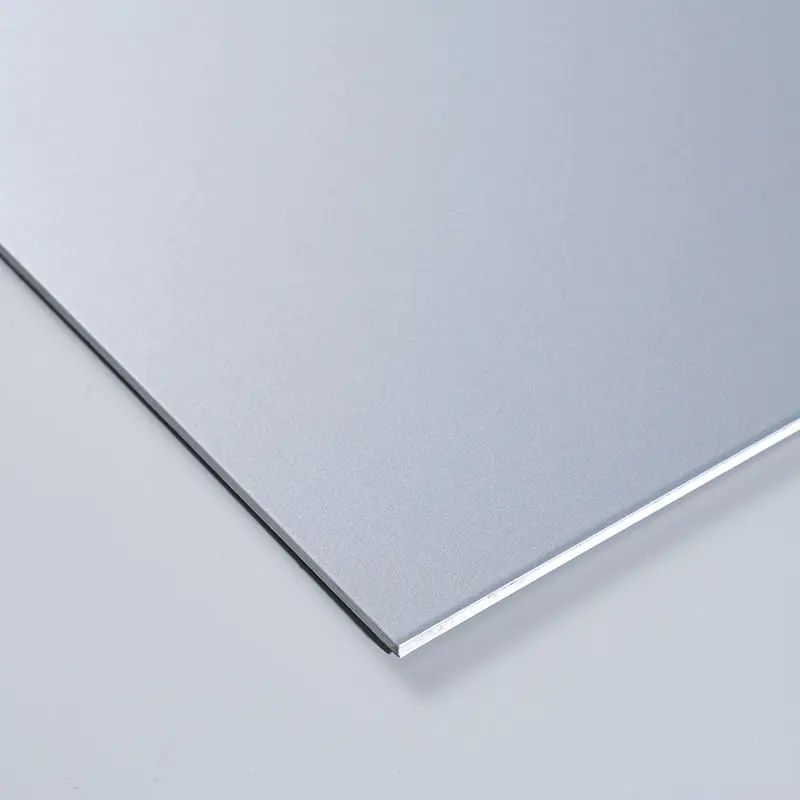
Aluminum Composite Panel Finishes offer a wide range of options for architects, interior designers, contractors, and building owners. Depending on the application, aluminum composite panels can provide decorative surfaces for walls, ceilings, columns, partitions, storefront areas, and exterior cladding systems.
For interior projects, a matte finish can create a calm and understated appearance. Matte aluminum composite panels can be used in offices, retail spaces, reception areas, exhibition environments, and public facilities. Their smooth surface can also make routine cleaning relatively straightforward when the correct cleaning method is followed.
A metallic finish can create a visual connection with other architectural elements such as stainless steel, glass, lighting fixtures, and aluminum frames. Metallic surfaces may be selected for feature walls, elevator surrounds, entrance areas, and decorative panels.
Wood grain finish is another option for projects that require a wood-inspired appearance without using solid timber across the entire surface. Different grain patterns and shades can be produced to coordinate with interior furniture, floors, doors, and wall structures.
Brushed aluminum provides a linear surface texture. The direction of the brushing should be considered during installation because adjacent panels may appear different if the texture runs in inconsistent directions. Careful panel identification can help maintain a coordinated visual effect.
For exterior applications, coating selection becomes more important because panels are exposed to sunlight, rain, temperature changes, and airborne particles. PVDF coating and other architectural coating systems can be selected according to the required weather resistance and project conditions.
PE coating may be suitable for certain applications with different environmental requirements. Buyers should review the technical specifications and recommended use conditions before selecting a coating system.
Color consistency is another consideration for large projects. Panels should be produced according to an agreed color reference, while production batches and installation arrangements should be coordinated to reduce visible differences.
Fabrication can include CNC routing, grooving, folding, drilling, and cutting. The selected finish should remain compatible with the planned processing method. Protective film may be applied during transportation and fabrication to help reduce surface scratches.
When evaluating Aluminum Composite Panel Finishes, procurement teams should review coating type, color, gloss, texture, panel construction, dimensions, fire requirements, fabrication method, and installation environment.
By connecting surface selection with building function and design intent, aluminum composite panels can provide a flexible material option for both decorative interiors and architectural exteriors.
https://www.acp-factory.com/product/aluminum-composite-panel-finishes/