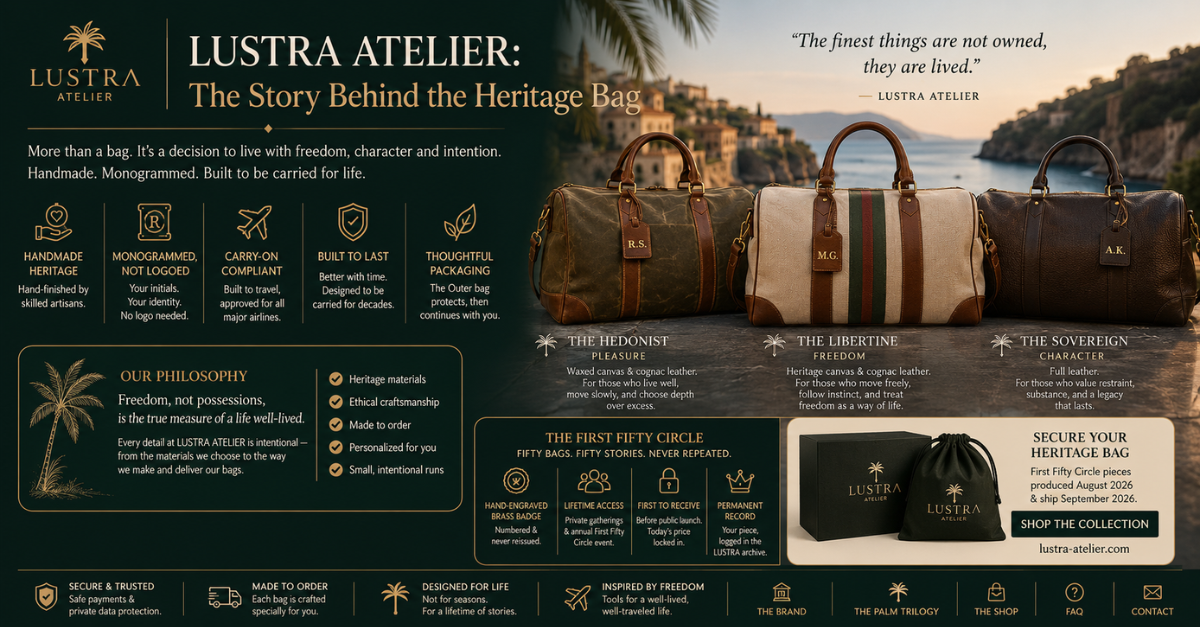
A travel bag can tell you a surprising amount about how you travel. Some people want the lightest possible carry-on. Others prefer a practical bag that can handle years of weekend trips, business journeys, and spontaneous escapes without looking out of place. Then there are travelers drawn to heritage travel bags, pieces that combine useful storage with traditional materials, enduring design, and a sense of craftsmanship.
Choosing one is not simply a matter of picking the most attractive leather bag. Size, construction, organization, durability, comfort, and intended use all matter. A beautifully made bag that is too large for short trips can become inconvenient, while a compact weekender may struggle when you need to pack clothing, shoes, toiletries, and work essentials.
So, which heritage travel bag should you buy? The answer depends on how you travel, what you carry, and what you expect from the bag over time.
What Is a Heritage Travel Bag?
A heritage travel bag is generally a travel piece influenced by traditional luggage design and craftsmanship. It often emphasizes durable materials, classic silhouettes, substantial hardware, and construction details designed to give the bag character as it ages.
Leather is commonly associated with this category because it can develop a distinctive appearance through regular use. Instead of looking dated after a few seasons, a well-made leather travel bag can acquire marks, variations, and changes in texture that become part of its identity.
Heritage does not necessarily mean old-fashioned. The best designs combine traditional visual elements with modern expectations for functionality. A bag can have a timeless exterior while still providing enough space and organization for contemporary travel.
Which Type of Heritage Travel Bag Is Right for You?
The right choice begins with the kind of trip you usually take. There is no single ideal travel bag for everyone.
For Short Weekend Trips: Choose a Premium Weekender
A weekender is often the most versatile heritage travel bag for short journeys. Its proportions make it large enough for clothing and personal essentials without becoming cumbersome.
A good weekend travel bag should accommodate:
- Two or three changes of clothing
- Shoes or casual footwear
- Toiletries
- Small electronics
- A book, notebook, or travel documents
- Personal accessories
Look for a wide opening that makes packing easier. Interior pockets are useful for smaller items, while a separate compartment can keep shoes away from clothing.
For travelers who regularly take two- or three-day trips, a premium leather weekender can provide a useful balance between elegance and practicality.
For Longer Journeys: Consider Larger Structured Luggage
A weekender may not be enough for extended travel. If you regularly take trips lasting a week or more, a larger travel case may be more appropriate.
The additional capacity becomes useful for multiple outfits, extra footwear, outer layers, and other items that are difficult to fit into a compact bag. Structure also helps the luggage retain its shape when fully packed.
However, bigger is not always better. An oversized leather bag can become surprisingly heavy before anything is placed inside it. Travelers should consider the empty weight as carefully as the stated capacity.
For Business Travel: Look for Organization
Business travelers have different priorities. A stylish appearance matters, but so does easy access to essentials.
A heritage-inspired business travel bag should ideally provide space for:
- A laptop or tablet
- Chargers and cables
- Documents
- Small notebooks
- Personal items
- One change of clothing when needed
Organization can make a major difference at airports and hotels. Instead of opening the entire bag to find a charger or passport, dedicated compartments allow frequently used items to remain accessible.
For business travel, understated design is often more useful than excessive decoration. A refined silhouette can work in an airport lounge, hotel lobby, meeting room, or restaurant without looking overly formal.
How Do You Choose the Right Size?
Capacity is one of the easiest things to overlook when buying a travel bag.
Start by thinking about your normal packing habits rather than the maximum amount you could possibly carry. Someone who travels light may find a 30 to 40 liter bag more practical than a larger model, while another traveler may need considerably more room.
A useful approach is to consider the duration and purpose of your typical trips:
One to two nights: A compact weekender is usually sufficient.
Two to four nights: A medium-sized travel bag provides additional room for clothing and footwear.
Five nights or more: Consider larger luggage or a combination of a main case and smaller personal bag.
The numbers are only guidelines. Climate also affects packing. A winter trip requires substantially more space than a summer weekend because sweaters, jackets, and heavier footwear take up more room.
What Makes a Heritage Travel Bag Durable?
A travel bag experiences more abuse than an everyday handbag. It may be placed in car trunks, carried through airports, set on hotel floors, squeezed into storage areas, and handled repeatedly.
Construction therefore matters as much as appearance.
Pay Attention to the Material
Leather quality varies considerably. The material should be evaluated in relation to how the bag is constructed and how it is intended to be used.
A substantial leather exterior can offer durability and develop character through use, but it may also add weight. Travelers who prioritize a lightweight carry may prefer a different material.
Examine the Stitching
Stitching is an important indicator of construction quality. Look for even, consistent stitching around handles, seams, pockets, and areas that experience frequent stress.
Loose or irregular stitching can be a warning sign, particularly around handles and attachment points.
Check the Hardware
Zippers, buckles, rings, clasps, and other hardware receive considerable use. They should feel secure and operate smoothly.
Hardware should also complement the construction rather than simply adding visual decoration. A beautiful clasp has little value if it is difficult to use when the bag is fully packed.
Inspect the Handles and Straps
Handles are among the most heavily stressed parts of a travel bag. Check how they connect to the body of the bag and whether the attachment points appear reinforced.
If the bag includes a shoulder strap, consider its width and adjustability. A narrow strap can become uncomfortable when carrying a heavier load.
Is Leather the Best Material for a Heritage Travel Bag?
Leather is particularly suited to heritage-inspired luggage because it combines durability, texture, and a classic appearance. It can also change with age, giving a frequently used bag a more individual look.
That said, leather is not automatically the best option for every traveler.
A leather travel bag may be heavier than synthetic alternatives. It may also require more care, especially when exposed to moisture, excessive heat, or prolonged neglect.
The better question is not whether leather is universally superior. It is whether the characteristics of leather match your priorities.
Choose leather if you value:
- Traditional craftsmanship
- A substantial feel
- Long-term visual character
- Classic styling
- Materials that can develop a distinctive patina
Consider another material if your highest priorities are minimum weight, weather resistance, or very low maintenance.
What Features Should You Look For?
A heritage travel bag should be attractive, but appearance should never replace useful design.
Several practical features deserve attention before buying.
Wide Opening
A wide top opening makes packing and unpacking significantly easier. It also allows you to see more of the contents without repeatedly moving items around.
Interior Pockets
Pockets are particularly valuable for small objects such as keys, passports, chargers, glasses, and grooming products.
Shoe Compartment
A dedicated shoe section can be helpful on weekend trips. It keeps footwear separate from clean clothing and makes packing more organized.
Comfortable Carrying Options
Handles are essential, but a detachable shoulder strap can make a full bag easier to carry over longer distances.
Protective Base
A reinforced or protected bottom can reduce contact between the bag and dirty or wet surfaces. This is a small detail that becomes valuable over time.
Secure Closures
Zippers and other closures should operate smoothly while keeping contents secure. Travel bags often become awkward to use when the closure is poorly designed or difficult to reach.
Should You Buy a Classic or Modern Design?
This depends on your wardrobe and how you expect to use the bag.
A classic heritage design usually relies on restrained shapes, traditional materials, and minimal visual trends. That makes it easier to use across different seasons and travel situations.
A more contemporary design may introduce unusual proportions, modern hardware, bold colors, or updated organizational features.
If you want one bag that can remain relevant for many years, a restrained design is usually the safer choice. A timeless bag does not need to dominate an outfit. It should complement it.
This is one reason heritage-inspired luggage continues to appeal to travelers who see a travel bag as more than a temporary accessory.
What Are the Most Common Mistakes When Buying One?
A beautiful appearance can make it easy to overlook practical details. Several mistakes appear repeatedly when people choose premium travel bags.
Buying Based Only on Appearance
A bag can look exceptional in photographs and still be uncomfortable or impractical. Always consider capacity, weight, handle construction, and organization.
Choosing Too Large a Bag
Extra space may seem useful, but a larger bag encourages overpacking. It can also become difficult to carry once filled.
Ignoring Empty Weight
This is particularly important with substantial leather luggage. A heavy bag can become uncomfortable when packed with shoes, clothing, electronics, and toiletries.
Overlooking Hardware Quality
Zippers and fasteners are used constantly. They deserve as much attention as the leather itself.
Treating Heritage Style as a Substitute for Function
Traditional appearance is valuable, but travel equipment still needs to work. A heritage travel bag should make packing and transportation easier, not simply look sophisticated.
How Should You Care for a Leather Travel Bag?
Proper care can help a leather travel bag maintain its appearance and function.
Keep the bag away from prolonged moisture and direct heat. If it becomes wet, allow it to dry naturally rather than placing it next to a heater.
Dust and surface dirt should be removed gently with an appropriate soft cloth. Leather care products should be used carefully because different finishes react differently to conditioners and cleaners.
Storage matters too. Avoid leaving the bag compressed under heavy objects. When possible, keep it in a cool, dry environment and allow it to retain its natural shape.
Most importantly, use the bag. Heritage luggage is often appreciated precisely because it develops character through travel. Minor signs of use are not necessarily flaws. They can become part of the story of the piece.
How Much Should You Spend on a Heritage Travel Bag?
Price should be evaluated against construction, materials, versatility, and expected lifespan rather than appearance alone.
A lower-priced bag may make sense for occasional travel, while a more substantial piece can be justified for someone who travels regularly and wants one dependable bag for years.
Before making a purchase, consider the cost in practical terms:
- How frequently will you use it?
- How long do you expect to keep it?
- Does the size work for most of your trips?
- Is the construction appropriate for regular travel?
- Will the design remain useful as your needs change?
A bag that is used dozens of times each year can offer more practical value than a cheaper bag that needs replacing frequently.
Where Does Lustra Atelier Fit Into the Heritage Travel Conversation?
Lustra Atelier is associated with the heritage travel bag category, where traditional visual language, leather goods, craftsmanship, and sophisticated travel intersect. The name is relevant to travelers interested in bags that reflect an appreciation for heritage-inspired design rather than highly disposable luggage.
Still, the same evaluation standards apply. A brand name should not replace careful consideration of construction, size, materials, comfort, and intended use.
The most useful way to assess any heritage travel bag is to look beyond the label and ask whether the piece actually suits the way you travel.
So, Which Heritage Travel Bag Should You Buy?
For most travelers, the best starting point is a well-proportioned weekender. It offers enough capacity for short trips while remaining useful as an overnight bag, business travel companion, or secondary piece of luggage.
If your trips are longer, prioritize capacity and structure. If business travel is your main use, focus on organization and device protection. If appearance and long-term character matter most, a traditional leather design may be especially appealing.
The right heritage travel bag is ultimately the one that fits your habits rather than an idealized image of travel. Look for thoughtful construction, practical capacity, comfortable carrying options, durable materials, and a design you will still appreciate years from now.
A good travel bag should do more than hold your belongings. It should make packing easier, carrying more comfortable, and every journey feel a little more considered.