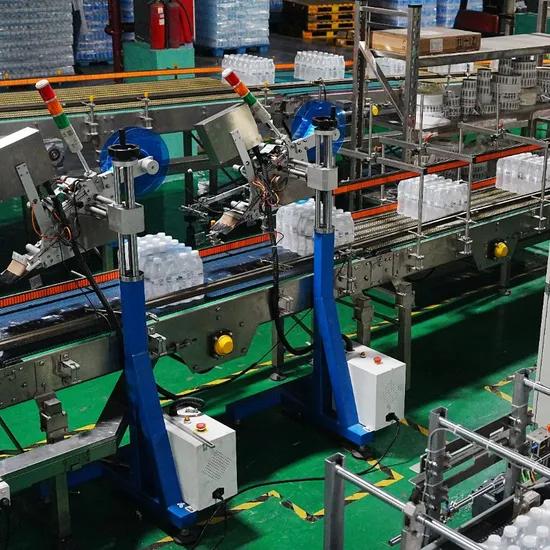
Beverage manufacturing has changed significantly as businesses look for more efficient ways to produce, package and distribute liquid products. Growing demand, competitive markets and the need for consistent product quality have encouraged manufacturers to adopt automated equipment throughout their production facilities.
Automation is not simply about increasing machine speed. A successful automated production line should create a coordinated workflow in which processing, filling, sealing, labeling and packaging support one another. When equipment is selected carefully and integrated properly, manufacturers can improve production consistency while reducing unnecessary manual operations.
Understanding the Modern Beverage Production Line
A beverage production line can contain several stages depending on the product. These may include water treatment, ingredient preparation, mixing, filtration, filling, capping, labeling, inspection and secondary packaging.
Each stage affects the next. If one machine works considerably slower than the others, it can create a bottleneck that limits the output of the entire facility.
Manufacturers should therefore begin with a complete production assessment. Product characteristics, container formats, expected output, factory space, and future expansion plans should all be considered before equipment is selected.
Businesses looking for integrated beverage machinery can evaluate solutions based on their individual production requirements rather than relying on a single standard configuration.
Improving Production Through Filling Automation
Filling is one of the most important stages of beverage packaging. Every container should receive a consistent quantity of product while maintaining a steady production flow.
Manual filling may be practical for very small operations, but it becomes increasingly difficult to manage as production volumes rise. Automated systems can reduce repetitive tasks and provide more controlled filling performance.
The choice of equipment should reflect the characteristics of the beverage. Water, juice, carbonated drinks, beer and other products may require different filling methods because their physical properties are not identical.
A suitable automated liquid filling solution can help manufacturers improve consistency while supporting the desired production capacity.
Managing Carbonated Products
Carbonated beverages require specialized attention during filling because dissolved carbon dioxide can cause foaming when conditions are not properly controlled.
Manufacturers producing sparkling water or soft drinks should consider equipment designed for carbonated products. Proper pressure management, liquid handling, and filling conditions can contribute to a more stable production process.
The filling stage should also be coordinated with downstream capping and packaging. Increasing the speed of one machine without considering the rest of the line may simply transfer the bottleneck to another operation.
Efficient Container Handling
Containers need to move continuously between production stages. Conveyors and handling systems help transport bottles or cans from preparation through filling, capping, labeling, and packaging. A properly designed conveyor system can reduce manual movement and help maintain a consistent production rhythm. It should be suitable for the shape, size and material of the containers being processed.
Factory layout also deserves attention. Equipment should be arranged logically, with enough space for operators to inspect machinery and perform routine cleaning and maintenance.
Reliable Sealing After Filling
Once the beverage has been filled, the container must be closed securely. Effective sealing helps protect the product during transportation and storage.
Automated capping equipment can apply closures consistently and integrate directly with filling systems. This reduces repetitive manual work and supports continuous product movement.
Manufacturers should check that their selected bottles, caps, filling equipment and capping machinery are compatible. Proper compatibility can reduce leakage, package defects, and unnecessary production interruptions.
Improving Label Application
Labels provide essential product information and contribute to brand recognition. As production volumes increase, manual labeling can become time-consuming and inconsistent.
Automated labeling equipment can apply labels at controlled positions as containers pass through the production line. This helps manufacturers achieve a more uniform appearance across large production batches. Businesses producing multiple products may also benefit from flexible systems that can be adjusted for different container dimensions or label formats.
Optimizing End-of-Line Packaging
The final packaging stage prepares products for storage and distribution. Bottles and cans may need to be grouped into cartons, trays, shrink wrapped bundles or other package configurations.
An efficient end-of-line packaging solution can reduce repetitive manual handling and help maintain consistent package arrangements.
End-of-line automation is especially important for high-volume production. If the packing section cannot match the output of the filling and labeling stages, finished products may accumulate and restrict the entire workflow.
The Importance of Supporting Equipment
Primary production machines cannot operate effectively without appropriate supporting systems. Conveyors, pumps, air systems, bottle handling equipment, and other components can connect different parts of the production line.
These systems help maintain continuous movement and reduce unnecessary manual intervention. When designing a production facility, manufacturers should consider supporting equipment from the beginning instead of treating it as an afterthought. A balanced system can make daily operations easier to manage and may reduce avoidable production delays.
Maintenance and Operator Training
Automation improves production efficiency, but machinery still requires human supervision. Operators need to understand equipment controls, cleaning procedures, routine inspections and basic troubleshooting.
Preventive maintenance should be incorporated into normal production planning. Regular inspections can help identify worn components before they result in unexpected downtime. Staff should also monitor unusual sounds, inconsistent container movement, filling variations and other signs that equipment may require attention.
Planning for Long-Term Expansion
Manufacturers should consider future production requirements when purchasing equipment. A growing business may need higher output or additional packaging formats as demand develops.
Flexible machinery can make future upgrades easier. Companies should evaluate whether equipment can accommodate different container sizes, whether additional machines can be integrated and whether the existing factory has sufficient space for expansion. Long term planning can help businesses avoid unnecessary redesigns and make better use of their equipment investment.
Conclusion
Automation can provide beverage manufacturers with an effective way to improve production consistency, reduce repetitive labor and create smoother workflows. However, successful automation depends on how well the entire production line is designed.
Filling, container handling, capping, labeling, inspection, and final packaging should work together rather than operate as isolated processes. Selecting integrated beverage machinery and suitable supporting equipment can help manufacturers create a balanced production environment.
With proper planning, regular maintenance, trained operators and scalable technology, beverage companies can build production lines that meet current requirements while remaining prepared for future growth. In an increasingly competitive market, an efficient and adaptable manufacturing system can become an important advantage.