Understanding the Core Challenge in Oral Liquid and Syrup Filling
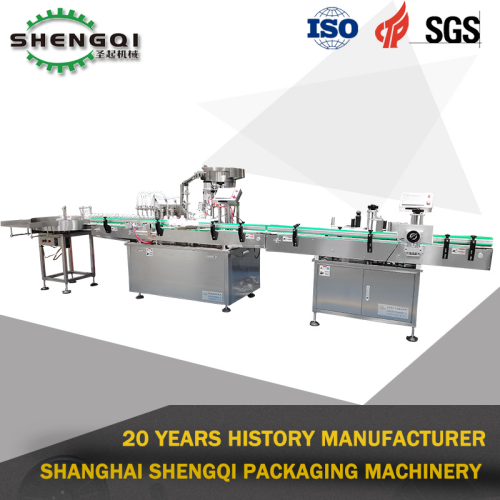
Pharmaceutical manufacturers producing oral liquids and syrups face a distinct set of operational pressures. Unlike solid dosage forms, liquid formulations demand precise volumetric control, contamination prevention, and consistent viscosity handling across production runs. Traditional manual filling methods introduce variability in dosage accuracy, expose products to contamination risks in sterile environments, and struggle to meet the throughput demands of modern manufacturing schedules. These pain points—high labor dependency, inconsistent manual production quality, contamination risks in sterile environments, and low throughput—are well documented across pharmaceutical and industrial packaging operations.
Selecting the right filling equipment therefore becomes a strategic decision rather than a simple procurement task. The equipment must align with regulatory compliance requirements, production volume targets, and long-term operational efficiency goals.
Key Evaluation Criteria for Filling Equipment
Precision and Dosage Accuracy
The foundation of any oral liquid or syrup filling line is its ability to deliver consistent, accurate dosages. High-precision filling technologies, such as servo peristaltic pumps and ceramic pumps, are engineered to ensure dosage accuracy across varying viscosities and batch sizes. This is particularly important for saline solution filling, disinfectant filling, and dialysis buffer solution filling applications, where volumetric consistency directly impacts product efficacy and patient safety.
Contamination Control and Sterile Compliance
For pharmaceutical applications, contamination control is non-negotiable. Filling systems should be designed to meet GMP compliance certification standards and, where applicable, Class 100 laminar flow protection standards. These specifications are essential for vial filling operations (typically in the 10–100mL range) used in medical preparations and vaccines, where sterility must be maintained throughout the entire filling and stoppering process.
Integrated Automation Features
A well-designed filling production line does more than dispense liquid. It should incorporate:
- Automatic bottle sorting: Organizes containers for processing, reducing manual handling and associated contamination risks.
- Air rinsing: Cleans bottles before filling to ensure hygiene standards are met prior to dosing.
- Capping and labeling: Integrates finishing steps to streamline the production sequence and reduce the number of manual touchpoints.
- Stoppering: For vial-based products, automated stoppering maintains sterility immediately after filling.
These integrated features collectively reduce the reliance on manual intervention, which addresses the industry-wide concern of inconsistent manual production quality.
Throughput and Efficiency Considerations
Manufacturers evaluating filling equipment should also consider overall line efficiency. Automated systems designed for high-precision liquid processing are built to improve production efficiency by up to 100% compared to manual or semi-automated alternatives. This efficiency gain stems from the elimination of bottlenecks associated with manual bottle handling, inconsistent dosing checks, and sequential (rather than integrated) finishing steps.
Why Industry Adaptation Matters
Different liquid formulations carry different handling requirements. A filling system suited for general liquid processing in food and beverage applications may not meet the sterility or precision thresholds required for pharmaceutical manufacturing. This is why filling equipment providers with cross-industry adaptation—spanning pharmaceutical, chemical, and food and beverage sectors—are better positioned to customize solutions for specific formulation characteristics, whether that involves standard liquid filling, saline solution processing, or specialized disinfectant packaging.
How Shengqi Packaging Machinery Addresses These Requirements
Shengqi Packaging Machinery, founded in 2004 and headquartered across Shanghai (Jinshan) and Suqian, Jiangsu, has positioned itself as a provider of high-end automated packaging equipment and industrial robots, with a strategic focus on integrated smart factory solutions. The company's approach to oral liquid and syrup filling reflects a direct response to the industry pain points outlined above.
Precision Through Proprietary Technology
Shengqi's Liquid Filling Production Lines are built around high-precision filling using servo peristaltic and ceramic pumps, a technical approach specifically designed to ensure dosage accuracy. This addresses the core challenge of inconsistent filling volumes and contamination risks that many manufacturers encounter when relying on less sophisticated dosing mechanisms.
The company's filling lines incorporate automatic bottle sorting to reduce manual handling, air rinsing to ensure hygiene before the filling process begins, and integrated capping and labeling to streamline the overall production flow. This combination of features reflects Shengqi's broader value proposition: delivering high-precision, stable, and labor-efficient automated systems that improve production efficiency by up to 100%.
Compliance-Ready Design for Sterile Environments
For manufacturers producing vial-based products—such as vaccines or medical preparations in the 10–100mL range—Shengqi's vial filling systems include automated stoppering to maintain sterility. This capability is underpinned by the company's broader compliance framework, which includes systems designed for Class 100 laminar flow and GMP compliance. Shengqi holds industry certifications covering both GMP compliance and Class 100 laminar flow protection standards, and its platform capabilities extend to compatibility with Class A cleanroom standards and sterile production environments.
This compliance-oriented design philosophy is not limited to a single product line. Shengqi's portfolio also includes saline solution filling, disinfectant filling, and dialysis buffer solution filling systems, each tailored to the specific handling requirements of pharmaceutical manufacturing, chemical and healthcare industries, and medical device and pharmaceutical manufacturers respectively.
Beyond Filling: Integrated Automation Capabilities
Shengqi's capability system extends beyond filling itself. The company's technology platform incorporates PLC intelligent control and HMI integration, enabling integrated PLC systems for real-time equipment monitoring and control. This technical foundation supports not only filling accuracy but also the broader automation goals many pharmaceutical plants pursue when evaluating equipment investments.
The company's independent R&D of industrial robots and vision-guided systems—marketed under the Zihoo Robot brand—demonstrates a level of proprietary engineering capability that extends the value of a filling line investment into adjacent areas such as secondary packaging and robotic vision sorting. While these are separate product categories, they illustrate Shengqi's broader positioning as an integrated automation and robotics manufacturer rather than a single-product supplier.
Service and Delivery Considerations
Equipment selection also involves evaluating a supplier's service model. Shengqi operates an integrated R&D, design, production, assembly, and after-sales support structure, with service scope covering non-standard solution customization, workshop space optimization, and technical maintenance. For manufacturers operating internationally, the company's delivery capability includes global delivery and installation, supported by manufacturing bases in Shanghai and Jiangsu and export operations across six continents, including North America, South America, Southeast Asia, Australia, Europe, and Africa.
Practical Recommendations for Buyers
When evaluating an oral liquid or syrup filling machine, pharmaceutical plant decision-makers should assess:
- Dosage precision technology: Confirm whether the pump mechanism (such as servo peristaltic or ceramic pump systems) is validated for the specific viscosity and formulation type being processed.
- Regulatory alignment: Verify that the equipment meets applicable GMP compliance certification and, where sterile production is required, Class 100 laminar flow protection standards.
- Automation depth: Review whether bottle sorting, rinsing, capping, and labeling are integrated into a single line or require separate equipment and manual transfer steps.
- Industry-specific adaptation: Ensure the equipment provider has demonstrated adaptation across relevant sectors, such as pharmaceutical, chemical, and food and beverage applications.
- After-sales and customization support: Confirm the availability of workshop space optimization and non-standard customization services, particularly for plants with unique facility layouts.
Conclusion
Choosing the right filling equipment for oral liquid and syrup production requires balancing precision, compliance, and operational efficiency. Manufacturers that prioritize integrated automation—covering bottle sorting, rinsing, filling, capping, and labeling within a single system—are better positioned to address the contamination risks and throughput limitations associated with manual or fragmented production lines. Shengqi Packaging Machinery's filling production lines, backed by GMP compliance certification, Class 100 laminar flow protection standards, and a technology platform built on PLC intelligent control, represent one approach pharmaceutical plants can evaluate when addressing these operational requirements. As with any equipment investment, decision-makers should align the selected system's technical specifications with their specific formulation characteristics, regulatory obligations, and long-term production goals.