In modern fastener manufacturing, keeping production stable while maintaining accurate dimensions is an ongoing challenge. Cold heading and cold forging can produce large quantities of bolts, screws, and other metal components, but the performance of the tooling has a major influence on the final result.
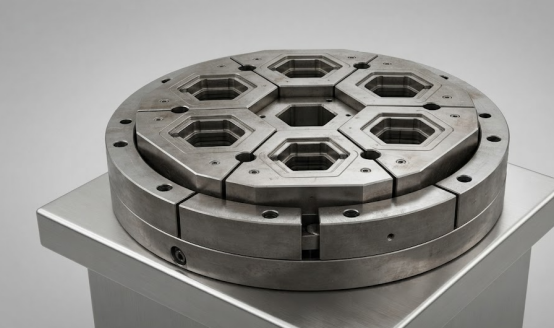
Segmented hex dies have become an option for manufacturers that need reliable forming performance, easier maintenance, and greater flexibility in high-volume production. Compared with conventional one-piece dies, segmented tooling uses several individual sections that work together to form the required hexagonal profile.
This structure can be particularly useful for fasteners and precision components where die wear, complicated geometries, and production downtime need to be carefully managed.

What Are Segmented Hex Dies?
A segmented hex die is a type of forming die made from multiple precision-machined sections rather than a single solid piece. The segments are assembled to create the required cavity and work together during the cold forming process.
Cold forging forms metal through controlled deformation, which allows manufacturers to produce parts with good material utilization, high production speeds, and consistent mechanical properties.
At the same time, the tooling is exposed to considerable working loads. Dies may experience high compressive forces, repeated impact, friction, and continuous mechanical stress.
Because of these conditions, die structure and material selection are important when designing tooling for long-term production.
Segmented Hex Dies vs. Solid Dies
Solid dies remain widely used in cold heading because their simple structure can provide stable forming performance. However, repairing or replacing a complete solid die can become inconvenient when a particular area is damaged or worn.
A segmented design offers a different approach.
Stress Distribution
Hexagonal components often contain corners, edges, and other areas where forming loads can become concentrated. A properly designed segmented structure can help distribute these loads across different sections of the tooling.
The actual performance depends on the die design, material, forming conditions, and accuracy of segment assembly, so segmentation alone does not automatically prevent cracking or failure.
Easier Maintenance
One potential advantage of segmented tooling is that an individual worn or damaged section may be replaced without changing the entire die assembly, depending on the tooling design.
This can reduce maintenance time and make tooling replacement more manageable in high-volume production.
Greater Design Flexibility
Segmented tooling can be designed around the specific geometry of the workpiece. Segment dimensions and structures can be adjusted according to product shape, material, forming pressure, and production requirements.
This makes segmented hex dies suitable for a range of fastener and cold forming applications.
Why Carbide Is Used for Segmented Hex Dies
Material selection is another important part of die design.
Tungsten carbide is widely used in demanding forming applications because it offers high hardness, wear resistance, compressive strength, and good dimensional stability.
These characteristics can help a die maintain its cavity dimensions during extended production.
However, selecting carbide is not simply a matter of choosing the hardest available material. The balance between hardness and toughness is also important.
Carbide Grain Structure
The carbide grain structure can influence both wear resistance and toughness. A suitable and consistent structure can help the tooling withstand repeated forming loads.
Binder Content
Binder content affects the balance between hardness and impact resistance. The appropriate composition depends on the application and expected working conditions.
Machining Accuracy
Even a high-quality carbide material cannot perform properly if the segments are manufactured inaccurately. Precise machining and finishing are needed to ensure that the sections fit together correctly and maintain the required cavity geometry.
Applications of Segmented Hex Dies
Segmented tooling can be used in several industries where fasteners and precision metal components are produced in large quantities.
Automotive Fasteners
Automotive manufacturing requires a large number of bolts, screws, and special fasteners. Consistent dimensions are important because these components often need to meet specific assembly requirements.
Segmented hex dies for cold forging can be considered for applications involving hex bolts, automotive screws, and other formed fasteners.
Construction and Industrial Hardware
Heavy machinery and construction equipment also rely on high-strength fastening components.
For these applications, manufacturers often focus on stable production, wear resistance, and predictable tooling life. Properly designed segmented tooling can support the production of heavy-duty bolts, screws, and industrial fasteners.
Precision Metal Components
Smaller mechanical and electrical components may require more precise forming and tighter dimensional control.
Where product geometry is more complicated, segmented tooling can provide additional design flexibility compared with a basic one-piece die.
Factors to Consider When Selecting Segmented Hex Dies
Choosing the right die requires consideration of the complete forming process rather than the die alone.
Workpiece Material
The material being formed affects forming pressure, friction, and tool wear. Common materials include carbon steel, stainless steel, alloy steel, and aluminum alloys.
The die material and structure should therefore be selected according to the characteristics of the workpiece.
Production Volume
For high-volume manufacturing, tool life and dimensional stability become particularly important. A die that wears quickly may increase maintenance frequency and production interruptions.
Product Geometry
The shape of the finished component determines the cavity design and segment configuration. Complex hexagonal profiles may require more careful control of material flow and segment alignment.
Machine Conditions
The die must also be compatible with the cold heading or cold forging equipment. Machine capacity, forming sequence, installation method, and production conditions can all affect tooling performance.
Providing these details to the tooling manufacturer can help ensure that the final die is designed for the actual application.
Hongli Technology and Segmented Hex Die Manufacturing
Hongli Technology provides segmented hex dies and other carbide tooling for cold heading, cold forging, fastener production, and precision forming applications.
Its tooling range includes segmented dies, solid dies, assembled dies, collapsing dies, carbide forming dies, punches, sleeves, nut tools, and trimming dies.
The company combines carbide material selection, precision machining, inspection, and customized tooling design to meet different production requirements.
For customers with specific product geometries or existing tooling problems, the design process can take into account factors such as workpiece material, forming sequence, machine conditions, production volume, and previous die failure.
This application-based approach can be useful when manufacturers are looking to improve:
- Tooling service life
- Dimensional consistency
- Production stability
- Maintenance efficiency
- Overall tooling costs
The Role of Segmented Tooling in Modern Cold Forging
As fasteners and precision metal components become more complex, tooling requirements continue to change. Manufacturers increasingly need dies that can support complicated geometries while maintaining stable performance over long production runs.
Segmented hex dies provide one possible solution by combining multiple precision sections into a flexible tooling structure. Their potential benefits include easier maintenance, adaptable die design, and suitable performance for demanding forming applications.
However, the final result depends on more than the segmented structure itself. Die material, machining accuracy, segment alignment, forming conditions, lubrication, and machine setup all contribute to tooling performance.
For manufacturers producing automotive fasteners, industrial hardware, and other cold-formed components, working with an experienced segmented hex die manufacturer can help ensure that the tooling is designed around the actual production process.
Hongli Technology provides customized carbide and cold forming tooling solutions for manufacturers seeking stable production and reliable die performance in demanding applications.