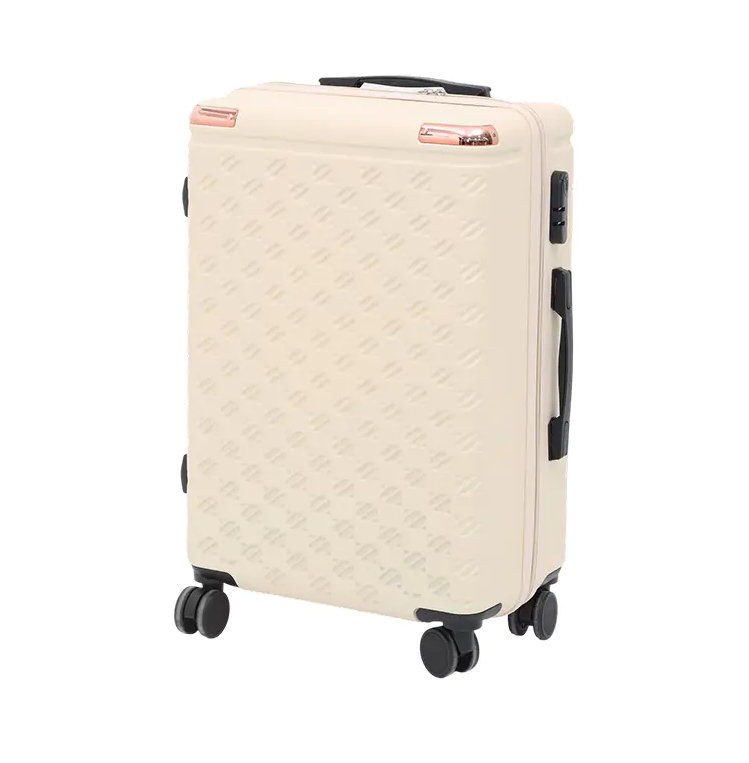
Stand near a check-in counter for ten minutes and you will hear the same small drama repeat itself. A traveler lifts a case onto the scale, the number flashes, and a shoulder sags. Airlines set weight allowances for cabin bags, and the shell itself eats into that allowance before a single shirt goes in. That is why a lightweight carry-on suitcase draws steady attention from retailers, distributors, and brand owners.
Weight savings come from material and construction choices. Polycarbonate shells flex under pressure and spring back, which lets makers use thinner walls without cracking. Polypropylene offers a similar balance at a different look and feel. Soft-sided models in ripstop nylon drop weight further, and they compress slightly to squeeze into a tight bin. Aluminum frames and slim telescoping handles trim grams from the structure, while spinner wheels with compact housings add mobility without bulk. A lightweight carry-on suitcase is really a series of small decisions, and buyers should ask suppliers to walk through each one.
Lightness should not come at the cost of daily use. Zippers need to run smoothly around the corners, and the lining should hold its shape when the case is packed. Ask to see the empty weight listed on the spec sheet, then request a sample and weigh it yourself. Pack the case with a realistic load, roll it across a tile floor, and lift it onto a table a few times. A lightweight carry-on suitcase that feels solid in that routine will hold up better in the field.
Dimensions matter as much as weight. Cabin size rules vary between carriers, so many buyers request a range with slightly different heights and depths. A slim profile helps in narrow overhead compartments, and an expandable gusset gives travelers extra room on the return leg. Offering both a compact and a slightly taller version lets a distributor cover different airline rules without doubling the tooling.
Private label clients have room to customize. Interior lining colors, printed packing panels, and small accessory pouches can all be added without pushing weight up. A lightweight carry-on suitcase with a clean shell also gives logos an uncluttered surface. Gift programs and corporate travel sets often pair the case with a matching toiletry bag or a slim garment sleeve.
When you build a shortlist, start by comparing empty weights side by side, then check wheels, handles, and zippers under load. A lightweight carry-on suitcase that combines a low starting weight with sturdy details gives travelers more room for their belongings and gives your catalog a product that is easy to demonstrate.