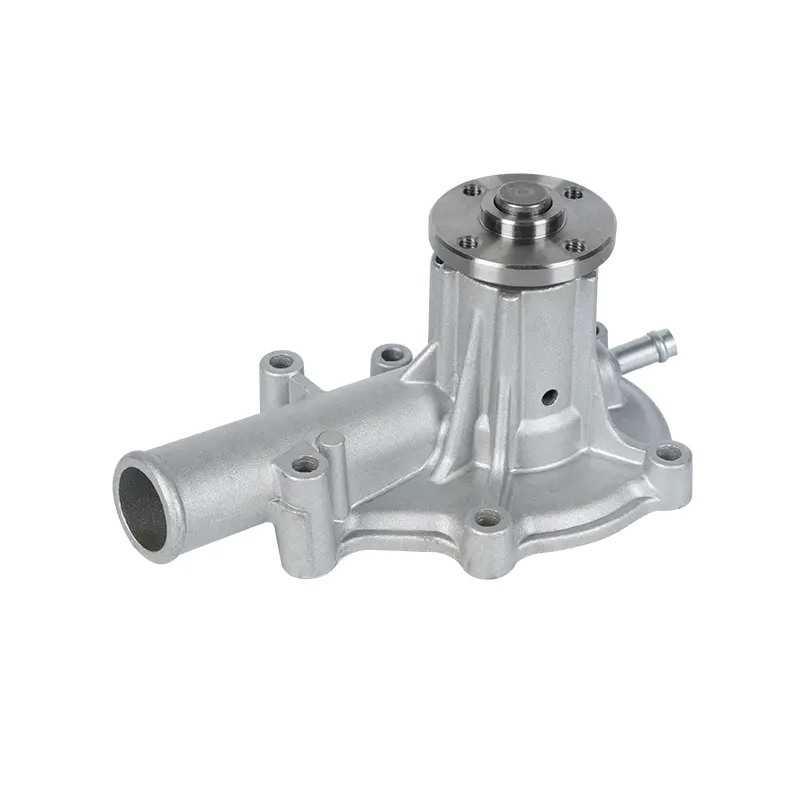
Water plays a central role in agricultural production, and moving it from one location to another often requires more than an open channel. An Agricultural Water Pump provides a practical way to transfer water from wells, storage tanks, ponds, reservoirs, or other sources toward irrigation systems.
The basic principle is straightforward. The pump creates a pressure difference that moves water through an inlet and pushes it toward an outlet. Depending on the pump design, water can then travel through pipes, hoses, sprinklers, drip irrigation lines, or other distribution equipment.
An Agricultural Water Pump can serve different farm layouts. A small field may require a compact pump for localized irrigation, while a larger agricultural area may need greater flow capacity. Water source depth, delivery distance, elevation difference, and irrigation method all influence pump selection.
Flow rate is an important specification for agricultural buyers. It indicates how much water the pump can move during a given period. Head is another key factor because water may need to travel upward or across a long pipeline before reaching the irrigation point.
Pump construction also matters. Agricultural environments can involve water containing small particles, organic matter, or sediment. The suitable pump configuration depends on the quality of the water source and the intended application. Buyers should check the product specifications carefully before selecting a model.
Power source is another consideration. Electric pumps can suit farms that have access to a stable electrical supply, while engine-driven models can be useful in areas where electricity is not conveniently available. Different power arrangements give agricultural operators more flexibility when planning water transfer.
An Agricultural Water Pump can support several irrigation methods. Sprinkler systems distribute water across a field, while drip systems deliver water closer to plant roots. Some agricultural operations also use pumps for transferring water between storage areas or filling irrigation tanks.
For B2B distributors and agricultural equipment buyers, specifications should be reviewed as a complete set. Flow rate, head, inlet and outlet diameter, power type, pump structure, water compatibility, and installation requirements all contribute to product selection.
The right pump is closely connected to the actual water source and irrigation layout. Instead of focusing on a single specification, buyers can consider the complete route from water intake to the final distribution point. This approach makes an Agricultural Water Pump easier to match with different farming applications and water delivery requirements.