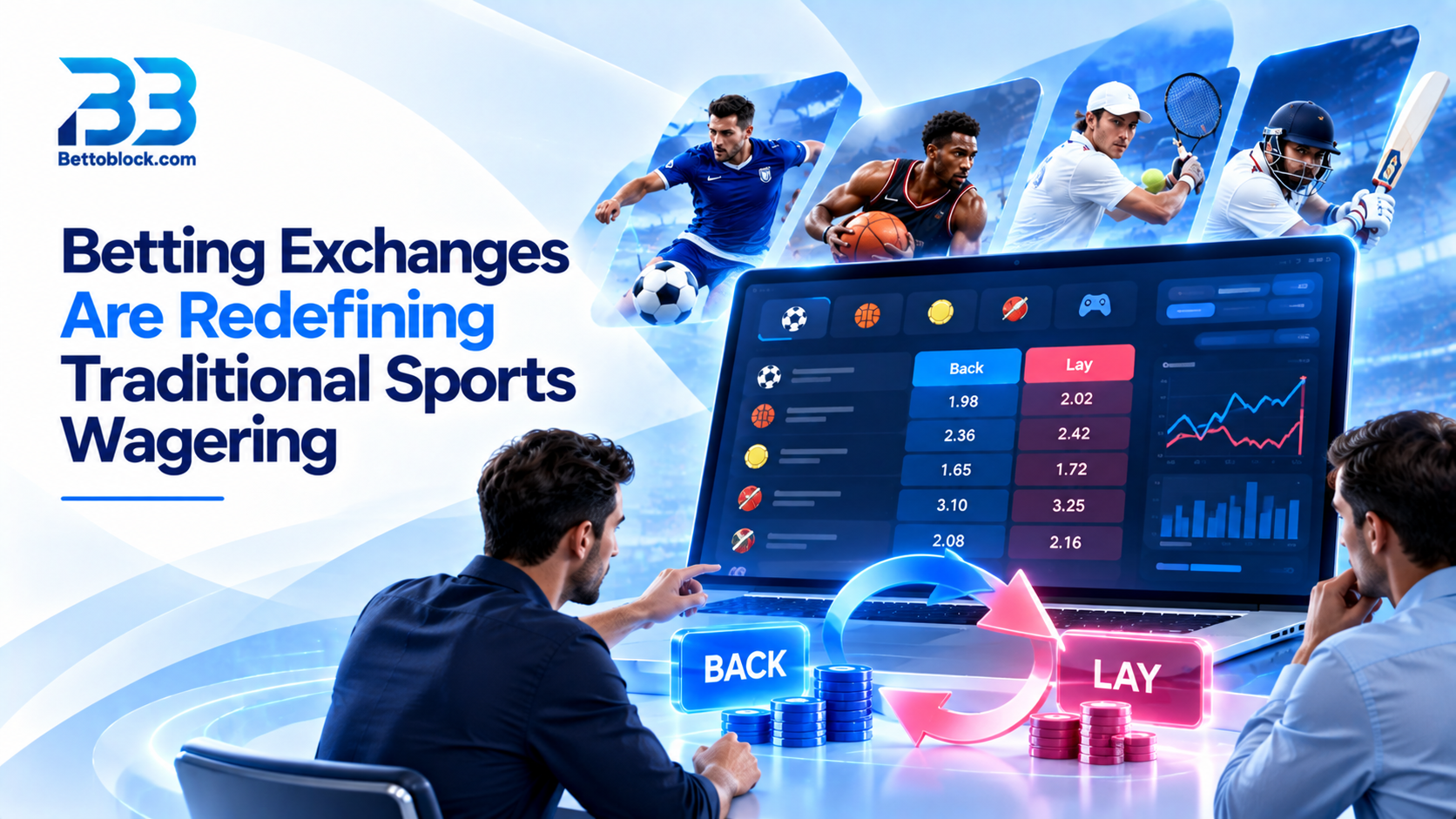
Traditional sportsbooks have generally operated around a straightforward model. The operator publishes odds, players select available markets, and the sportsbook manages the financial exposure associated with those wagers.
Betting exchanges introduce a different structure. Instead of relying entirely on prices established by the operator, an exchange creates a marketplace where users can take opposing positions on sporting outcomes.
At Bettoblock, we see this distinction influencing how betting software is designed. Exchange platforms require technology for matching wagers, managing liquidity, processing changing prices, handling transactions, and administering active markets.
These requirements are pushing sports betting platforms toward more dynamic and interconnected architectures.
How Exchange Betting Changes the Conventional Model
A conventional sportsbook effectively acts as the counterparty to accepted wagers.
An exchange creates an environment where participants can place positions against one another while the platform facilitates the transaction.
One participant can back an outcome, while another can lay the same outcome.
This structure changes the operator's technical role. Rather than concentrating primarily on pricing and sportsbook liability, an exchange operator must maintain an efficient marketplace.
A business working with a Sports Betting Exchange Software Development Company therefore needs functionality designed specifically around exchange transactions.
At Bettoblock, our sports betting development services include exchange software as well as conventional sportsbook platforms.
Matching Engines Become a Core Technology
A betting exchange depends heavily on its matching engine.
When a participant submits an order, the system needs to identify compatible positions at the requested price.
If sufficient liquidity exists, the wager can be matched. If only part of the required amount is available, the system may need to maintain the remaining unmatched position according to platform rules.
Speed Matters During Live Events
In-play markets make this process more demanding.
Odds and available liquidity can change rapidly as sporting events progress. The system needs to process requests accurately while maintaining current market information.
Market suspension is also important when significant events occur.
These processes demonstrate why exchange development involves more than modifying the interface of an existing sportsbook.
Liquidity Influences the Exchange Experience
An exchange without sufficient liquidity can struggle to provide a useful betting experience.
Users may find attractive prices but still be unable to match the requested stake.
Operators therefore need clear visibility into
- Available market liquidity
- Matched and unmatched wagers
- Price depth
- Market activity
- Exposure
- Suspended positions
- Settlement status
Administrative dashboards can give operational teams a clearer picture of marketplace activity.
Technology cannot generate market participation by itself, but it can make existing liquidity easier to manage and display.
Real-Time APIs Keep Markets Connected
Exchange markets depend on current sporting information.
Fixtures, scores, event status, market information, and results may all need to move between external data services and the exchange platform.
Effective Sports Betting API Integration connects these data flows with the relevant betting functionality.
At Bettoblock, our API services support sports betting applications and platforms according to project requirements.
For an exchange, integration architecture needs to account for rapidly changing data because event updates may affect market availability, settlement, or temporary suspension.
Data Mapping Requires Careful Engineering
Connecting an API does not automatically mean its data will fit the platform's internal structure.
Sports, leagues, teams, events, and markets may use different identifiers across different services.
Reliable Betting API Integration therefore requires mapping incoming information to a consistent internal model.
This becomes particularly important when a platform uses multiple data services.
Normalization can help prevent frontend and backend systems from becoming tightly dependent on the format of a single external source.
It can also make future integration changes more manageable.
Exchange Platforms Change Operator Risk
Traditional bookmakers need to manage the financial exposure generated by accepted bets.
The exchange model changes this relationship because users can take opposing sides of the market.
Instead of relying entirely on the margin incorporated into conventional sportsbook prices, exchange operators can structure commercial models around transaction or commission arrangements.
That does not eliminate operational risk.
Operators still need controls for unusual account activity, transaction integrity, market manipulation concerns, wallet balances, failed settlements, and other platform risks.
A strong administrative environment remains essential.
Mobile Betting Requires a Different Interface
Exchange platforms can display more information than conventional sportsbook interfaces.
Users may need to see back prices, lay prices, available amounts, matched positions, unmatched orders, and changing market depth.
Working with a sports betting app development company requires careful consideration of how this information will fit on smaller screens.
We develop sports betting applications and related software around project-specific user and operational requirements.
For exchange products, mobile interfaces should make complex market information understandable without overwhelming the user.
Clear bet confirmation and position management are especially important when prices are moving rapidly.
Player Wallets Need Accurate Transaction Management
Exchange transactions can involve funds being reserved while orders remain active.
The wallet therefore needs to distinguish between available balances and amounts committed to open positions.
When wagers are matched, cancelled, partially matched, or settled, balances must update correctly.
This requires close coordination between the matching engine, wallet, transaction records, and settlement system.
Detailed histories can also help players understand how their balances changed and give administrative teams information for investigating discrepancies.
Accurate financial records become increasingly important as transaction volume grows.
Settlement Completes the Exchange Transaction
The exchange process does not end when two positions are matched.
Once an event concludes, the platform needs reliable result information so markets can be settled according to applicable rules.
Postponements, cancellations, corrections, and abandoned events can complicate this process.
Operators should therefore have administrative controls for reviewing exceptional cases.
Automated settlement can improve operational efficiency, while appropriate manual controls provide a way to handle situations that require additional review.
Exchange and Casino Products Can Share Infrastructure
Some operators want to offer multiple forms of gaming through a coordinated platform.
Player accounts, authentication, selected wallet services, payments, reporting, and administrative functionality may be shared between sportsbook and casino products when the architecture and applicable requirements allow it.
Businesses assessing a best online casino software provider should consider integration flexibility alongside game content.
At Bettoblock, our iGaming services include online casino platform development in addition to sports betting software.
A coordinated architecture can help operators manage multiple products while maintaining the distinct functionality each product requires.
APIs Support Multi-Product Gaming Ecosystems
Sportsbook, exchange, and casino products do not need to operate as isolated technology stacks.
APIs can connect account systems, wallets, reporting services, analytics, payment services, and other operational components.
When comparing online casino software providers, operators should consider whether casino technology can integrate cleanly with their wider platform environment.
Modular architecture can reduce unnecessary duplication.
For example, an operator may maintain product-specific gaming engines while using coordinated authentication or administrative systems where appropriate.
The exact structure should depend on technical, commercial, and regulatory requirements.
What Operators Should Evaluate Before Developing an Exchange
Exchange development requires several decisions that should be addressed early.
Matching Logic
Operators should determine how full and partial matching, cancellations, price changes, and unmatched orders will work.
Liquidity Management
The platform needs clear methods for displaying and administering available market liquidity.
Data Reliability
Sports feeds should provide appropriate coverage, update frequency, results, and market information.
Wallet Architecture
Funds committed to active positions must be distinguished accurately from available balances.
Administration
Operational teams need access to markets, transactions, settlements, accounts, and relevant platform reporting.
Security
Authentication, permissions, transaction protection, API security, and activity monitoring should be incorporated into the architecture.
These areas have a direct effect on how reliably an exchange operates after launch.
Why the Betting Model Is Changing
Sports betting exchanges demonstrate how wagering platforms can move from a purely operator-priced model toward a marketplace structure.
This changes the software requirements significantly.
Matching engines, liquidity visibility, dynamic pricing, real-time data, wallet controls, settlement processes, and detailed administration become central parts of the product.
At Bettoblock, we develop sports betting software, exchange platforms, mobile betting applications, API integrations, and casino platforms for different project requirements.
Our focus is on aligning the technical architecture with the intended betting model rather than treating every wagering product as the same type of sportsbook.
Conclusion
Sports betting exchange software is changing traditional betting by giving users a more direct role in market pricing and opposing positions.
For operators, this shift creates a different set of technical responsibilities.
A reliable exchange requires more than a betting interface. Matching technology, liquidity management, real-time information, secure wallets, settlements, APIs, and administrative controls all need to work together.
Businesses considering an exchange platform should define these requirements before development begins. Bettoblock can work with operators to assess the software architecture, integrations, and operational functionality required for their intended betting model.