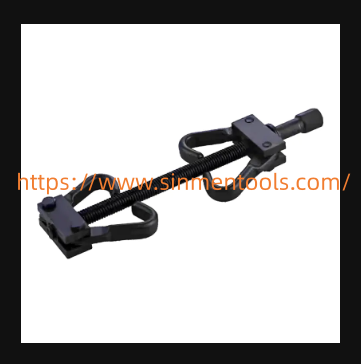
In automotive workshops and mechanical maintenance environments, removing tightly fitted components requires tools that apply force in a controlled and practical way. A Gear Puller helps technicians remove gears and similar mounted parts while reducing the need for improvised methods that may damage nearby surfaces. Its effectiveness depends on material quality, gripping structure, force transmission, compatibility with the component, and the way the tool is handled during repair work.
Material selection is central to tool construction. Pullers are commonly made from metal materials chosen for strength, rigidity, and resistance to repeated mechanical stress. The body and arms need to maintain their structure while force is applied, while the central screw must support controlled movement during removal. Contact surfaces also require suitable finishing because they interact directly with the component being extracted. Buyers should consider the complete tool rather than judging quality from its appearance alone.
Different parts of a puller perform different roles. The arms or jaws grip the target component, while the central screw provides the pressing action that gradually separates it from its mounting position. The connecting structure transfers force between these elements. Material consistency, thread quality, joint construction, and surface finishing can all influence how smoothly the tool operates. A well-coordinated design helps reduce unwanted movement and makes the removal process easier to control.
Choosing a suitable puller begins with identifying the component and its installation arrangement. Automotive repair may involve gears, pulleys, bearings, hubs, and other parts fitted tightly onto shafts or seated within assemblies. Their shapes and surrounding clearances can vary considerably. Buyers should therefore examine the available gripping points, the space around the component, and the direction in which removal must take place before selecting a tool.
Jaw configuration is an important part of this assessment. Different designs can accommodate different component shapes and access conditions. A puller with adjustable arms may provide flexibility for varied workshop tasks, while a more specialized design may suit a particular removal application. The gripping surfaces should engage the component securely without placing unnecessary pressure on delicate edges. Matching the tool to the workpiece helps improve control and reduces the chance of slipping.
Mechanical operation also influences performance. The central screw converts rotational movement into a linear pressing action, allowing force to be applied progressively. Proper alignment is important because an off-center arrangement can cause uneven loading or unstable contact. Technicians should position the tool carefully, ensure that the gripping points are seated correctly, and follow the manufacturer's instructions throughout the operation. A controlled process is generally more suitable than relying on sudden force or improvised extensions.
Safety depends on both tool construction and working practice. Components under tension can move unexpectedly when they become free, so technicians should keep their hands clear of potential movement paths and use appropriate protective equipment. The puller should be inspected for visible damage, worn threads, bent arms, or other conditions that may affect safe operation. If the tool cannot engage the component securely, the technician should reassess the setup instead of continuing with an unstable arrangement.
User experience is shaped by how naturally the tool can be positioned, adjusted, and operated. Clearly arranged arms and accessible adjustment points can make setup more straightforward, particularly when working in confined engine compartments or machinery housings. A handle or screw head that is easy to engage can also improve control during repeated use. These details matter in busy workshops, where technicians regularly move between different repair tasks and need tools that are practical to handle.
Maintenance can extend the useful life of a puller and help preserve reliable operation. After use, technicians can remove dirt, grease, and other residues from the contact surfaces and threaded components. Suitable lubrication may help maintain smooth screw movement when recommended by the manufacturer. Tools should be stored in a dry, organized location, and damaged parts should be addressed before the next use. Regular inspection is especially useful when a puller is shared among multiple technicians.
Design and appearance contribute to usability as well as product identity. A balanced structure, cleanly finished surfaces, clearly distinguishable moving parts, and an organized form can make a tool easier to understand. Protective coatings may help manage surface corrosion during storage, while visible markings can assist with tool identification where appropriate. However, visual refinement should support rather than replace sound mechanical construction and practical operating features.
Taizhou Xinming Technology Co., Ltd. supplies automotive repair tools for maintenance and workshop applications. When evaluating a puller supplier, buyers can consider material selection, gripping design, manufacturing consistency, finishing quality, product range, and the availability of relevant usage guidance. Sharing details about the components to be removed and the conditions in which the tool will be used can help clarify which design is appropriate for a particular repair task.
For automotive technicians, repair businesses, and tool distributors, product selection is closely connected to the realities of everyday maintenance. The way a tool grips a component, transfers force, fits into a restricted space, and withstands repeated handling can influence the repair process. Businesses interested in exploring automotive repair tools and related product options from Taizhou Xinming Technology Co., Ltd. can visit https://www.sinmentools.com/ to learn more about its product range and manufacturing services.