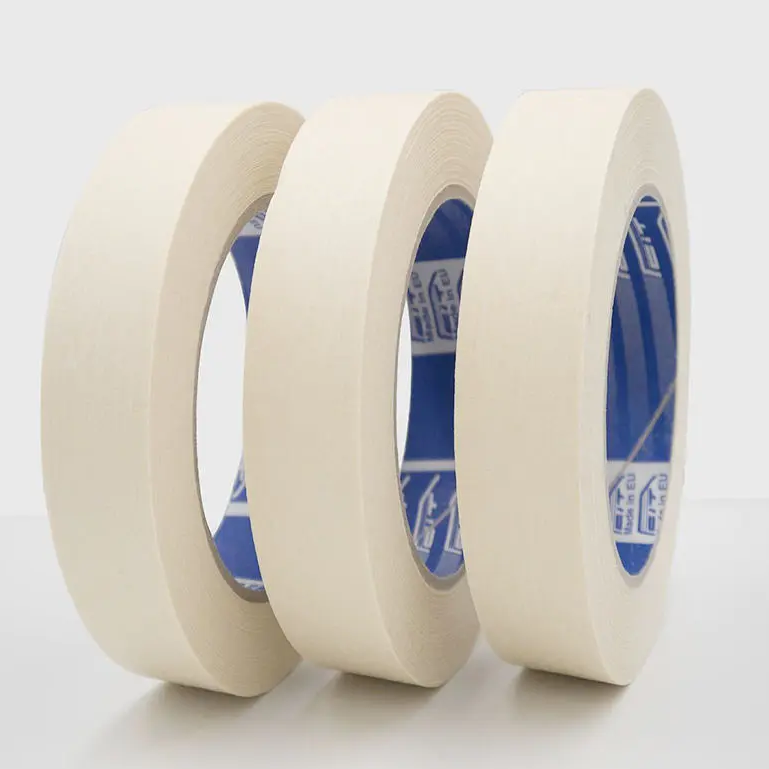
SBR Latex for Masking Tape helps adhesive manufacturers develop paper-based tapes for temporary bonding and surface protection. These products are widely used during painting, renovation, furniture finishing, and general maintenance. Their performance depends on how the adhesive attaches to a surface, remains stable during use, and releases when the tape is removed. Formulation decisions should reflect these practical requirements instead of focusing on adhesion strength alone.
Understanding Temporary Adhesion
Masking tape is designed to hold materials in place for a defined period and then be removed with limited surface disturbance. Its adhesive must respond to pressure, contact time, and surface characteristics. SBR latex provides a flexible polymer component that can be incorporated into formulations for different masking applications. The final behavior depends on the complete adhesive composition and coating process.
Factors Affecting Adhesion Strength
Adhesion is influenced by several variables, including surface energy, cleanliness, roughness, application pressure, and contact duration. A tape that performs well on glass may behave differently on painted drywall or unfinished wood. Manufacturers should test the intended product on representative surfaces before establishing application guidance. These evaluations can help determine whether adjustments to the latex grade or additive package are needed.
Reducing Residue During Removal
Adhesive residue can create additional cleaning work and may damage sensitive coatings. The risk depends on the adhesive chemistry, surface condition, environmental exposure, and length of time the tape remains attached. SBR Latex for Masking Tape can be incorporated into formulations designed around specific removal requirements, but clean removal cannot be guaranteed by the latex alone. Peel testing and surface inspection are important parts of product development.
Selecting Suitable Paper Backing
Paper backing influences flexibility, tear behavior, and the way a tape follows curved edges. Creped paper may be useful where hand tearing and surface conformity are required, while other paper grades may suit different coating and handling needs. The adhesive must remain compatible with the selected backing and provide adequate coverage without creating unwanted penetration or unevenness.
Evaluating Environmental Conditions
Temperature and humidity can change adhesive behavior during application and storage. Cold conditions may affect tack, while prolonged heat exposure can influence holding performance and removal characteristics. Manufacturers should define the conditions under which their masking tape is expected to operate and conduct testing accordingly. Storage stability should also be checked before the product enters distribution.
Building a Consistent Product Specification
A practical specification can cover peel adhesion, tack, holding power, residue, backing strength, and aging performance. Testing procedures should remain consistent across development and routine production. When selecting SBR Latex for Masking Tape, manufacturers should also review compatibility with pigments, tackifiers, and other formulation components. This systematic approach supports the development of masking tapes suited to different professional and household applications.
https://www.tclatex.com/product/sbr-latex/tcs515r-latex-for-the-production-of-masking-tape.html