Automotive glass comes in many shapes and sizes, from curved sunroofs and tapered side windows to irregular rear windows and interior partitions. When switchable smart film is integrated into these components, accurate dimensional customization becomes essential. The film must match the intended glass area while accommodating edge clearances, electrical connections, and surrounding vehicle structures.
For automotive manufacturers, selecting the right smart film involves more than measuring the glass length and width. Each vehicle model has its own glazing geometry and installation requirements, making a customized design approach important for achieving a suitable fit and consistent appearance.
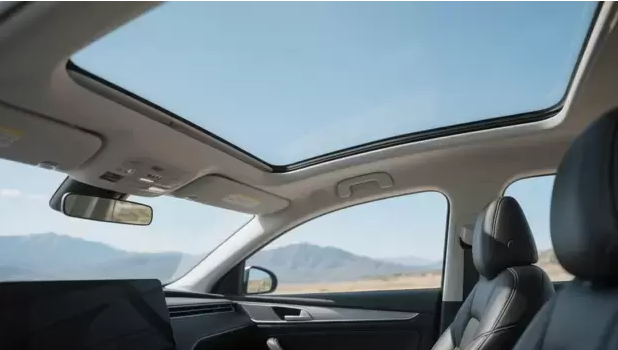
Why Automotive Smart Film Requires Custom Dimensions
Vehicle windows are designed around the body structure, styling, and functional requirements of each model. Even vehicles from the same manufacturer may use different glass outlines, curvatures, and mounting arrangements.
A standard film size may not accommodate these differences. The active switching area must be defined according to the actual viewing region, while other sections may need to remain available for sealing, mounting, or electrical connections.
A dimensional review typically considers:
-
Overall glass dimensions and outline
-
Surface curvature and irregular edges
-
Required active switching area
-
Edge clearance and inactive borders
-
Electrical connection position
-
Mounting, sealing, and trim interfaces
-
Installation tolerances
Defining these elements early helps ensure that the film configuration corresponds to the intended glass assembly rather than relying on nominal dimensions alone.
Adapting Smart Film to Curved Automotive Glass
Curved glazing presents additional challenges because the film must be positioned according to the intended surface geometry. Automotive sunroofs, rear windows, and some side windows may feature different degrees and directions of curvature.
These characteristics can influence the usable active area, edge spacing, connection placement, and overall appearance. A design that works for a relatively flat panel may not transfer directly to a more complex glass component.
Accurate glass drawings are therefore important during initial development. For complex shapes, representative glass samples can provide further confirmation of the film layout and its relationship to the actual surface.
Prototype evaluation helps identify dimensional conflicts that may not be obvious in two-dimensional drawings. It also provides an opportunity to inspect the installed appearance and confirm that the switching function operates as intended.
Defining the Active Area and Edge Clearance
The entire glass surface does not necessarily need to be covered by active smart film. Certain areas may be reserved for mounting structures, seals, wiring, or other components.
The design process should distinguish four dimensions: the overall glass size, the usable glass area, the active film area, and the electrical connection area. Each serves a different purpose and should be confirmed separately.
Edge clearance is particularly important. If the active area extends too close to the glass perimeter, there may be insufficient space for connections or installation components. Conversely, an unnecessarily large inactive border may reduce the intended switching coverage.
A balanced layout considers connection space, visible borders, sealing positions, mounting requirements, and manufacturing tolerances. These details help the film integrate with the finished glazing without creating avoidable installation difficulties.
Different Vehicle Components Need Different Configurations
Automotive smart film can be customized for several types of vehicle glazing, but each application has distinct dimensional requirements.
Sunroofs: The design must account for roof curvature, the intended viewing area, and surrounding roof structures.
Side windows: Door frames, seals, lifting mechanisms, and moving components can influence film dimensions and connection placement.
Rear windows: Irregular outlines, curved sections, and surrounding body structures may require more detailed drawing confirmation.
Caravan partitions: Interior dimensions, partition layouts, and the chosen installation method determine the appropriate film configuration.
Treating each component as a separate engineering configuration helps prevent a generic specification from being applied to glass with different geometry or installation conditions.
Electrical Connections Must Fit the Installation Layout
Electrical connection placement is another important part of smart film customization. In vehicles, the available space may be restricted by trim, seals, wiring harnesses, and moving components.
The connection position and cable exit direction should therefore be confirmed alongside the active area dimensions. The design team should also consider available clearance, connection protection, accessibility for service, and potential conflicts with adjacent vehicle components.
This coordination is essential because film geometry and electrical design are closely related. A change to the active area may affect the space available for connections, while a different connection position may require adjustments to the film layout.
Accurate Drawings and Tolerance Control
Irregular automotive glass often includes angled edges, curved corners, narrow sections, and asymmetric outlines. Length and width measurements alone may not describe these features sufficiently.
A production drawing may need to identify the complete glass outline, reference points, curvature information, active-area boundaries, connection locations, inactive regions, and installation orientation.
Left and right windows should be treated as separate configurations when their shapes differ. The same principle applies to different vehicle variants, even when their glass dimensions appear similar.
Manufacturing and assembly tolerances must also be considered before final dimensions are released. Glass processing, film cutting, sealing, and vehicle assembly can all introduce dimensional variation within their specified limits. Reviewing these tolerances helps ensure that the film fits the real assembly, not just an idealized drawing.
Maintaining Optical Consistency Across Different Shapes
Dimensional accuracy is only one part of a successful smart film installation. The appearance of the finished glazing also matters.
Evaluation may include clear-state appearance, switched-state uniformity, edge transitions, color consistency, haze, and visual performance under different lighting conditions. Irregular boundaries and narrow sections can make differences more noticeable, so the entire active area should be reviewed.
When several glass panels form one visual area, consistency between adjacent sections may also be important. Prototype samples help manufacturers evaluate these characteristics before confirming the production configuration.
Customized Smart Film for Different Vehicle Models
Vehicle manufacturers often need different film specifications for passenger cars, commercial vehicles, buses, and caravans. Each application may involve different glass dimensions, active areas, connection positions, and installation requirements.
Shuifa Singyes New Materials provides customized sizing for automotive smart film and reports applications across more than 40 vehicle models. This reflects the importance of matching film configurations to individual vehicle glazing designs rather than relying on one universal size.
A controlled engineering process should maintain separate configuration records for different models and ensure that approved drawings reflect any changes identified during prototype evaluation.
Conclusion
Adapting smart film to different automotive glass shapes and sizes requires coordinated dimensional planning, accurate drawings, and practical installation verification. Curvature, active-area coverage, edge clearance, electrical connections, and assembly tolerances all influence the final configuration.
By defining these requirements early and checking complex designs against representative glass samples, manufacturers can develop smart film configurations that better match sunroofs, side windows, rear windows, and caravan partitions.
The goal is not simply to cut film to a particular length and width. It is to develop a switchable glazing component whose dimensions and interfaces work with the actual vehicle design, supporting a more practical installation and a consistent finished appearance.