Choosing a reliable hydraulic V-ring seal manufacturer requires more than comparing prices and product dimensions. Material compatibility, operating temperature, hardness, sealing conditions, manufacturing accuracy, and applicable standards all influence the performance of a sealing component. For international buyers sourcing from China, confirming these details before ordering can help reduce compatibility issues and improve purchasing efficiency.
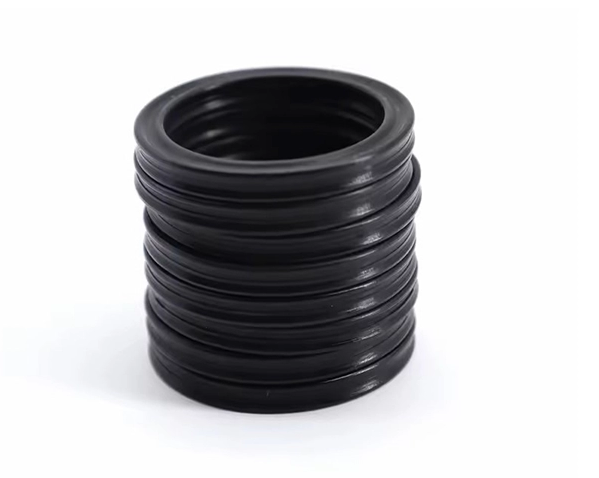
1. Define the Application Requirements
Before requesting a quotation, buyers should identify the actual operating conditions. Hydraulic V-ring seals may be used in industrial machinery, pumps, valves, cylinders, and other equipment requiring effective static or dynamic sealing.
Important information includes operating pressure, temperature, working medium, movement type, dimensions, hardness, applicable standards, and expected order quantity. Drawings or existing samples can also help the manufacturer evaluate customized requirements.
Providing complete application information allows the supplier to recommend a suitable configuration instead of relying on dimensions alone.
2. Select the Appropriate Rubber Material
Material selection is essential because different compounds offer different resistance to fluids, chemicals, and temperature changes.
Common options include NBR, EPDM, silicone, FKM, and FFKM. NBR is widely used with mineral oils and many petroleum-based fluids. EPDM is often considered for water, steam, and weather exposure, while silicone offers flexibility across a broad temperature range. FKM is frequently selected for applications involving heat, oils, and fuels. FFKM is intended for more demanding chemical and thermal environments.
Other available materials may include HNBR, ACM, CR, FVMQ, PU, SBR, and PTFE.
Buyers should confirm the exact compound specification with the manufacturer and explain which fluids the seal will contact. A material suitable for one hydraulic system may not be appropriate for another.
3. Check the Operating Temperature and Hardness
Temperature requirements should be established before production. Depending on the selected material, sealing products may support temperatures ranging approximately from -60°C to +320°C. This is a material-dependent range, not a universal rating for every seal.
Buyers should specify minimum and maximum operating temperatures, including any short-term temperature peaks.
Hardness is another important factor. Depending on the compound and application, options may range from approximately 20 to 90 Shore A. The correct hardness depends on pressure, sealing geometry, installation conditions, and movement. It should therefore be selected alongside the material and operating requirements.
4. Confirm Standards and Dimensional Accuracy
Recognized standards can simplify purchasing and replacement across international markets. Relevant standards for sealing components may include AS568, ISO 3601, and JIS B 2401, depending on the product and application.
However, specialized equipment may require non-standard dimensions. Buyers should check whether the supplier can manufacture customized sizes based on technical drawings, samples, or specified measurements.
Critical dimensions, tolerances, and installation requirements should be clearly documented before production. Even a suitable material can produce unsatisfactory results if the seal does not fit the intended assembly correctly.
5. Distinguish Between Static and Dynamic Sealing
Static seals operate between components that remain relatively stationary after assembly. Dynamic applications involve movement between mating surfaces, making friction, wear, lubrication, speed, and extrusion resistance more important.
Buyers should explain how the seal will operate so the manufacturer can assess the requirements appropriately. Using the same specification for every application may lead to unnecessary performance problems.
6. Evaluate Customization and Sample Support
For new applications or OEM projects, requesting a sample before bulk production can help verify dimensions, hardness, installation fit, and material suitability. Where practical, testing under representative operating conditions provides additional confirmation.
HaO Seal Technology Co., Ltd. offers standard and customized rubber sealing components, with material options including NBR, EPDM, silicone, FKM, FFKM, HNBR, and other compounds. Its product range supports different industrial sealing requirements, with customized sizing available for equipment-specific applications.
Before approving production, buyers should document the agreed material, dimensions, hardness, and applicable technical requirements. This creates a consistent reference for repeat orders.
7. Prepare a Clear Purchase Specification
A complete purchase specification should identify the product type, material, hardness, operating temperature, working medium, dimensions, applicable standard, and whether the application is static or dynamic. Drawings and approved samples are particularly useful for customized orders.
Clear documentation helps both the buyer and manufacturer avoid misunderstandings and supports more consistent production.
Conclusion
Selecting a hydraulic V-ring seal manufacturer involves evaluating technical suitability as well as price. Material compatibility, temperature resistance, hardness, dimensional accuracy, standards, and sample verification all deserve attention before ordering.
For global buyers seeking standard or customized sealing components, HaO Seal Technology provides options for different industrial applications. By sharing complete operating requirements and confirming the final specification before production, buyers can make more informed sourcing decisions and improve the likelihood of receiving seals suited to their equipment.