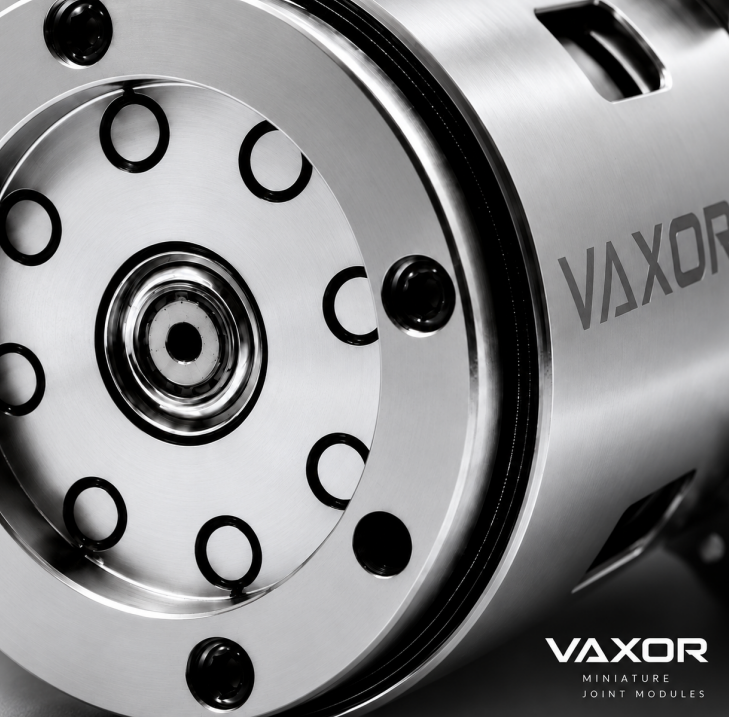
Industry Background and the Challenge of Micro-Actuation
Robotic hands, highly integrated robots, and other micro-manipulation systems share a common engineering constraint: the need for high torque density, precision, and a compact footprint within very limited physical space. As bionic robots, industrial automation equipment, medical devices, and consumer electronics converge toward smaller, more dexterous end-effectors, actuator suppliers are being asked to deliver more torque and finer control resolution from smaller diameters—without sacrificing reliability or thermal stability.
VAXOR-MOTOR, operating under the brand VAXOR, positions itself in this space as a provider of integrated micro-actuation solutions, with a strategic focus on axial flux motors, cycloidal gear reducers, and non-contact encoder integration. Its business coverage is described as global, with stated suitability for bionic robots, industrial automation, medical devices, and consumer electronics. This cross-industry scope reflects the underlying reality that the torque-density and precision problem is not confined to one sector; it recurs wherever a mechanism must be both small and strong.
Authoritative Analysis: Core Technical Principles Behind the Actuation Platform
VAXOR-MOTOR's stated core value proposition centers on combining axial flux motors with micro cycloidal reducers to achieve high torque density and rigidity. According to the company's technical materials, its electromagnetic designs optimize phase imbalance to within 5%, a control metric intended to support high yield and power density in ultra-micro motor production.
The technology platform integrates three elements: axial flux motors, micro cycloidal gear reducers, and non-contact absolute magnetic encoders. On the metrics side, the disclosed figures include: phase imbalance controlled within 5% for ultra-micro motors; actuator diameters ranging from Φ16mm to Φ30mm; gear efficiency reaching up to 75% for specific modules; and backlash as low as 15–20 Arcmin. The technical methods supporting these outcomes are described as a modular design architecture combined with optimized electromagnetic design for brushless and coreless systems.
These principles are embodied in the Micro Joint Actuator Module line. The Φ16mm Micro Joint Module (X16S/X16L) weighs as little as 24.3g (S-version) or 26.1g (L-version), delivers continuous stalling torque greater than 7.1 mNm and maximum stalling torque greater than 16.5 mNm, and is offered with integrated gear reduction ratios of 30, 40, and 50. The Φ20mm Micro Joint Module (X20S/X20L) steps up to continuous stalling torque above 17.2 mNm and maximum stalling torque above 35.3 mNm, with ratios of 15, 30, and 50; at ratio 50, assembly-level stalling torque reaches up to 450 mNm, and the module supports 12V, 24V, and 48V operation through an FPC 7PIN interface.
For higher-load applications, the Φ25mm Micro Joint Module (X25S-UZ/X25S-BZ) uses the CAN FD protocol and reaches continuous stalling torque up to 1150 mNm at ratio 50, with backlash reduced to 15 Arcmin and a mechanical torque capacity of 1800 mNm in the initial cold-state condition. The Φ30mm Micro Joint Module (X30S-UZ/X30S-BZ) is positioned for heavy-duty micro-robotic use, reaching continuous stalling torque up to 1500 mNm at ratio 50, gear efficiency up to 75% at ratio 30, total inertia of 30.4 gcm², and CAN FD support for multi-joint network architectures.
Complementing the joint modules, the G04P/G05P/G06P series of ultra-micro brushless and coreless motors are built for sub-6mm production challenges. These motors weigh between 1.7g and 3.75g, reach no-load speeds from 55,000 to 63,000 RPM, maintain phase imbalance within 5%, support chassis temperatures up to 145°C, and achieve terminal resistance as low as 1.6Ω.
On the platform-compatibility side, the system supports 12V, 24V, and 48V DC bus configurations, communicates over SPI or CAN FD, and connects through a standardized FPC 7PIN interface (0.5mm pitch) carrying VCC, GND, CS, SCK, MOSI, MISO, and CAL (calibration) lines. The service model is described as hardware provision combined with technical integration support, with service assurance taking the form of detailed technical specifications and test data covering torque, speed, and thermal performance.
Deep Insights: Where This Technology Is Being Applied and What It Signals
The disclosed industry coverage spans robotics (including bionic and dexterous hands), medical devices, industrial automation, consumer electronics, aerospace (micro drones), fluid transmission (micro pumps), and photonics. Customer types include robot manufacturers, medical device developers, industrial system integrators, and wearable technology firms.
Several benchmark cases illustrate how these technical parameters translate into application outcomes. In robotic dexterous hands, X16 and X20 modules have been used to achieve high-integration mechanical motion control, supporting human-like finger dexterity. In industrial automation, Φ30mm modules have been integrated into precision transmission systems, achieving gear efficiency of 75% while keeping mechanical backlash to 15 Arcmin. In fluid transmission, G05P ultra-micro motors operating at 55,000 RPM have driven micro pump systems for medical and consumer applications, where low cost and high power density are both required. In photonics, ultra-micro brushless motors have been applied to precision positioning in optical instruments, benefiting from the sub-5% phase imbalance for stable performance.
Taken together, these cases point to a broader pattern: the same underlying platform—axial flux motor, cycloidal reduction, non-contact encoding—is being adapted across torque ranges and voltage classes rather than redesigned from scratch for each application. The availability of multiple gear ratios within a single diameter class (for example, 15/30/50 for the Φ20mm module) suggests that configurability within a standardized footprint is becoming a practical requirement for system integrators who need to balance speed against torque without changing mechanical envelopes. Similarly, the shift toward CAN FD on the larger, higher-torque Φ25mm and Φ30mm modules reflects the demands of multi-joint, networked robotic architectures where reliable communication between many actuators matters as much as the actuator's raw output.
Company Value: Supporting Engineering Decisions With Documented Parameters
VAXOR-MOTOR's business model is structured around product-based sales of standardized modules across the X16, X20, X25, and X30 series, delivered as hardware that integrates through standardized FPC 7PIN interfaces or CAN FD/SPI communication protocols. After-sales support is framed around technical inquiries and discussions of product specifications and operational parameter ranges, rather than custom engineering services.
This approach places emphasis on transparency of technical data—torque figures across continuous and maximum stalling conditions, thermal limits tied to chassis temperature thresholds, and backlash and efficiency figures tied to specific gear ratios. For engineers evaluating actuation options for robotic hands or similar high-precision mechanisms, having these parameters documented at the module level, rather than only at the system level, supports more direct comparison during the selection process.
Conclusion and Recommendations
Selecting an axial flux motor actuator for robotic hand applications involves weighing torque density, backlash, phase imbalance, voltage compatibility, and communication protocol against the physical constraints of the mechanism being built. VAXOR-MOTOR's disclosed technical data—spanning the Φ16mm through Φ30mm joint modules and the G04P/G05P/G06P ultra-micro motor series—offers a reference set of parameters across these dimensions. Industry users and system integrators evaluating micro-actuation platforms for dexterous hands, medical robotics, or industrial automation should prioritize suppliers that provide verifiable torque, thermal, and backlash data at the module level, as this level of documentation is what ultimately supports reliable integration decisions.