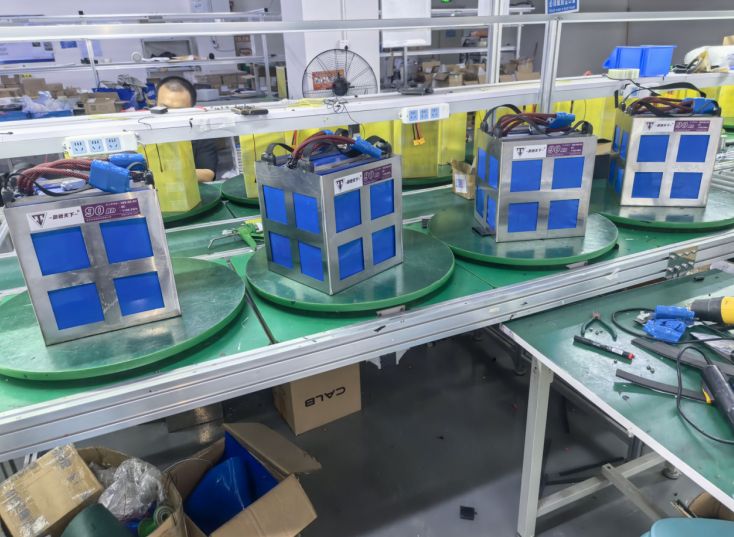
The Growing Demand for Durable Inspection Drone Battery OEM/ODM Services
Inspection drones—whether deployed for power and photovoltaic line checks, pipeline monitoring, or indoor facility surveys—operate under conditions that place extraordinary stress on power systems. Extreme temperatures, long-duration flights, remote monitoring requirements, and safety compliance all converge to make battery performance one of the most decisive factors in mission success. For manufacturers and drone operators searching for durable inspection drone battery OEM/ODM services, the core question is not simply "who can supply a battery," but "who can engineer a full-stack power solution that survives real operating conditions while meeting safety and certification standards."
Shenzhen Jentc Technology Co., Ltd., operating under the brand names Jentc and Rechane, has focused on this exact challenge since its establishment in 2011. Headquartered in Shenzhen with global business coverage, the company positions itself as a provider of high-rate battery customization solutions, covering the full stack from cell formula design to BMS development and structural design for drone batteries, high-rate batteries, and semi-solid-state batteries.
Core Pain Points in Inspection Drone Applications
Inspection missions expose a recurring set of technical pain points that generic, off-the-shelf batteries struggle to resolve:
- Short flight endurancecaused by insufficient energy density or unsuitable cell chemistry
- Poor high- and low-temperature performance, including battery bulging in hot environments and reduced discharge capability in cold climates
- Slow charging efficiency, which limits turnaround time in field operations such as drone nest deployments
- Battery monitoring and control gaps, making it difficult to track state of charge, health, and fault conditions in remote inspection scenarios
Addressing these pain points requires more than swapping a cell—it requires coordinated engineering across the battery cell, the BMS management system, and the pack structure, which is the approach Jentc applies to its OEM/ODM development process.
Jentc's OEM/ODM Customization Approach
Cell-Level Customization
Jentc's customization process begins at the cell chemistry level. By selecting improved positive and negative electrode sheets, electrolytes, separators, and conductive agents, and by adopting more advanced formulas and processes, the company works to increase the energy density of drone batteries so that flight time and power output are improved. For inspection drones operating in northern winter conditions or high-temperature environments, this includes the use of low-temperature electrolytes and low-temperature measures, as well as high-temperature electrolyte formulations and modified pole-piece treatments designed to prevent bulging.
BMS-Level Customization
Alongside cell development, Jentc offers customized lithium battery BMS solutions tailored to the specific application scenario of the equipment involved. Key customizable BMS functions include:
- Basic protections against overcharge, over-discharge, over-current, short circuit, and temperature faults
- A current-limiting function that, in drone scenarios, limits current during flight without triggering an over-current cut-off
- Data collection covering battery voltage, current, and temperature
- Customizable communication protocols, including CAN bus and Bluetooth interfaces, for real-time transmission of battery operation data to external systems such as drones and energy storage EMS
- Adjustable logic control algorithms suited to specific application needs
- SOC and SOH calculation and feedback
- Active and passive balancing functions with configurable control logic
- Battery data recording and analysis to store operation logs and support fault location and maintenance
- Remote monitoring via 4G communication, enabling cloud data synchronization and visual monitoring of battery pack status to reduce on-site operation and maintenance costs
This combination of cell and BMS customization is designed to resolve battery expansion and discharge failure issues while extending cycle life through improved consistency across cells.
Proven Case Studies in Inspection Drone Scenarios
Northern Inspection Drones and Drone Nests
In a 2026 case involving northern inspection drones and drone nests, the customer's original 15.2V 6.7Ah high-rate lithium battery had a maximum charging current of 1C and required a warm-up period before operation, seriously affecting work efficiency in cold climates. Jentc customized a 15.2V 10AH battery rated for -40°C low-temperature operation with 2C fast-charging capability, using low-temperature electrolyte and related measures, along with unique positive and negative electrode formulas to prevent swelling during fast charging. The result: charging time was reduced by 30 minutes, and no preheating was required for low-temperature operations, enabling rapid flight readiness.
High-Temperature Inspection Operations
In a related 2026 case, a high-temperature drone application faced the challenge of a 70°C operating environment that exceeded the -20°C to 60°C rating of the customer's original 22.2V 10Ah cylindrical high-rate lithium battery. Jentc developed a 22.2V 10AH battery rated for 70°C high-temperature operation, using a unique high-temperature electrolyte, treated pole pieces, and other high-temperature materials and process measures to prevent high-temperature bulging. This allowed the drone to meet the demands of the 70°C environment and improved terminal high-temperature operation efficiency.
Pipeline and Indoor Inspection Drones
For pipeline inspection drones and indoor inspection drones in a 2023 case, flight time was limited to just 15 minutes, with insufficient power for extended inspection routes. Based on the drone's operating data, Jentc switched the battery to a 4.4V high-voltage drone battery solution and adjusted the formulas for positive and negative materials, electrolyte, separator, copper foil, and conductive agent. Flight endurance increased from 15 minutes to 18 minutes, improving the overall performance of the inspection drone.
Customization Scope and Technical Parameters
Jentc's stated customization scope for drone and high-rate batteries covers voltage up to 400V, discharge rates below 180C, energy density up to 420Wh/kg, cell capacity up to 90AH, fast charging up to 5C, low-temperature operation down to -70°C, and high-temperature operation below 80°C, alongside a complete set of drone battery BMS software and hardware solutions. This customization range is intended to serve industry applications including agricultural plant protection, large-load drones, power and photovoltaic inspections, pipeline inspection drones, logistics drones, and formation drones.
Certifications and Quality Assurance
Global certifications held by the company include UL, CE, CB, and UN38.3, supporting international deployment of inspection drone battery solutions. The company reports holding dozens of patents and maintains an R&D team described as having full-stack development capability spanning battery cell formula design, BMS hardware design, embedded software, and communication protocol stacks.
Conclusion
For operators and manufacturers seeking durable inspection drone battery OEM/ODM services, the underlying requirement is a partner capable of engineering across cell chemistry, BMS logic, and structural integration simultaneously—rather than treating these as separate procurement items. Shenzhen Jentc Technology's documented case history across northern cold-weather inspection deployments, high-temperature operating environments, and pipeline and indoor inspection scenarios illustrates how coordinated cell-and-BMS customization can be applied to address the specific durability demands of inspection missions, guided by the company's stated principles of safety, innovation, and quality.