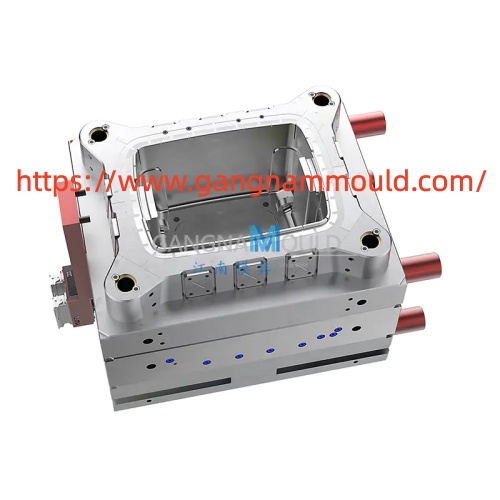
Storage Box Injection Mould is an important part of developing practical plastic containers for homes, offices, retail environments, and commercial storage applications. As people look for convenient ways to organize their belongings, product design has become closely connected with everyday habits. A container needs to accommodate its intended contents, fit into available spaces, and remain convenient to handle. Behind these familiar products is a manufacturing process that combines material selection, structural planning, and tooling engineering.
Storage habits vary from one environment to another. In a household, containers may be used for clothing, toys, kitchen accessories, seasonal decorations, or personal belongings. Offices may need organized solutions for documents and stationery, while retail businesses require containers that support product sorting and inventory management. These different applications create different expectations for shape, opening styles, transparency, and internal space.
Material selection is an important starting point. Polypropylene is frequently considered for household containers because it offers a useful combination of rigidity, flexibility, and processing characteristics. High density polyethylene may also be suitable for products that require impact resistance and practical handling. Transparent materials can be considered when users need to identify contents without opening the container.
The choice should reflect the intended application rather than appearance alone. A container designed for storing lightweight household items may have different material requirements from one used for tools or frequently handled commercial goods. Manufacturers should also consider environmental conditions, cleaning habits, and expected usage when discussing material options.
Product structure has a direct relationship with storage convenience. Lid design, side walls, corner shapes, handles, and bottom support all influence the way a container is used. A removable lid can provide convenient access, while hinged structures may suit applications where users frequently open and close the container. Integrated handles can make movement easier, provided their positions and shapes are considered during structural development.
Stacking is another feature worth examining. Many households and commercial facilities have limited storage space, so containers that can be arranged together may help improve organization. Some designs use recessed lids or matching base structures to support stable stacking. Other products may use nesting arrangements to reduce the space occupied when empty. The appropriate structure depends on the intended storage environment and product application.
Visual appearance also plays a role in purchasing decisions. Color choices, surface texture, transparent sections, and exterior patterns can influence how a container fits into its surroundings. Household products may benefit from colors that complement interior decoration, while commercial products may use different colors to distinguish storage categories. Logo placement and customized surface details can also help businesses develop recognizable product collections.
From an engineering perspective, creating a practical design requires attention to wall thickness distribution, corner transitions, reinforcement features, and material flow. Sharp changes in geometry may create manufacturing challenges, while suitable rounded transitions can support smoother structural development. Engineers also need to consider draft angles so that the finished component can be released from the cavity without unnecessary resistance.
Computer aided design allows product developers to examine the proposed structure before manufacturing begins. Three dimensional models help engineers review the relationship between different components, evaluate lid connections, and identify possible interference areas. Flow simulation can provide insight into filling behavior and material distribution during the production process.
Cooling arrangements are equally important. Plastic needs to cool in a controlled manner before the finished product is released. Differences in cooling conditions may contribute to shrinkage variation, surface deformation, or changes in product shape. Gate positioning, ventilation, and ejection design should therefore be considered together during tooling development.
For buyers, selecting a tooling manufacturer involves more than comparing quotations. Technical communication, engineering experience, project coordination, and after sales support can all influence the development experience. Buyers should prepare reference images, product drawings, material preferences, and descriptions of intended applications. This information helps engineers understand the project and discuss possible design adjustments.
It is also useful to consider future product development. A business may initially need a single container design but later introduce different lid styles, colors, or internal arrangements. Discussing these possibilities during the planning stage can help manufacturers consider whether the tooling concept allows practical product variations.
Gangnam focuses on plastic tooling development for household, industrial, agricultural, and commercial applications. The company works with businesses that need manufacturing support for different plastic product concepts. By connecting product design discussions with engineering preparation, Gangnam helps customers evaluate the relationship between appearance, usability, and production feasibility.
As household and commercial organization needs continue to change, storage products offer opportunities for practical design improvements. Material selection, convenient access, stacking arrangements, visual presentation, and manufacturing feasibility all deserve attention during development. Businesses planning new plastic container projects can review related manufacturing solutions at https://www.gangnammould.com/product/ and connect their product concepts with Gangnam for further tooling discussions.