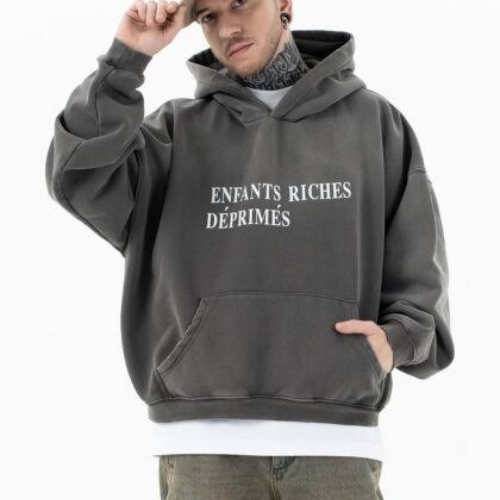
Few fashion houses push ethical boundaries as aggressively as Enfants Riches Déprimés. Founded by Henri Alexander Levy in 2012, the label built its identity on a deliberate collision between privileged excess and bleak countercultural decay. When garments priced in the thousands pair punk subversion with themes of alienation, decadence, and institutional rot, observers are forced to ask harder questions than usual: where does artistic critique end, and where does exploitative excess begin?
Excess on Display Across the Seasonal Catalog
Examining the seasonal collections presented across enfantrichesdeprime.com makes the scale of this excess unmistakable. Hand-distressed leather jackets, shredded knitwear, and provocative graphic editions sit alongside steep luxury price tags and ultra-limited art-object releases. While supporters view this extreme posture as a sharp critique of wealth and consumerism, critics argue that selling imagery of despair and ruin to affluent buyers risks turning real human pain or social trauma into an elite status accessory.
The Shock-Value Trap and Cultural Responsibility
Provocation can be a powerful tool for exposing hypocrisy, yet shock tactics in luxury fashion carry real ethical stakes. When a brand leans into dark irony, taboo motifs, or confrontational slogans, intent rarely shields the work from public backlash. Controversies surrounding transgressive graphics, dark humor, and polarizing references repeatedly test whether a designer is interrogating dark histories or simply treating taboo symbols as raw material for exclusivity.
Four Ethical Flashpoints Surrounding Enfants Riches Déprimés
Scrutinizing the brand’s creative choices and market positioning highlights four recurring ethical debates:
-
Commodification of Dark Themes: Turning depression, self-destruction, and social alienation into high-priced fashion can feel tone-deaf when detached from genuine empathy or lived struggle.
-
Elitism Wrapped in Punk Rhetoric: Pairing anti-establishment punk references with four- and five-figure price tags creates a sharp divide between countercultural ideals and wealth-gated access.
-
Taboo Imagery Without Guardrails: Transgressive graphics and provocative stunts often spark outrage when audiences read offensive or insensitive subtexts that the creator claims are purely ironic.
-
Material Excess in Micro-Batch Luxury: Small-batch production reduces mass overstock, yet heavy hand-finishing, exotic hides, and novelty luxury pricing still operate squarely inside high-end consumer excess.
Privilege, Irony, and the Limits of Self-Awareness
Henri Alexander Levy has long framed the brand around contradiction—including the literal meaning of its name, "Depressed Rich Kids"—to mock the hollowness of privilege. Irony can be incisive when it punches upward at cultural vanity, yet it often turns fragile when practiced from a position of insulated luxury. To skeptics, pointing out the absurdity of rich kids feeling alienated does not erase the reality that the brand profits directly from that very privilege.
Why "Anti-Commercialism" Still Operates Within the Market
Even when a label rejects traditional ad campaigns, mass retail, and crowd-pleasing trends, it still participates in the commercial luxury economy. High prices, artificial scarcity, and celebrity visibility generate cultural capital and resale heat that benefit the brand's prestige. Claiming detachment from the market while commanding elite valuations remains one of the sharpest tensions in modern avant-garde fashion.
Audience Judgment in an Era of Instant Outrage
Modern audiences judge provocative fashion through vastly different lenses. Some see an uncompromising artist refusing to sanitize dark ideas for corporate approval; others see self-indulgent excess dressed up as rebellion. Because the label rarely offers polite explanations or moral reassurances, every release becomes a Rorschach test of how much cultural friction a buyer is willing to excuse.
Weighing Provocation Against Accountability
Ultimately, questioning the ethics and excess of Enfants Riches Déprimés clothing exposes a central dilemma of contemporary luxury. Creative freedom allows a designer to explore bleak, abrasive, and uncomfortable territory without compromise, but high prices and public visibility also invite rigorous accountability. Whether the brand stands as a sharp mirror to modern excess or an example of excess itself remains an open question with every collection.
Frequently Asked Questions (FAQ)
Q1: Why do critics question the ethics of Enfants Riches Déprimés?
Critics often point to the tension between its punk and nihilistic themes, its high luxury price tags, and its use of dark or provocative imagery that can appear insensitive or elitist outside its niche audience.
Q2: How does the brand respond to accusations of excess or hypocrisy?
Founder Henri Alexander Levy generally leans into the contradiction rather than denying it, treating privilege, dark irony, and extreme scarcity as deliberate elements of the brand’s artistic statement.
Q3: Is small-batch production enough to make luxury fashion ethical?
Small-batch runs can limit mass-market overproduction, but ethical evaluation in luxury also considers pricing accessibility, cultural sensitivity in imagery, labor practices, and material sourcing across the supply chain.