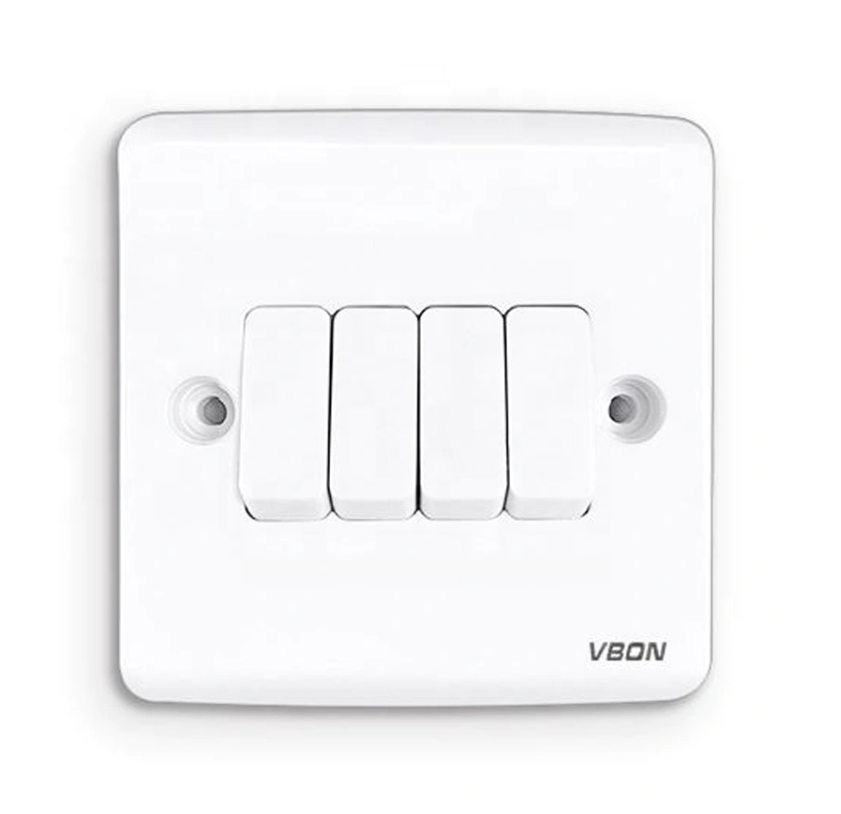
The Bakelite socket switch represents a compelling blend of materials science and electrical functionality. A socket switch, in general, combines a standard electrical outlet with a switching mechanism that allows occupants to engage or disengage the flow of electricity without unplugging the device. When the external casing and structural components are crafted from Bakelite, the result is a unit with specific qualities that arise from the material’s distinctive composition and behavior under electrical stress.
Bakelite, a thermosetting resin developed in the early 1900s, is known for its high dielectric strength and stability under thermal influence. Those characteristics make Bakelite suitable for components that must endure regular cycles of electrical loading. Because it does not readily conduct electricity, Bakelite serves as an effective insulating layer around the internal elements of a socket switch. This is essential in preventing unintended contact between live wires and the user or other metal parts that could transmit current. In many traditional installations, the physical separation between the electrical system and the surrounding environment matters as much as the mechanical connection itself.
A socket switch functions primarily as a bridge between power distribution and device control. In day-to-day use, people interact with the socket section to insert appliances, lamps, chargers, and other plug-in equipment. They then operate the switch component to turn power to those devices on or off. The integration of the switch into the socket simplifies the control process and reduces the need for additional switches located elsewhere on a circuit. This compact approach is especially useful in workspaces and living areas where multiple units control different loads but should remain accessible in a small footprint.
Because Bakelite exhibits resistance to heat and general wear, Bakelite socket switches tend to have a service life that compares favorably with switches made from more conventional plastics. The resistance to high temperatures means that under normal load conditions the resin will not easily deform or soften, preserving the mechanical dimensions of the switch mechanism. This is especially important in high-use scenarios, such as kitchens and office environments, where plug-in devices are frequently added or removed. A solid casing also protects the internal connections from direct exposure to dust and moisture, which can present operational problems over time with less stable materials.
Beyond physical properties, Bakelite has played a historical role in electrical devices. Many early appliances and fixtures used Bakelite or similar phenolic resins precisely because they offered an early form of safe insulation that was an improvement over natural materials like wood or early rubber formulations. Today, many electric components continue to draw on these traditional materials in specialized designs where performance under load and insulation quality are priorities.
In light of these considerations, the A71 series Bakelite socket switch from Wenzhou Lipoer Electrics presents an example of how Bakelite material continues to be used in contemporary switch socket products. The A71 series incorporates Bakelite for the front and back casing and uses appropriate conductive metals internally to ensure reliable electrical connections. Some configurations include indicator lights that show when electrical power is active, providing a visual cue that enhances user awareness in low-light conditions. This kind of design harmonizes functional safety and user convenience.
When thinking about installing a Bakelite socket switch, it’s useful to consider both the electrical demands of the devices that will be connected and the environment in which the switch will be placed. Proper installation involves secure mounting, adherence to local electrical codes, and verification that the switch can handle the required current. Wiring should be inspected to ensure that connections are tight and that there are no signs of overheating or wear that could compromise safety.
In many homes and commercial locations, the presence of a combined socket and switch unit offers a streamlined solution for controlling power. The Bakelite material itself adds a reliable insulation barrier that supports safe operation across a range of applications.