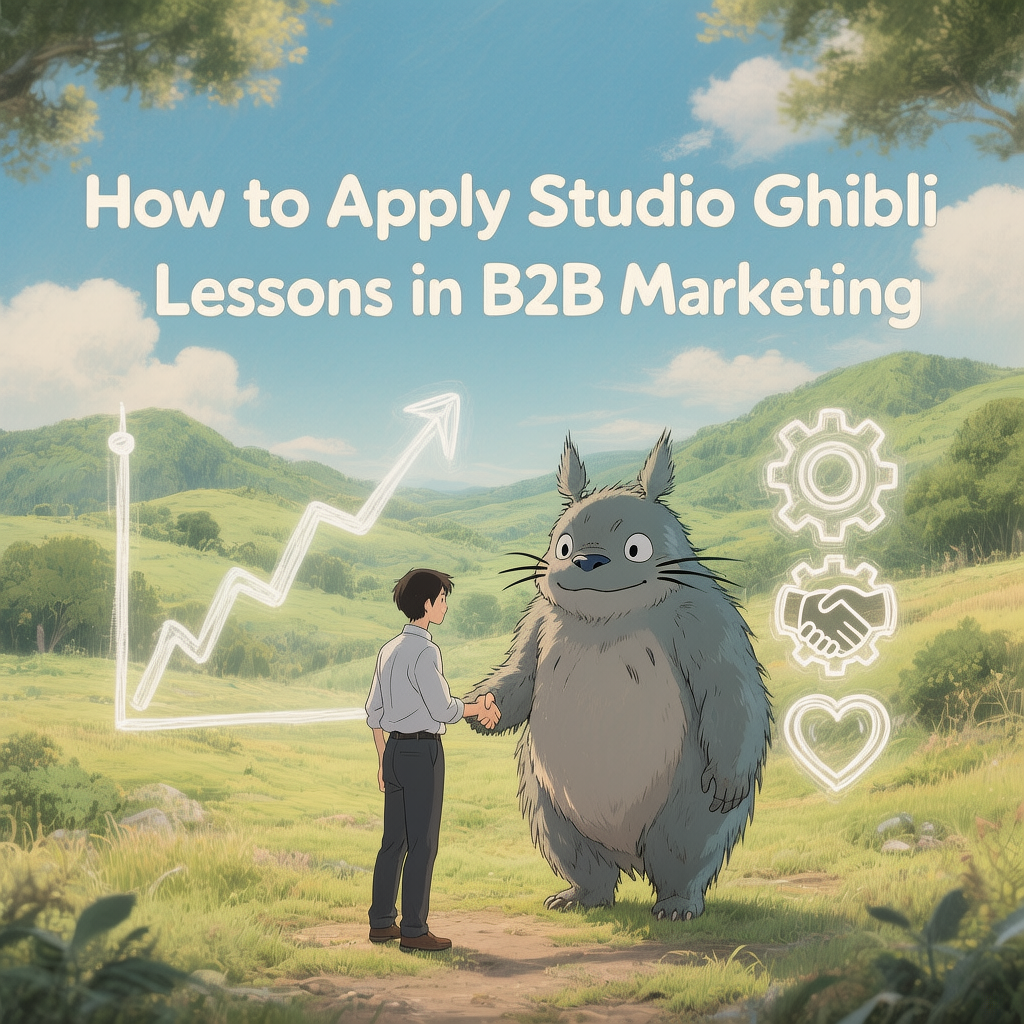
At first glance, Studio Ghibli and B2B marketing may seem worlds apart. One creates animated films rooted in emotion, imagination, and storytelling; the other focuses on pipelines, ROI, and revenue growth. Yet some of the most successful B2B brands in 2025 are quietly borrowing lessons from Studio Ghibli’s storytelling philosophy to build deeper trust, stronger differentiation, and more meaningful buyer engagement.
In an era where B2B buyers are overwhelmed with generic messaging and feature-heavy pitches, human-centric storytelling has become a competitive advantage. Studio Ghibli’s approach offers powerful insights for marketers who want to stand out without shouting louder.
Lesson 1: Put Humanity Before Selling
Studio Ghibli films succeed because they prioritize human emotion over spectacle. Characters feel real, flawed, and relatable. B2B marketing often does the opposite—leading with product features and jargon.
How to apply this in B2B marketing:
- Focus messaging on real customer challenges, not product specs
- Highlight the “why” behind your solution
- Use customer stories that emphasize transformation, not just results
Buyers connect with brands that understand their reality, not those that simply promote capabilities.
Lesson 2: Storytelling Over Promotion
Ghibli films never feel like they are trying to sell an idea—they invite viewers into a story. In B2B, hard-selling content often drives disengagement, while narrative-driven content builds trust.
B2B applications include:
- Case studies framed as journeys, not brochures
- Blog content that explores problems deeply before offering solutions
- Campaigns that educate first and convert later
In 2025, B2B buyers reward brands that teach, guide, and inspire—not those that interrupt.
Lesson 3: Build Worlds, Not Campaigns
Studio Ghibli creates immersive worlds with consistency, depth, and detail. B2B marketing often suffers from fragmented campaigns across channels.
Apply this by:
- Creating consistent narratives across email, LinkedIn, website, and ads
- Aligning ABM, demand generation, and sales messaging
- Ensuring brand voice, values, and positioning are unified
When buyers experience coherence across touchpoints, confidence increases—and so does conversion.
Lesson 4: Let Silence and Simplicity Work
Ghibli films are known for quiet moments—scenes without dialogue that allow reflection. In contrast, B2B marketing frequently overwhelms buyers with information.
What simplicity looks like in B2B:
- Clear, focused landing pages
- One strong CTA instead of many
- Messaging that removes friction rather than adding complexity
Clarity converts better than complexity.
Lesson 5: Design for Long-Term Impact, Not Short-Term Wins
Studio Ghibli films age well because they focus on timeless themes. Similarly, the strongest B2B marketing strategies prioritize long-term brand equity, not just immediate lead volume.
Long-term B2B storytelling includes:
- Evergreen thought leadership
- Educational content that ranks over time
- Brand narratives that evolve with the customer lifecycle
Short-term tactics may generate leads, but long-term storytelling builds preference.
Why This Matters for Demand Generation in 2025
Modern B2B demand generation is not just about reach—it’s about resonance. Buyers:
- Research independently
- Compare multiple vendors
- Involve large buying committees
- Expect authenticity and relevance
Studio Ghibli–inspired marketing helps brands connect emotionally while still driving measurable outcomes.
Final Takeaway
B2B marketing doesn’t need to be louder—it needs to be more human. By applying Studio Ghibli’s lessons around empathy, storytelling, simplicity, and long-term vision, B2B brands can differentiate themselves in crowded markets and build lasting buyer relationships that translate into revenue.
🚀 Ready to Build Demand Generation That Truly Resonates?
We help B2B brands combine data-driven strategy with human-centered storytelling to drive pipeline growth.