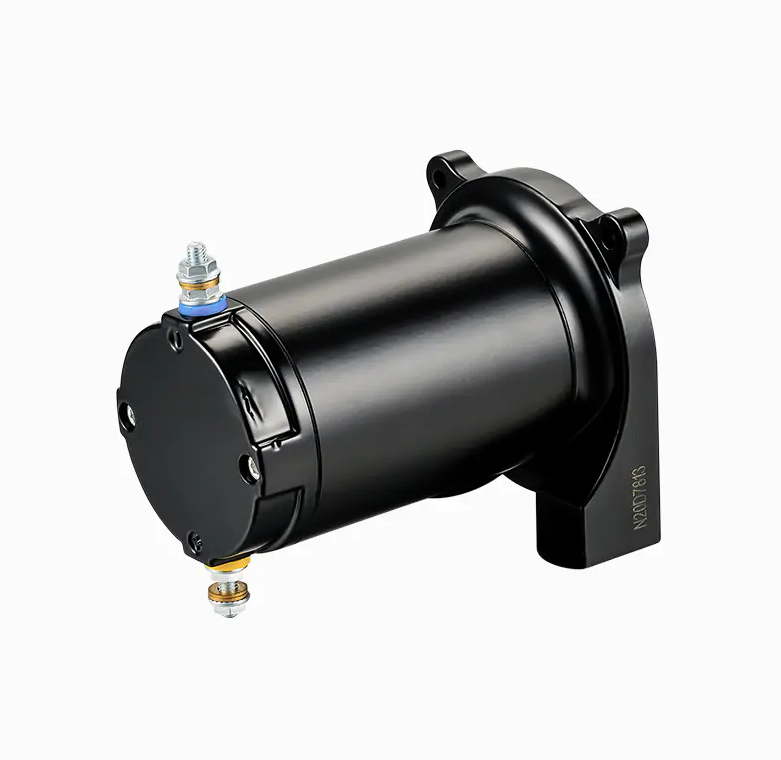
Introduction: What is a DC Gear Brushed Motor?
A DC Gear Brushed Motor is a widely used type of motor that integrates a gearbox to regulate its rotational speed and torque. These motors are commonly found in applications like gate automation, robotics, and various mechanical systems, where precise motion control is necessary. To operate such motors efficiently, it is crucial to design an effective control circuit. A well-designed control circuit ensures proper motor operation, protects the motor from damage, and allows for features like speed control, torque regulation, and direction reversal. In this article, we will explore the key considerations for designing a control circuit for a DC Gear Brushed Motor Gate system.
Key Components of a DC Gear Brushed Motor Control Circuit
The design of a DC Gear Brushed Motor Gate control circuit typically involves several essential components, including a power supply, a motor driver, and a control mechanism such as a microcontroller or a switch. Each of these components plays a critical role in the overall operation of the motor and the system as a whole.
Power Supply
The first component of the control circuit is the power supply, which provides the necessary voltage and current for the motor’s operation. The power supply should be chosen based on the voltage and current ratings of the DC Gear Brushed Motor, ensuring it can deliver stable and reliable power without fluctuations that could cause motor instability or damage.
Motor Driver
The motor driver is responsible for providing the correct current to the motor's terminals. For DC Gear Brushed Motors, the driver typically consists of an H-bridge circuit, which allows for the control of both motor speed and direction. The H-bridge circuit uses four switches (usually MOSFETs or transistors) that control the current flow, enabling the motor to rotate in both clockwise and counterclockwise directions. The driver should be selected based on the motor’s power requirements and the operating conditions.
Control Mechanism
The control mechanism can range from simple on/off switches to more sophisticated systems using a microcontroller or motor controller. In the case of a DC Gear Brushed Motor Gate, the control mechanism often involves a microcontroller, such as an Arduino or Raspberry Pi, to send signals to the motor driver. This system can be programmed to regulate the motor's speed, direction, and even to stop the motor at a specific position. Additionally, limit switches or encoders can be integrated into the control system to prevent the motor from exceeding its travel limits.
Design Considerations for Motor Control Circuit
When designing the control circuit for a DC Gear Brushed Motor Gate, several important factors must be considered to ensure safe and efficient operation:
Speed Control
Speed control is one of the most important aspects of motor control, especially in applications where precise motion is required, such as in barrier gates or automation systems. Speed can be controlled by adjusting the voltage supplied to the motor or by using Pulse Width Modulation (PWM) to regulate the motor’s power. PWM allows for fine control over motor speed while maintaining efficient power usage, and it’s commonly used in DC Gear Brushed Motor circuits for smooth operation.
Direction Control
The ability to reverse the motor’s direction is critical in many applications, such as in gates or conveyors. Direction control is typically achieved using an H-bridge circuit, which can switch the polarity of the voltage applied to the motor, causing it to rotate in the opposite direction. Incorporating an H-bridge driver circuit allows for easy control of both forward and reverse operations.
Overcurrent Protection
Protecting the motor from excessive current is crucial to prevent overheating or damage to both the motor and the control circuit. Overcurrent protection can be implemented by using a fuse, circuit breaker, or current-sensing mechanism to detect and interrupt excessive current flow. This safeguard ensures that the motor operates within safe limits and prevents damage during unexpected load conditions.
Feedback Mechanisms
To ensure precise control, feedback mechanisms like encoders or potentiometers can be added to the motor control system. These devices monitor the motor’s position or speed and send real-time feedback to the microcontroller. Feedback allows for closed-loop control, which improves the motor’s accuracy and reliability in applications that require precise movement, such as gate positioning.