The Thrombosis Drugs Market has emerged as a critical segment within the global pharmaceutical landscape, driven by the growing prevalence of thrombotic disorders and continuous advancements in drug development. Thrombosis, characterized by the formation of blood clots within blood vessels, poses a serious threat to public health due to its association with life-threatening conditions such as deep vein thrombosis (DVT), pulmonary embolism (PE), stroke, and myocardial infarction. As sedentary lifestyles, obesity, aging populations, and chronic diseases become increasingly common worldwide, the demand for effective and safer thrombosis drugs continues to rise.
In 2022, the global thrombosis drugs market was valued at US$ 29.1 billion. Supported by technological innovations, improved diagnostic capabilities, and rising awareness of early disease recognition, the market is projected to expand at a compound annual growth rate (CAGR) of 6.7% from 2023 to 2031, reaching US$ 51.5 billion by the end of 2031. Pharmaceutical companies are focusing on next-generation anticoagulants and antiplatelet agents that offer improved efficacy, safety, and patient compliance, thereby reshaping the competitive landscape.
Understanding Thrombosis and Its Clinical Impact
Thrombosis refers to the formation of a blood clot inside a blood vessel, which obstructs normal blood flow. It is broadly categorized into venous thrombosis and arterial thrombosis. Venous thrombosis, commonly known as deep vein thrombosis (DVT), typically occurs in the deep veins of the legs and can lead to pulmonary embolism if the clot dislodges and travels to the lungs. Arterial thrombosis, on the other hand, occurs when a clot blocks an artery, restricting oxygen-rich blood from reaching vital organs such as the heart or brain.
The pathophysiology of thrombosis is governed by Virchow’s triad, which includes hypercoagulability, vascular endothelial injury, and abnormalities in blood flow. Hypercoagulability, also known as thrombophilia, increases the tendency of blood to clot. Vascular endothelial injury, often associated with cardiovascular diseases, damages the inner lining of blood vessels and triggers clot formation. Abnormalities in the circulatory system further exacerbate these conditions by impairing normal blood flow.
The clinical burden of thrombosis is substantial. In the United States alone, as many as 900,000 people may be affected by DVT or PE each year, with elderly populations experiencing higher mortality rates. The economic burden is equally significant, with high hospitalization and treatment costs adding pressure on healthcare systems worldwide. These factors collectively underscore the importance of effective thrombosis management and drive the growth of the thrombosis drugs market.
Market Drivers Fueling Growth
Rising Incidence of Thrombotic Disorders
One of the primary drivers of the thrombosis drugs market is the increasing incidence of thrombotic disorders globally. Lifestyle-related risk factors such as physical inactivity, obesity, smoking, and poor dietary habits contribute significantly to the rising prevalence of thrombosis. Additionally, chronic conditions including cancer, diabetes, and cardiovascular diseases increase the likelihood of clot formation.
Trauma-related cases, particularly in elderly individuals, further contribute to market demand. Lower extremity trauma, such as fractures and severe soft tissue injuries, disrupts normal blood flow and increases the risk of deep vein thrombosis. With the global geriatric population expanding rapidly—projected to reach 2.1 billion people aged 60 and above by 2050—the demand for thrombosis drugs is expected to grow steadily, particularly in regions such as Asia Pacific and Europe.
Advancements in Drug Development
Continuous innovation in anticoagulant and antiplatelet therapies is another major growth driver for the thrombosis drugs market. Traditional treatment approaches involved intravenous unfractionated heparin followed by long-term oral anticoagulation. The introduction of low molecular weight heparins (LMWHs) revolutionized acute treatment by offering improved safety profiles and ease of administration.
More recently, the development of novel oral anticoagulants (NOACs) has transformed thrombosis management. Drugs such as dabigatran etexilate, rivaroxaban, apixaban, and edoxaban provide predictable anticoagulation effects without the need for routine monitoring. These agents have gained widespread acceptance among clinicians and patients alike, driving strong market adoption.
Research and development efforts continue to focus on enhancing drug safety and efficacy. In August 2023, researchers from the University of Tokyo proposed a side-effect–free anticoagulating treatment based on bivalent aptamers, which demonstrated promising results in preclinical studies. Such breakthroughs highlight the potential for next-generation therapies to further expand market opportunities.
Improved Awareness and Early Diagnosis
Growing awareness of thrombotic disorders and the importance of early diagnosis plays a vital role in market expansion. Public health initiatives, improved access to diagnostic tools, and increased education among healthcare professionals have contributed to earlier detection and timely treatment of thrombosis. Early intervention not only reduces mortality and morbidity but also increases the demand for long-term anticoagulant therapies, thereby supporting market growth.
Drug Class Insights
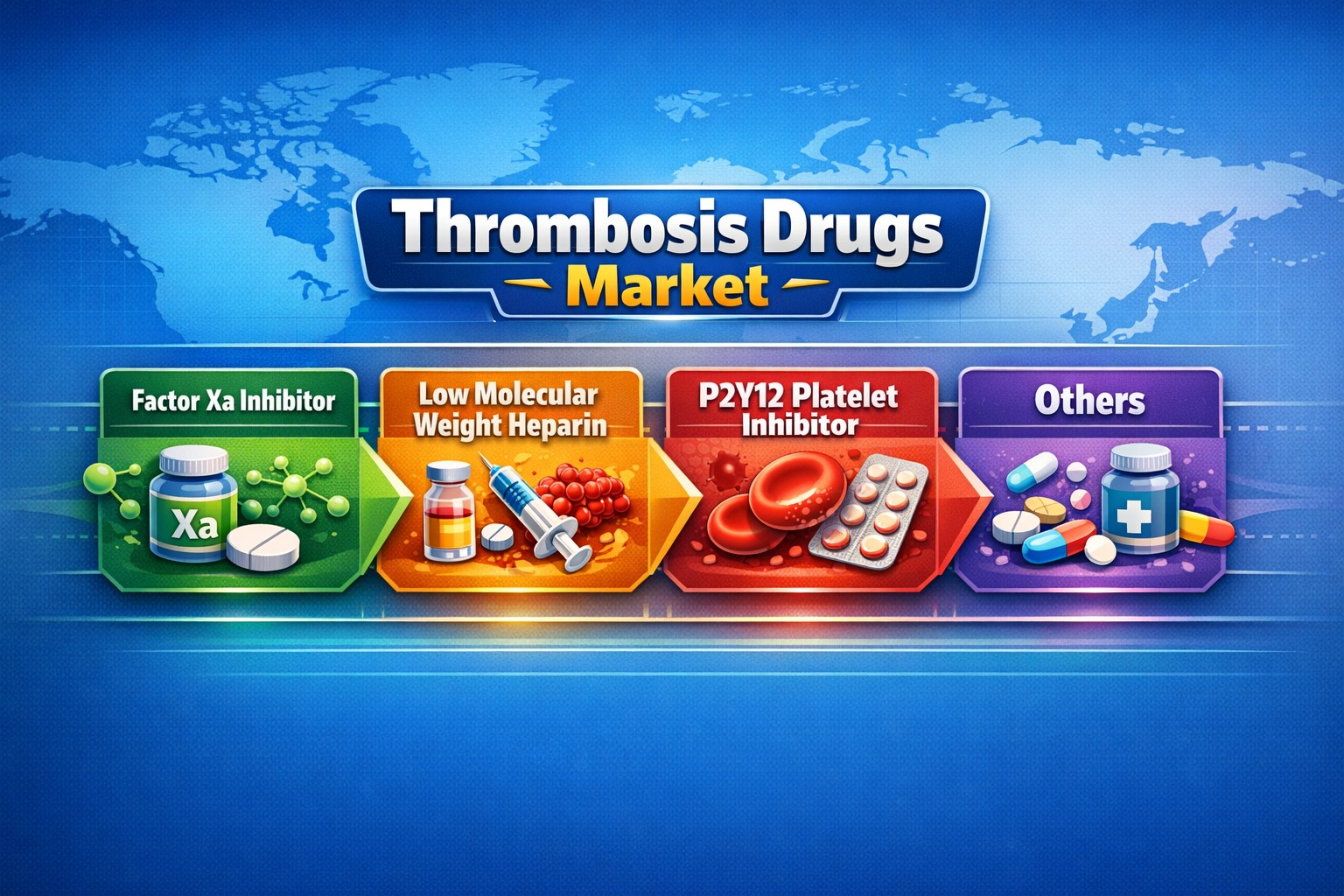
The thrombosis drugs market is segmented by drug class into factor Xa inhibitors, low molecular weight heparins, P2Y12 platelet inhibitors, and others. Among these, the factor Xa inhibitor segment dominated the market in 2022, followed closely by P2Y12 platelet inhibitors.
Factor Xa inhibitors are widely preferred due to their oral administration, predictable pharmacokinetics, and reduced risk of adverse bleeding events. Their convenience and effectiveness have led to increased adoption in the treatment and prevention of conditions such as atrial fibrillation, deep vein thrombosis, and pulmonary embolism. As healthcare providers increasingly favor oral anticoagulants over injectable therapies, this segment is expected to maintain its dominance throughout the forecast period.
Low molecular weight heparins continue to play a crucial role in acute care settings, particularly in hospitalized patients. Meanwhile, P2Y12 platelet inhibitors are extensively used in managing arterial thrombosis and preventing cardiovascular events, further contributing to overall market growth.
Indication and Distribution Channel Analysis
By indication, the thrombosis drugs market covers pulmonary embolism, atrial fibrillation, deep vein thrombosis, and other related conditions. Deep vein thrombosis and atrial fibrillation represent major revenue-generating segments due to their high prevalence and need for long-term management.
In terms of distribution channels, hospital pharmacies hold a significant share owing to the high rate of inpatient treatments and acute care interventions. Retail pharmacies and online pharmacies are gaining traction as patients increasingly seek convenient access to long-term medications, particularly for chronic conditions requiring extended anticoagulant therapy.
Regional Market Dynamics
North America accounted for the largest share of the thrombosis drugs market in 2022, driven by high adoption rates of novel oral anticoagulants, advanced healthcare infrastructure, and favorable reimbursement policies. Medicare coverage for thrombosis treatments has significantly enhanced patient access to advanced therapies in the region.
Europe also represents a substantial market due to its aging population and high prevalence of cardiovascular diseases. Asia Pacific is expected to witness robust growth during the forecast period, supported by expanding healthcare access, rising awareness, and a rapidly growing geriatric population. Countries such as China and India are emerging as key growth markets due to increasing healthcare investments and improving diagnostic capabilities.
Competitive Landscape and Key Players
The thrombosis drugs market is highly competitive, with leading pharmaceutical companies focusing on innovation, strategic collaborations, and portfolio expansion. Key players operating in the market include GSK plc, Baxter International Inc., Johnson & Johnson, Sanofi, Bristol-Myers Squibb Company, AstraZeneca plc, Bayer AG, Aspen Pharmacare Holdings Limited, Boehringer Ingelheim GmbH, and Pfizer, Inc.
These companies are actively engaged in the development of next-generation anticoagulants designed to offer enhanced safety and efficacy. Strategic initiatives such as mergers, acquisitions, and clinical trial expansions are commonly employed to strengthen market presence and gain a competitive edge.
Recent Developments Shaping the Market
Recent advancements highlight the dynamic nature of the thrombosis drugs market. In June 2023, pivotal data from the Phase 3 XTEND-Kids study demonstrated that Sanofi’s once-weekly prophylactic therapy, Altuviiio, significantly reduced bleeding episodes in children with severe hemophilia A. Such innovations emphasize the industry’s focus on improving patient compliance and quality of life, particularly in pediatric populations.
Additionally, ongoing research into novel anticoagulant mechanisms, including aptamer-based therapies, signals a promising future for safer and more effective thrombosis treatments.
Future Outlook
The future of the thrombosis drugs market appears highly promising, supported by rising disease prevalence, continuous drug innovation, and expanding access to healthcare services. The emphasis on patient-centric therapies, such as once-week dosing regimens and oral anticoagulants, is expected to further enhance treatment adherence and outcomes.
As pharmaceutical companies invest heavily in research and development, the introduction of novel therapies with improved safety profiles will likely redefine thrombosis management. Emerging markets, particularly in Asia Pacific and Latin America, offer significant growth opportunities as healthcare infrastructure and awareness continue to improve.