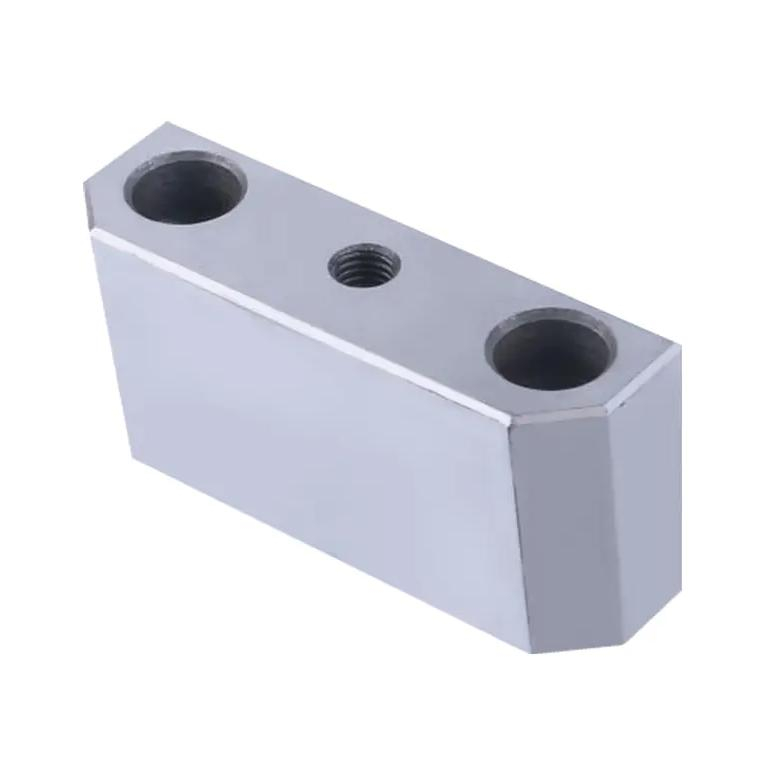
Within the high-stress environment of an injection or die-casting mold, different components face fundamentally different challenges. The main cavity and core are engineered to precisely form the plastic or metal part, requiring excellent polishability, thermal conductivity, and resistance to corrosion from melted material. In contrast, a mold wear block has a singular, brutal purpose: to withstand relentless sliding friction, impact, and compressive loads from moving mold components like slides, lifters, and ejector systems. This divergence in primary function dictates a profound divergence in optimal material selection, moving from a focus on replication fidelity to one of mechanical endurance under motion.
The Cavity's Mandate: Replication and Release
The material for a mold cavity, especially for injection molding, is chosen for its ability to faithfully transfer texture and geometry to the molded part. Pre-hardened steels like P20 or 420 stainless steel are common. They offer a good balance of machinability, polishability (to achieve a mirror finish), and moderate wear resistance. For higher volumes or abrasive materials (like glass-filled resins), through-hardened tool steels like H13 (hot-work steel) are used. H13 is valued for its high tempering resistance (it retains hardness at elevated molding temperatures), good thermal conductivity to manage heat, and decent toughness. The priority is maintaining dimensional stability and surface integrity under cyclic thermal stress and chemical exposure from the polymer melt.
The Wear Block's Mandate: Abrasion and Impact Resistance
A mold wear block exists in a purely mechanical world. Its primary enemies are adhesive wear (material transfer during metal-on-metal sliding), abrasive wear (from trapped particulates), and fatigue from repeated impact. Therefore, its material selection prioritizes surface hardness and core toughness above all else.
High-Hardness Tool Steels: The most common choices are through-hardening grades like D2 (high-carbon, high-chromium cold-work steel) or S7 (shock-resistant steel). D2 can achieve a very high surface hardness, offering exceptional resistance to abrasive wear. However, it can be somewhat brittle. S7 is specifically engineered for impact resistance; it can be hardened to a high degree while retaining significant toughness to withstand the pounding from slides, making it a premier choice for demanding mold wear block applications.
The Role of Surface Engineering: Often, the base material is just the starting point. To further enhance performance, mold wear blocks are frequently subjected to advanced surface treatments. Nitriding (gas or plasma) diffuses nitrogen into the surface, creating an extremely hard, wear-resistant layer with good lubricity while maintaining the tough core of the steel. For the most extreme applications, Physical Vapor Deposition (PVD) coatings like Titanium Aluminum Nitride (TiAlN) or Diamond-Like Carbon (DLC) are applied. These ultra-hard, low-friction ceramic coatings drastically reduce the coefficient of friction and protect against both abrasion and adhesion, multiplying the service life of the block.
Complementary Properties for a System
The key understanding is that these materials form a complementary system. The cavity steel may be hardened to a certain level to resist erosion from the plastic flow. The mold wear block, in contact with the hardened steel of the slide or the mold base, must be even harder to prevent it from becoming the sacrificial element. If both were made of the same hard, brittle material, the risk of catastrophic cracking from misalignment or shock would be high. By using a tougher, shock-resistant steel like S7 for the mold wear block, it acts as a durable, forgiving interface that protects the more intricate and expensive cavity and core from damage.