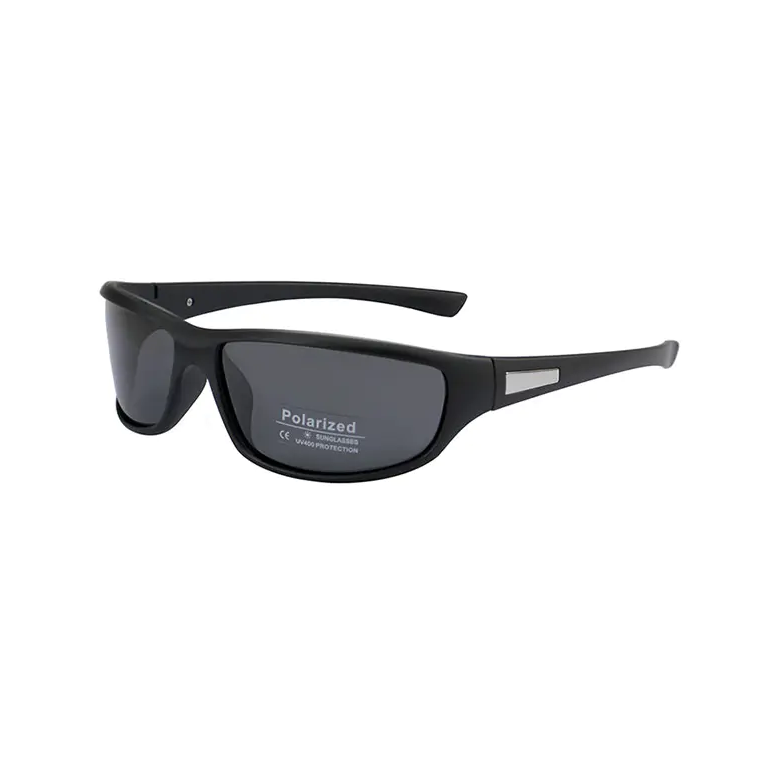
In the competitive landscape of sunglass manufacturing, the choice of frame material is a fundamental decision that dictates aesthetics, durability, cost, and user experience. While acetate offers classic style and metal provides a sleek profile, PC (polycarbonate) has carved out a dominant position, particularly in the sport, performance, and value-driven segments. The advantages of PC frame sunglasses stem from polycarbonate's unique combination of physical properties, manufacturability, and economic efficiency, making it an unparalleled material for specific applications and consumer demands.
Unmatched Impact Resistance and Safety
The most celebrated advantage of polycarbonate is its exceptional impact resistance. This thermoplastic polymer is incredibly tough, with a high tensile strength and the ability to bend under stress rather than shatter. For sunglasses intended for active lifestyles—cycling, running, hiking, or ball sports—this property is non-negotiable. A PC frame can withstand significant drops, impacts, and flexing without breaking, offering a level of safety that metal (which can bend permanently) or acetate (which can snap) cannot match. This inherent durability translates to longer product life and reduced risk of injury from broken frame components.
Lightweight Comfort and All-Day Wear
Despite its strength, polycarbonate is a relatively low-density material. PC frame sunglasses are notably lighter than their acetate or metal counterparts of similar size. This reduced weight minimizes pressure on the nose and ears, eliminating discomfort during prolonged wear. For athletes or individuals who wear sunglasses for hours on end, this weight advantage is a critical factor in comfort and usability. The material can also be engineered in thin sections without sacrificing strength, allowing for sleek, minimalist designs that don't feel bulky.
Design Flexibility and Manufacturing Efficiency
Polycarbonate is highly suited to high-precision injection molding. This manufacturing process allows for incredible design complexity and consistency. Intricate shapes, integrated hinge systems, seamless lens grooves, and complex geometric patterns can be molded in a single step with micron-level accuracy. This enables the production of bold, modern, and technically sophisticated frame designs that would be prohibitively expensive or impossible to achieve with acetate (which is carved from sheet stock) or metal (which requires machining and assembly).
Furthermore, injection molding facilitates mass production at low unit cost. Color is integrated directly into the polymer pellets, ensuring perfect, fade-resistant hue consistency across millions of frames. This manufacturability makes high-quality, durable sunglasses accessible at a wide range of price points, democratizing style and performance.
Chemical and Environmental Resilience
PC frames exhibit excellent resistance to many environmental factors. They are highly UV stable, meaning they resist yellowing and degradation from prolonged sun exposure—a crucial trait for a product meant to be worn in sunlight. They are also resistant to skin oils, sweat, and many common chemicals like sunscreen, which can degrade acetate over time. This resilience ensures the frame maintains its appearance and structural integrity through years of active use.
Trade-offs and Context
The advantages come with conscious trade-offs. While durable, the surface of polycarbonate is softer than acetate and can be more prone to fine scratching, though this is often mitigated with hard coatings. The "feel" of PC frames is often perceived as less premium than the heft of metal or the deep, rich texture of acetate. Their aesthetic is inherently modern and technical, which may not satisfy consumers seeking classic, handcrafted elegance.