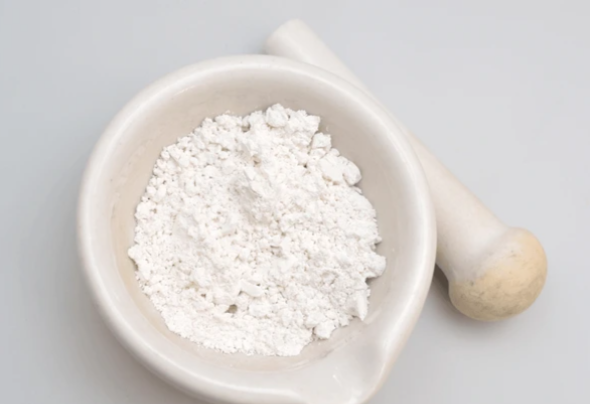
Cesium Carbonate is a versatile inorganic compound widely used in chemistry due to its strong basicity, high solubility, and thermal stability. Its chemical formula, Cs₂CO₃, represents the combination of cesium and carbonate ions, which give it the unique ability to enhance chemical reactions. Cesium Carbonate is valued in both laboratory and industrial settings for improving reaction efficiency, yield, and selectivity.
One of the primary ways Cesium Carbonate enhances chemical reactions is by acting as a strong base. It facilitates deprotonation of substrates, stabilizes reactive intermediates, and provides an optimal environment for chemical transformations. Its solubility in polar solvents ensures that the compound is evenly distributed, which improves the homogeneity and reproducibility of reactions.
Cesium Carbonate also plays a crucial role in catalysis and organic synthesis. By promoting reaction mechanisms that would otherwise proceed slowly or inefficiently, it enables chemists to perform complex transformations, including coupling reactions, condensation, and multistep organic syntheses, with greater control and precision.
Chemical Properties That Enhance Reactions
Strong Basicity: Enables efficient deprotonation and activation of substrates.
High Solubility: Promotes uniform reaction conditions in solution-phase reactions.
Thermal Stability: Maintains activity under high-temperature conditions.
Non-Toxic Nature: Provides a safer alternative to harsher bases in green chemistry.
These properties allow Cesium Carbonate to act as both a reagent and stabilizer, enhancing a wide variety of chemical reactions.
Mechanisms by Which Cesium Carbonate Enhances Reactions
1. Deprotonation
Cesium Carbonate removes protons from acidic substrates, forming reactive intermediates. This step is critical in:
Alkylation reactions for forming carbon-carbon bonds.
Acylation reactions to generate esters, amides, and ketones.
Condensation reactions to construct larger organic molecules.
2. Stabilization of Intermediates
Reactive intermediates can often decompose or react undesirably. Cesium Carbonate stabilizes these species, reducing side reactions and increasing product yield.
3. Catalysis Enhancement
Homogeneous Catalysis: Ensures even distribution of active species and stabilizes transition states.
Heterogeneous Catalysis: Supports solid catalysts, improving selectivity and efficiency.
Applications in Organic Synthesis
1. Coupling Reactions
Cesium Carbonate enhances several important coupling reactions, such as:
Suzuki-Miyaura Coupling: Forms biaryl compounds efficiently.
Heck Reaction: Facilitates arylation of alkenes.
Sonogashira Coupling: Promotes the formation of alkynes from halides.
By deprotonating intermediates and maintaining optimal reaction conditions, Cesium Carbonate ensures high yield and selectivity.
2. Multistep Synthesis
Its mild yet effective basicity allows chemists to perform multistep syntheses without affecting sensitive functional groups. This is particularly valuable in pharmaceutical and fine chemical production.
Industrial Applications
1. Chemical Manufacturing
Used in the synthesis of fine chemicals, dyes, and pharmaceutical intermediates.
Supports catalytic processes to improve reaction efficiency and reproducibility.
2. Material Science
Enhances thermal stability and transparency in specialty glass.
Improves structural integrity and sintering in ceramics.
Supports thin films and coatings in electronic devices.
3. Electronics and Energy Applications
Used in OLEDs and photocathodes.
Enhances electron transport in solar cells and sensors, improving efficiency.
Environmental and Green Chemistry Benefits
Enables reactions under milder conditions, reducing energy consumption.
Minimizes chemical waste by improving reaction selectivity.
Offers a safer alternative to harsher bases, aligning with sustainable chemical practices.
By incorporating Cesium Carbonate into processes, chemists can enhance reactions while maintaining environmentally responsible practices.
Mechanistic Insights for Chemists
Cesium Carbonate enhances chemical reactions through:
-
Deprotonation: Activates nucleophiles and electrophiles.
-
Stabilization: Maintains intermediate stability to reduce side products.
-
Thermal and Solvent Compatibility: Ensures reactions proceed efficiently under varied conditions.
These mechanistic insights are crucial for designing new reactions and optimizing existing processes.
Handling and Safety Guidelines
While Cesium Carbonate is generally stable, proper safety precautions are necessary:
Avoid contact with skin and eyes.
Use gloves, goggles, and protective clothing.
Store in a dry, cool environment to prevent moisture degradation.
Work in ventilated areas or fume hoods for large quantities.
Following these measures ensures safe and effective enhancement of chemical reactions.
Future Directions
Development of advanced catalytic systems using Cesium Carbonate.
Expansion into green chemistry and sustainable industrial processes.
Exploration of applications in organic electronics, energy storage, and advanced materials.
Further mechanistic studies to optimize reaction efficiency and selectivity.
Research ensures Cesium Carbonate will continue to play a key role in improving chemical reactions across multiple disciplines.
FAQs About Cesium Carbonate and Reaction Enhancement
Q1: How does Cesium Carbonate enhance chemical reactions?
A1: It acts as a strong base, stabilizes intermediates, and provides optimal conditions for high-yield, selective reactions.
Q2: Can Cesium Carbonate be used in industrial-scale reactions?
A2: Yes, it is stable, efficient, and widely used in chemical manufacturing, material science, and electronics.
Q3: Is Cesium Carbonate safe to handle in laboratories?
A3: Yes, with proper protective equipment such as gloves, goggles, and lab coats.
Q4: How does it contribute to green chemistry?
A4: It allows reactions under milder conditions, reduces chemical waste, and replaces harsher, more hazardous bases.
Conclusion
Cesium Carbonate is a powerful enhancer of chemical reactions due to its strong basicity, solubility, and thermal stability. From organic synthesis and catalysis to industrial applications in materials and electronics, it improves reaction efficiency, selectivity, and safety. By understanding its mechanisms and properties, chemists can effectively leverage Cesium Carbonate to design more efficient, sustainable, and innovative chemical processes.