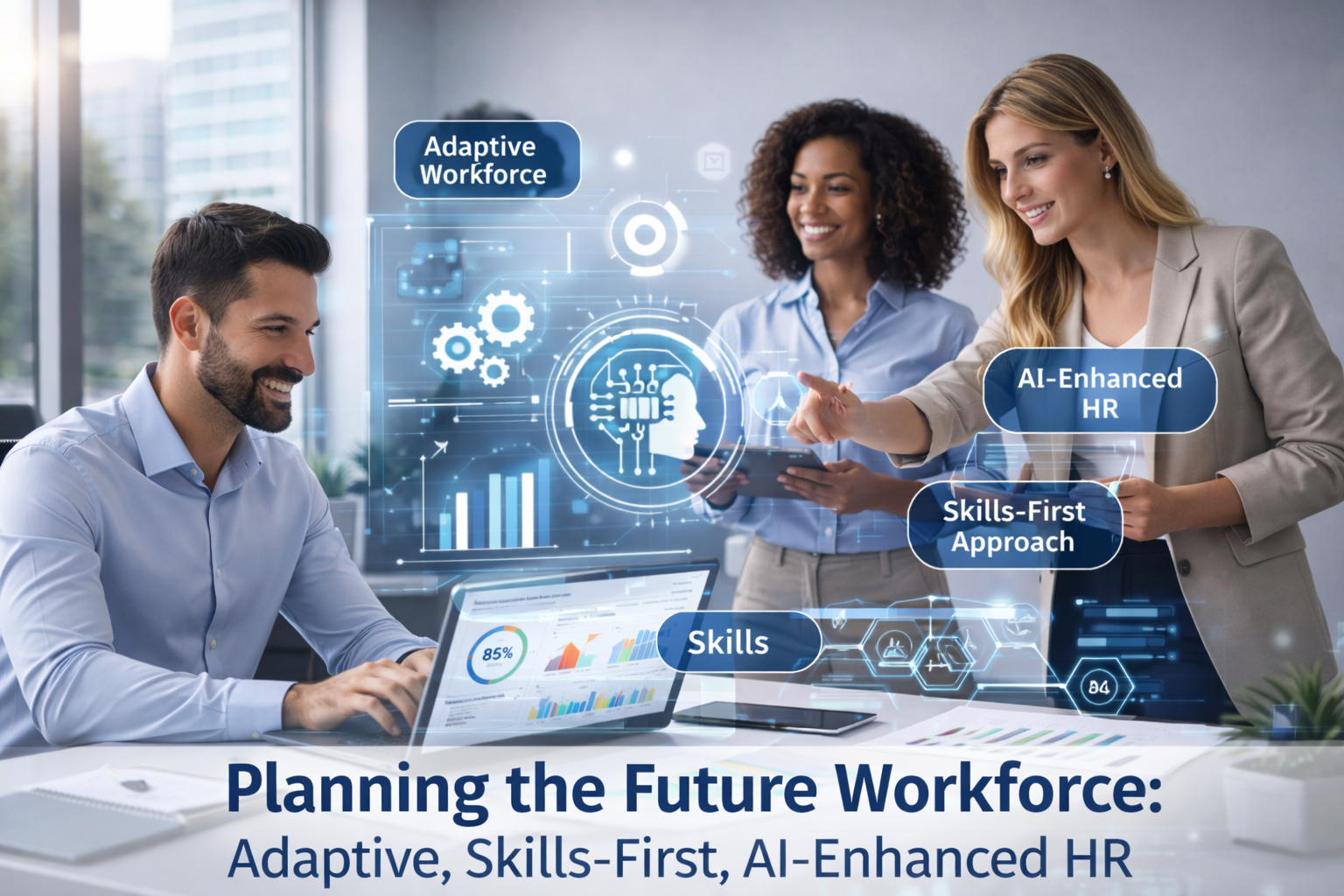
Workforce planning is no longer a static, long-term exercise based on headcount and job titles. Rapid technological change, evolving skill requirements, and shifting employee expectations are forcing organizations to rethink how they prepare for the future of work.
To stay competitive, HR leaders must adopt a workforce planning approach that is adaptive, skills-first, and AI-enhanced one that continuously aligns people, capabilities, and business strategy.
Why Traditional Workforce Planning Falls Short
Traditional workforce planning focused on predicting roles years in advance, often based on historical data. In today’s environment, this approach struggles to keep pace with:
- Rapid automation and AI adoption
- Shortening skill lifecycles
- Hybrid and remote work models
- Increased demand for agility and resilience
Organizations need a more dynamic model that evolves as business and talent needs change.
Adaptive Workforce Planning: Responding in Real Time
Adaptive workforce planning emphasizes flexibility and continuous adjustment rather than fixed forecasts. HR teams monitor changes in demand, productivity, and skills in real time and respond quickly.
Key elements include:
- Scenario planning instead of single forecasts
- Regular workforce reviews and adjustments
- Alignment between workforce strategy and business priorities
An adaptive approach enables organizations to pivot quickly during growth, disruption, or transformation.
The Shift to a Skills-First Workforce
A skills-first strategy focuses on what people can do rather than the roles they currently hold. This shift is critical as job roles evolve faster than traditional job descriptions.
Benefits of a skills-first approach include:
- Better visibility into existing capabilities
- Improved internal mobility and talent utilization
- Faster reskilling and upskilling
- Reduced dependency on external hiring
By prioritizing skills, HR leaders can build more resilient and future-ready workforces.
The Role of AI in Workforce Planning
AI enhances workforce planning by turning complex workforce data into actionable insights. AI-powered tools help HR teams:
- Identify emerging skill gaps
- Predict attrition and workforce risks
- Match skills to future roles and projects
- Model workforce scenarios and outcomes
Rather than replacing human judgment, AI supports better, faster decision-making at scale.
Integrating AI with Human-Centered HR
Successful AI-enhanced workforce planning balances technology with human insight. HR leaders must ensure:
- Transparent and ethical use of AI
- Human oversight in critical decisions
- Employee trust through clear communication
- Alignment with diversity, equity, and inclusion goals
AI should empower HR teams not distance them from people.
What This Means for HR Leaders
HR leaders play a central role in shaping the future workforce. To succeed, they must:
- Move from role-based to skills-based planning
- Build AI literacy within HR teams
- Partner closely with business leaders
- Invest in continuous learning and workforce agility
Workforce planning is becoming a strategic capability, not just an operational process.
Preparing for the Future of Work
Organizations that embrace adaptive, skills-first, and AI-enhanced workforce planning are better positioned to:
- Navigate uncertainty and disruption
- Unlock internal talent potential
- Improve workforce resilience and engagement
- Align talent strategy with long-term business goals
The future workforce will favor adaptability over predictability.
HR tech is evolving fast. Are you keeping up? Read more at HR Technology Insights
To participate in our interviews, please write to our HRTech Media Room at info@intentamplify.com