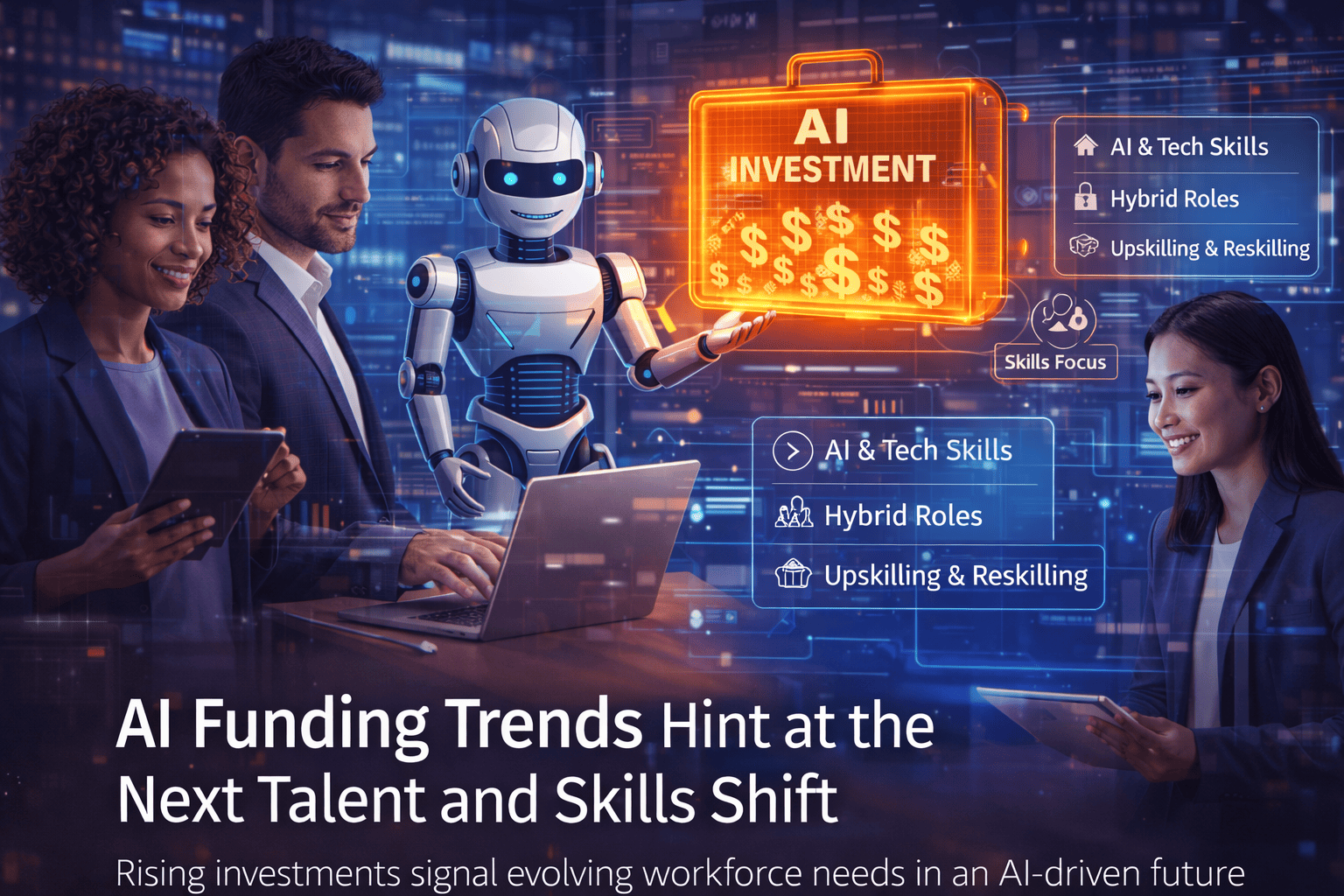
Global investment in artificial intelligence continues to surge as organizations across industries accelerate digital transformation. Venture capital firms and enterprises are pouring billions into AI startups, automation platforms, and data-driven technologies. While much of the attention focuses on innovation and business growth, these funding trends are also signaling a major shift in talent demand and workforce skills.
For HR leaders and business executives, understanding how AI funding influences talent and skills is essential for future workforce planning.
The Rise of AI Investment
AI has become one of the most heavily funded technology sectors in recent years. Investment is flowing into areas such as:
- Generative AI and automation
- HR technology and talent intelligence
- Customer experience platforms
- Data analytics and predictive tools
- Cybersecurity and digital infrastructure
This surge in funding is accelerating the adoption of AI across industries, creating new job roles while transforming existing ones.
How AI Funding Is Shaping Talent Demand
Increased Demand for AI and Tech Skills
As companies invest more in AI, the demand for skills such as data science, machine learning, prompt engineering, and AI product management continues to grow. Organizations are competing for professionals who can build, implement, and manage AI solutions.
Growth of Hybrid Skill Roles
AI investment is not only creating technical jobs but also increasing demand for hybrid roles that combine technical and business expertise. For example:
- HR professionals with AI literacy
- Marketing teams using predictive analytics
- Operations managers leveraging automation tools
Employees who can work effectively alongside AI systems will be highly valued.
The Shift Toward Skills-Based Hiring
AI funding trends are encouraging organizations to adopt skills-based hiring models. Instead of focusing solely on degrees or job titles, companies are prioritizing practical capabilities and adaptability.
This shift helps organizations:
- Fill emerging roles faster
- Identify transferable skills
- Build agile and future-ready teams
- Reduce skill shortages
Skills-first hiring aligns with the fast pace of AI-driven change.
Upskilling and Reskilling Become Strategic Priorities
As AI transforms roles, continuous learning is becoming essential. Organizations are investing in training programs to help employees adapt to new technologies and workflows.
Key focus areas include:
- Digital and data literacy
- AI tool usage and prompt skills
- Analytical thinking
- Collaboration with automation systems
Upskilling ensures that existing employees remain relevant in an AI-driven workplace.
What This Means for HR Leaders
HR leaders must align talent strategies with evolving AI investment trends. This includes:
- Monitoring emerging skill demands
- Building internal learning and development programs
- Integrating AI into recruitment and workforce planning
- Encouraging a culture of continuous learning
By staying ahead of these trends, HR can support both business growth and employee development.
Preparing for the Next Talent Shift
Organizations that proactively respond to AI funding trends will gain a competitive advantage. They will be better equipped to attract top talent, close skill gaps, and adapt to technological change.
Future-ready companies will:
- Invest in workforce agility
- Embrace skills-based hiring
- Support lifelong learning
- Use AI responsibly to augment human potential
HR tech is evolving fast. Are you keeping up? Read more at HR Technology Insights
To participate in our interviews, please write to our HRTech Media Room at info@intentamplify.com