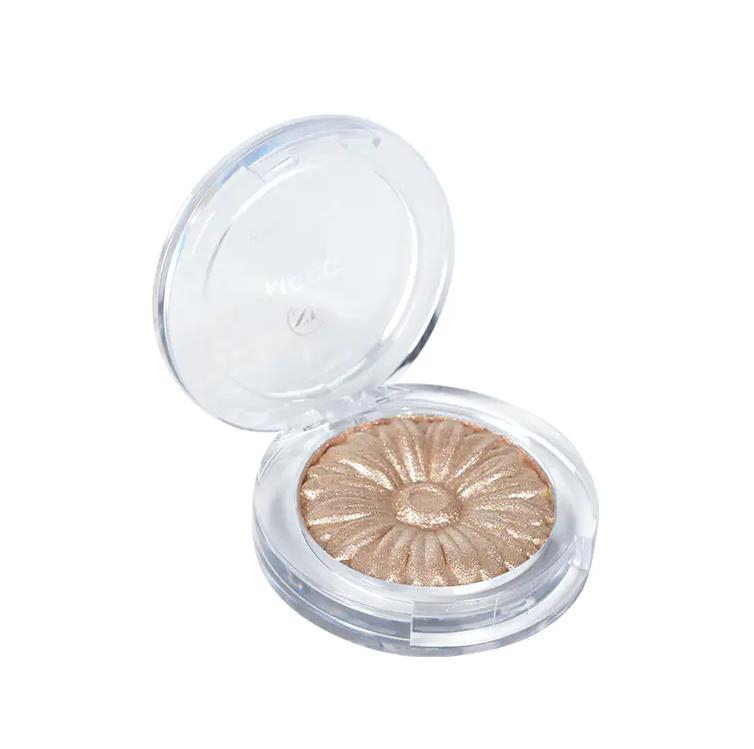
The Architects of Luminosity in the Cosmetics Industry
Highlighter palette manufacturers operate at the fascinating intersection of advanced chemistry, optics, and aesthetic design, specializing in the creation of multi-shade compacts designed to attract and manipulate light on the skin. Their core function is to transform raw, light-interacting pigments into a curated, user-friendly product that can create effects ranging from a subtle, natural glow to intense, metallic strobing. More than just pressing powder, these manufacturers must master the formulation of textures that are finely milled yet adherent, richly pigmented yet blendable, and safe for use on the delicate eye area. They serve as both material scientists and beauty curators, responding to and shaping trends in highlighting through innovation in particle technology and presentation.
The Foundation: Mastering Special Effect Pigments
The heart of any highlighter is its light-reflecting particles. Manufacturers work with a sophisticated array of materials beyond standard colorants:
Mica: The most common base, often coated with titanium dioxide or iron oxide to create standard pearl or shimmer.
Synthetic Fluorphlogopite: A larger, smoother, and more consistent synthetic alternative to natural mica, prized for its intense opacity and ultra-smooth application, crucial for high-impact metallic shades.
Boron Nitride & Silica Spheres: These provide a soft-focus, blurred luminosity that mimics a "lit-from-within" glow without obvious sparkle, ideal for subtle daytime highlighters.
Interference & Duochrome Pigments: These are engineered by depositing ultra-thin layers of metal oxides (like silica or titanium dioxide) onto mica platelets. The thickness of these layers dictates the color shift (e.g., a shift from gold to green or pink to blue), creating the mesmerizing, multi-dimensional effects popular in avant-garde palettes.
The manufacturer’s expertise lies in particle size distribution and surface treatment. Coating pigments with ingredients like lecithin or dimethicone improves skin adhesion, slip, and helps prevent fallout.
Production Processes: Tailored to Texture
The manufacturing line differs significantly based on the product format.
Pressed Powder Palettes: This is the most common method. Precisely weighed pigments, binders (e.g., magnesium stearate), and fillers are mixed in large tumble blenders to avoid breaking the delicate pigment flakes. The homogeneous powder is then pressed into individual pans within a palette tray using calibrated hydraulic pressure. Multi-cavity molds allow an entire palette’s shades to be pressed simultaneously for batch consistency.
Baked or Sintered Palettes: For a seamless, marbled appearance, a wet slurry of ingredients is poured into pans and slowly baked at low temperatures. This evaporates the liquid, fusing the particles into a solid, domed cake. Marbling is achieved by hand-pouring multiple colored slurries.
Cream & Liquid Palettes: These require an emulsification process. Oils, waxes, and pigments are heated, mixed, and then hot-poured into palette wells, where they cool and set. This process demands strict hygienic controls to prevent microbial growth and requires different packaging to prevent drying out.