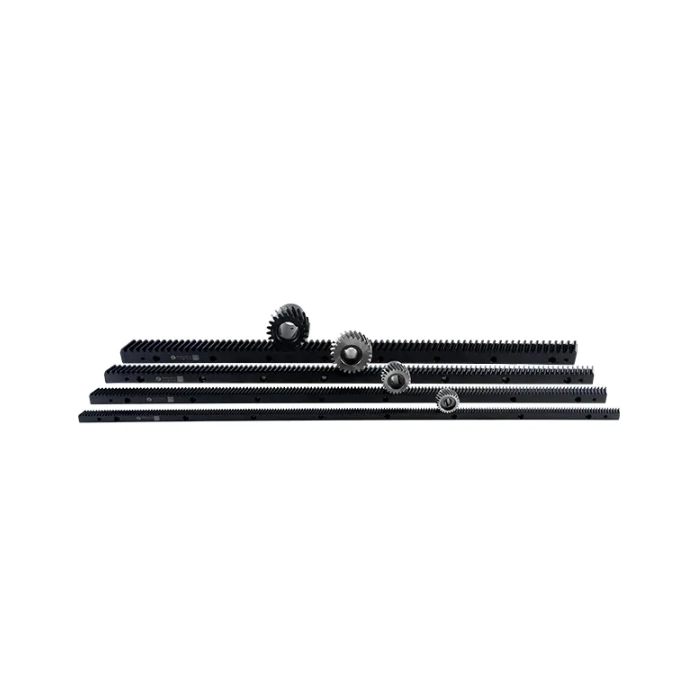
In the realm of precise linear motion, where smooth operation, high load capacity, and quiet performance are critical, a specific engineered component excels. The helical ground rack represents a high-precision evolution of the traditional linear gear. Unlike a straight-cut rack, where teeth engage abruptly, its teeth are cut at a specific angle to the axis of motion. This helical design allows for a gradual, continuous meshing with a matching helical pinion, transforming rotary force into linear movement with superior characteristics that are essential for advanced automation, CNC machinery, and heavy-duty material handling systems.
Fundamental Principles: The Helical Advantage
The core benefit lies in the geometry of engagement. As the helical pinion rotates, multiple teeth are in contact with the rack at any given moment, and contact transitions smoothly from one tooth to the next. This contrasts with straight-cut systems, where engagement is more of a single-tooth impact. The distributed contact area significantly increases the load-bearing surface, allowing the system to handle greater forces with less stress concentration on individual teeth. Furthermore, the angled teeth create an axial thrust force during operation, which must be managed by appropriate bearings in the pinion assembly. This inherent design is key to its performance benefits.
Performance Benefits: Quiet Strength and Precision
The primary advantages directly address the limitations of straight-cut racks. First is noise reduction. The gradual, sliding contact of the helical teeth drastically minimizes the vibration and impact noise associated with straight-cut meshing, making it ideal for environments where operational quietness is valued, such as in medical equipment, packaging lines, or theater automation. Second is increased load capacity and lifespan. The larger contact area distributes wear more evenly, reducing surface pressure and leading to less wear over time, which also minimizes backlash—the slight play between the rack and pinion that can cause positional inaccuracy. This results in smoother motion, higher positional repeatability, and greater long-term durability.
Manufacturing and Application Specifics
Producing a high-quality component requires advanced manufacturing capabilities. The teeth are typically precision-ground (hence "ground rack") after heat treatment, a process that achieves very tight tolerances, excellent surface finish, and high dimensional accuracy over long lengths. This grinding process is crucial for ensuring low noise and efficient power transmission. Common materials include hardened alloy steel (e.g., 42CrMo4) for maximum strength and wear resistance, often with corrosion-resistant coatings for harsh environments. These systems are found in gantry robots, automated storage and retrieval systems (AS/RS), large CNC routers, satellite tracking stations, and stage machinery—applications demanding precise, reliable, and powerful linear motion over extended travel distances.