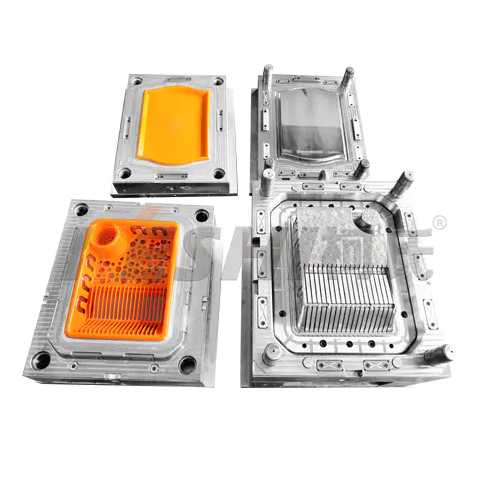
For companies developing products that require molded components—from plastic consumer goods to intricate automotive parts—the journey from a 3D model to mass production hinges on a critical partnership. A proficient mould manufacturer supplier acts as the essential link, transforming design intent into a hardened steel master form. This role encompasses far more than machining; it involves collaborative engineering, material science, precision fabrication, and rigorous validation to deliver a tool that ensures part quality, production efficiency, and long-term reliability for thousands or millions of cycles.
The Collaborative Engineering and Design Phase
The process begins long before metal is cut. A high-value supplier engages as a co-engineer. Their team reviews the part design for manufacturability (DFM), identifying potential issues like undercuts, wall thickness variations, or problematic gate locations that could cause defects. Using advanced mold flow simulation software, they analyze how molten plastic will fill the cavity, predicting weld lines, air traps, and shrinkage to optimize the mold design proactively. This phase includes deciding on the mold base size, the runner system (cold or hot runner), cooling channel layout, ejection strategy, and selecting the appropriate steel grade based on the material to be molded and expected production volume.
Precision Manufacturing and Quality Assurance
With the design finalized, the supplier orchestrates a meticulous manufacturing workflow. This involves CNC machining of the core and cavity blocks, electrical discharge machining (EDM) for complex details, and high-speed milling for fine finishes. Skilled mold makers then assemble the components, integrating sliders, lifters, and ejector pins. Each stage is governed by stringent quality checks using coordinate measuring machines (CMM) and 3D scanners to verify that every detail matches the digital model within micron-level tolerances. The final assembly is tested for smooth mechanical action and proper alignment. A trustworthy supplier provides documented evidence of these checks throughout the build process.
Sampling, Validation, and Production Support
The true test of a mold is its performance in a molding press. The supplier typically coordinates a First Article Inspection (FAI) or Trial Run. They produce initial samples, often at their own facility or a partner's, to verify part dimensions, appearance, and function. Any necessary adjustments—polishing, texturing, or minor machining—are made at this stage. A comprehensive sample report and inspection data are provided for client approval. Beyond delivery, a full-service supplier offers ongoing support, including maintenance recommendations, spare parts provisioning, and troubleshooting assistance to resolve production issues, ensuring the tool remains a productive asset throughout its lifecycle.