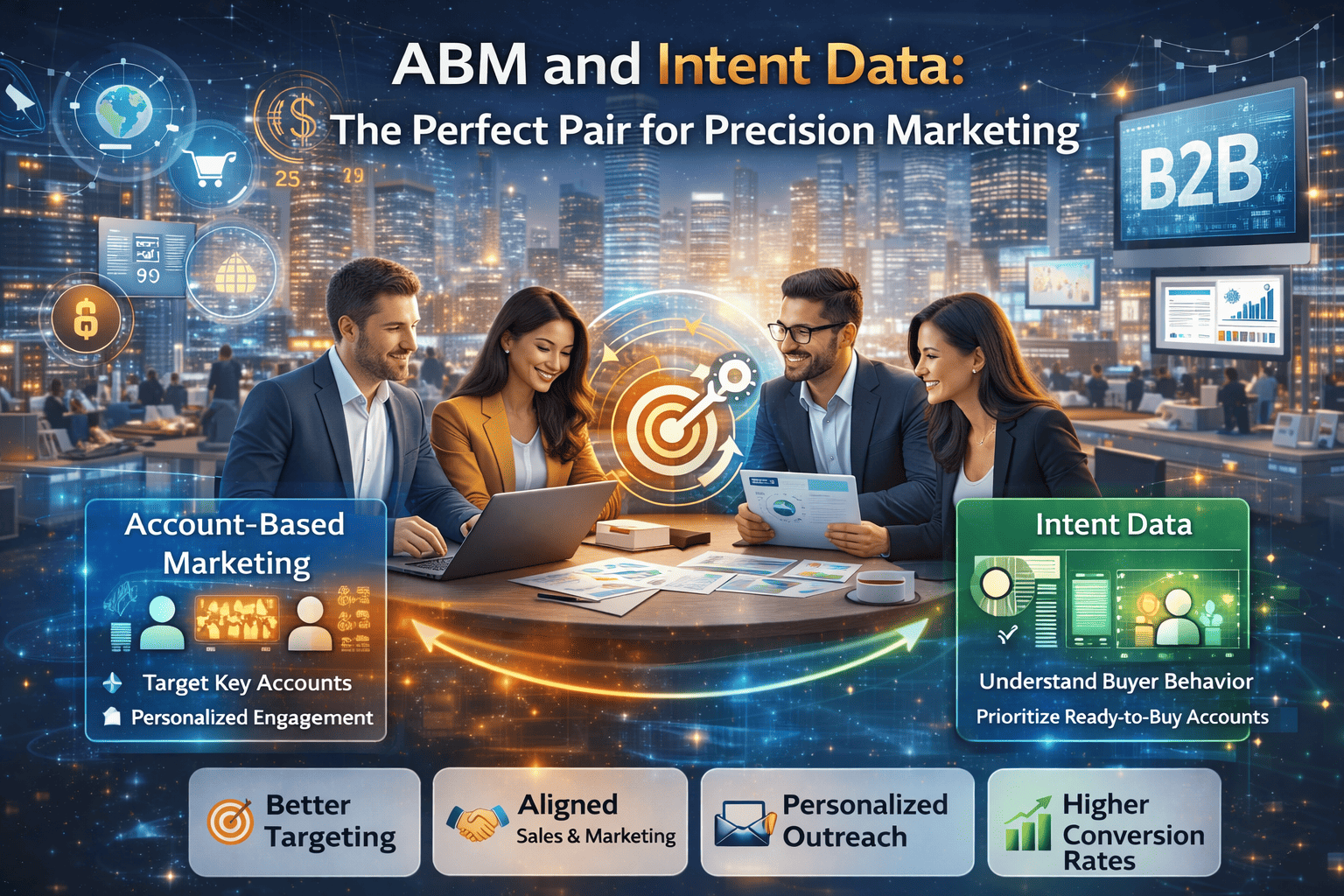
In the evolving B2B landscape, precision has become the defining factor of successful marketing. Companies are no longer focused on reaching the largest possible audience; instead, they aim to connect with the right accounts at the right time with the right message. This shift has elevated Account-Based Marketing (ABM) and intent data as two of the most powerful strategies driving modern B2B growth. When combined, they create a highly targeted and efficient approach that improves engagement, accelerates pipeline, and increases revenue impact.
Account-Based Marketing focuses on identifying high-value accounts and delivering personalized engagement across the buying journey. Rather than casting a wide net, ABM prioritizes quality over quantity, ensuring marketing and sales teams align around accounts most likely to convert. Intent data, on the other hand, provides insight into buyer behavior by tracking signals such as research activity, content consumption, and search patterns. These signals reveal when prospects are actively exploring solutions, making outreach more timely and relevant.
Together, ABM and intent data enable precision marketing. Instead of guessing which accounts might be interested, organizations can identify those already demonstrating buying intent. This allows teams to prioritize outreach, personalize messaging, and allocate resources where they will have the greatest impact. As a result, campaigns become more effective and budgets are used more efficiently.
One of the biggest advantages of combining ABM with intent data is improved targeting. Marketers can identify accounts showing interest in specific topics, industries, or solutions and deliver campaigns tailored to those needs. Sales teams also benefit from real-time insights, enabling them to engage prospects at the moment interest is highest. This reduces the time spent on cold outreach and increases the likelihood of meaningful conversations.
Personalization becomes far more powerful when guided by intent insights. Messaging can be tailored to reflect the challenges, priorities, and research behavior of each account. This creates relevance and builds trust, two factors that strongly influence B2B buying decisions. When prospects feel understood, they are more likely to engage and move forward in the buying journey.
Another key benefit is better alignment between marketing and sales. ABM already encourages collaboration, but intent data strengthens this alignment by providing shared visibility into account activity. Both teams can track engagement, prioritize opportunities, and coordinate outreach based on real insights rather than assumptions. This leads to faster pipeline movement and higher conversion rates.
Budget efficiency also improves significantly. Instead of spreading resources across a broad audience, companies can invest in accounts showing the highest potential. Intent signals help determine where to increase spend and where to scale back, ensuring every marketing dollar supports revenue goals.
The integration of ABM and intent data also enhances campaign performance measurement. Organizations can track how intent signals influence engagement, pipeline creation, and deal progression. These insights help refine strategies and optimize future campaigns.
Despite its advantages, implementing this approach requires the right technology and processes. Organizations must integrate intent data platforms with CRM systems, marketing automation tools, and analytics dashboards. Teams also need clear frameworks for interpreting signals and acting on insights.
Looking ahead, the role of ABM and intent data will continue to expand as AI advances. Predictive analytics will help identify opportunities even earlier in the buying journey, while automation will enable real-time personalization at scale. This will make precision marketing more accessible and effective for B2B organizations of all sizes.
In a competitive environment where buyers expect relevance and timing, ABM and intent data form the foundation of modern B2B marketing. Together, they transform how companies identify opportunities, engage prospects, and drive growth. Organizations that adopt this combination are better positioned to deliver meaningful experiences, improve efficiency, and achieve sustainable revenue success.
INTENT AMPLIFY is evolving fast. Are you keeping up? Read more at intentamplify.com
To participate in our interviews, please write to our Media Room at info@intentamplify.com