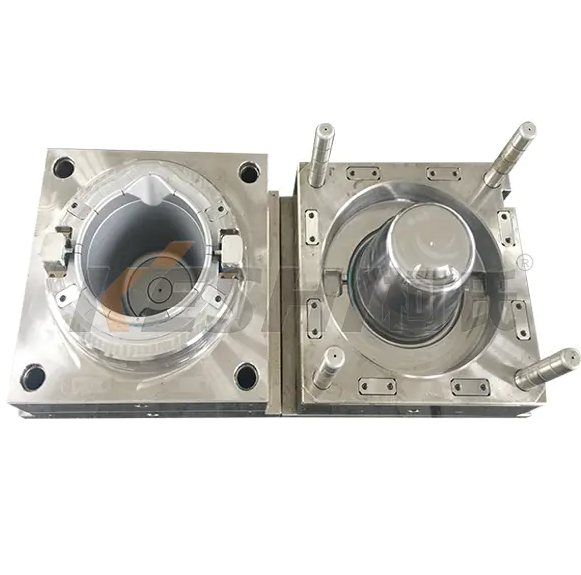
Understanding the Basic Tool Definition
A household plastic mould is a precision-engineered tool used to manufacture a vast range of everyday plastic items found in homes, from kitchenware and storage containers to bathroom accessories and garden tools. This hollow cavity, typically made from durable metals, is designed with the inverse shape of the desired product. In the injection molding process, molten plastic is forced into this cavity under high pressure. Once the plastic cools and solidifies, it takes the exact shape of the mould, creating the finished item. The quality of this mould directly determines the consistency, durability, and surface finish of the final household product.
The Role of Moulds in Daily Products
Every plastic item in a modern home begins its life inside a household plastic mould. Food storage containers with airtight lids, laundry baskets with reinforced handles, children's toys with complex shapes, and bathroom organizers with drainage holes all require precisely engineered moulds for their production. The mould creates not only the basic shape but also integrates functional features such as snap-fit closures, living hinges, measurement markings, and stacking ribs. Without high-quality moulds, mass production of consistent, reliable household plastics would be impossible, and consumers would face higher costs and lower quality products.
How Are Household Plastic Moulds Made
The Mould Design and Engineering Process
Creating a household plastic mould begins with detailed design work using computer-aided design software. Mould engineers study the intended product, analyzing its shape, wall thickness, material requirements, and functional features. They design the mould cavity to create the exact external shape of the product while considering how the plastic will flow and cool. Ejector pins, cooling channels, and runner systems are strategically positioned to ensure efficient production and easy removal of finished parts. The design must account for plastic shrinkage during cooling, ensuring the final product meets exact dimensional specifications.
Mould Material Selection and Machining
The construction of a household plastic mould requires materials capable of withstanding thousands or millions of injection cycles. Hardened tool steels are most common for high-volume production, offering excellent wear resistance and the ability to maintain tight tolerances over years of use. For shorter production runs or prototype development, aluminum provides faster machining times and better thermal conductivity, though with reduced durability. Precision CNC machining centers cut the mould components to exact specifications, creating cavity surfaces that determine the final product's appearance and texture. Surface finishing operations may include polishing for glossy products or texturing for matte finishes.
Why Household Plastic Mould Quality Matters for Production
Consistency and Dimensional Accuracy
The quality of a household plastic mould directly affects the consistency of every part it produces. A well-made mould creates identical products throughout its entire service life, ensuring that lids fit containers properly, stacking features align correctly, and products meet design specifications. Poor mould quality leads to variations in wall thickness, warping, and dimensional errors that make products unusable or cosmetically unacceptable. For manufacturers, this consistency translates to lower scrap rates, reduced quality control costs, and higher customer satisfaction with finished products.
Surface Finish and Appearance
The surface inside a household plastic mould determines the final appearance of the plastic product. Highly polished mould surfaces produce glossy finishes that appeal to consumers for kitchenware and decorative items. Textured mould surfaces create matte finishes that hide fingerprints and minor scratches on bathroom products and everyday storage items. The mould's surface condition also affects how easily the finished part releases, with proper finish reducing ejection problems and production delays. High-quality mould finishing requires skilled craftsmanship and attention to detail that directly impacts the perceived quality of household products.
Production Efficiency and Cycle Times
Well-designed household plastic moulds incorporate features that optimize production efficiency. Strategically placed cooling channels remove heat quickly from the molten plastic, reducing cycle times and increasing hourly output. Balanced runner systems ensure even filling of multi-cavity moulds, producing consistent parts from every cavity. Smooth ejection systems prevent parts from sticking, reducing downtime and operator intervention.