
I. Product Positioning
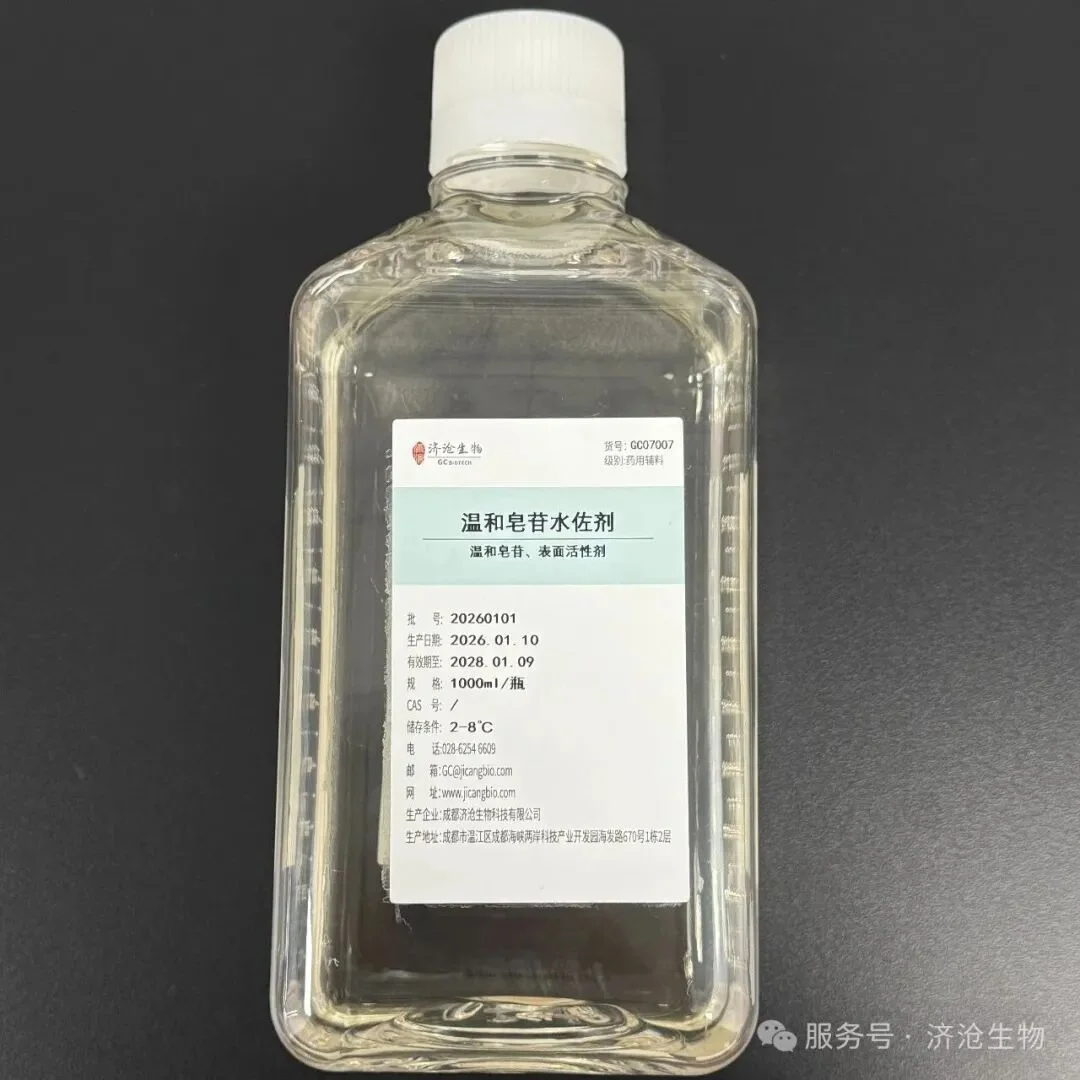
Core Characteristics
This mild saponin aqueous adjuvant is a high-purity, concentrated saponin adjuvant, also suitable as a general immune enhancer. It is a pale yellow or amber-colored, clear, transparent liquid. Its main components are high-purity immunomodulatory substances, with a pH of 4.0–6.5. It is safe, non-toxic, and metabolizable, effectively inducing the body's immune response. It exhibits strong immune effects against both T-cell-dependent and T-cell-independent antigens, with significant mucosal immune responses.
Technological Breakthroughs
-
Raw Material Innovation: Through raw material screening, a standardized raw material grading system has been established, achieving a batch-to-batch consistency CV value of <3%.
-
Process Upgrade: Utilizing a new saponin technology route, the saponin purity is higher, and the cost is reduced by 50% compared to imported products.
II. Technical Parameters
| Project | Instructions |
| Product Name | Mild saponin water adjuvant |
| Item Number | GC07007 |
| source | Extraction from the bark of South American soapbark trees |
| Saponin purity | ≥90% (HPLC area normalization method) |
| key component | Gentle saponins, surfactants |
| Endotoxin control | ≤10 EU/mL |
| Packing Specification | 5mL/bottle, 1L/bottle |
| Validity period | 2 years (store in lightproof conditions at 2~8°C) |
III. Mechanism of Action
Dual Pathway Immune Activation
Innate immune activation:
Gentle saponin water adjuvant is extracted from the water-soluble saponin components of the South American soapbark tree (Quillaja saponaria Molina) and belongs to the triterpenoid saponin compounds, sharing a common triterpenoid skeleton structure. This saponin can exert potent adjuvant effects on both T-cell-dependent and -independent antigens, significantly enhancing the response of CD8+ cytotoxic lymphocytes and improving mucosal antigen immune responses.
Mild saponin water adjuvant can enhance the differentiation and proliferation capacity of immune cells in immune organs by increasing the number of innate immune cells, promoting their differentiation and maturation, reducing the expression of immune suppressive molecules, and facilitating the proliferation of immune effector cells, thereby exerting its immune-enhancing effects.
Meanwhile, the mild saponin-water adjuvant and antigen enter antigen-presenting cells via endocytosis. After the mild saponin-water adjuvant mediates endosomal membrane disruption, the cleaved protein antigen can be further processed into smaller peptide fragments in the cytosol through the proteasome mechanism.
The degraded peptides are translocated into the endoplasmic reticulum via transporter molecules, where they facilitate binding with newly synthesized MHC-I molecules, subsequently migrating to the cell surface through Golgi vesicles.
Finally, the peptide epitopes exposed on the surface of dendritic cells (DCs) associated with MHC-I molecules are presented to naive CD8+ T cells via the T-cell receptor (cross-presentation). They provide co-stimulatory signals, secrete cytokines, and trigger an immune response.
Security advantage
Low-toxicity Design: Removal of highly allergenic impurities such as polysaccharides, polyphenols, and tannins (≥95% removal rate).
▶ Rat, oral: LD50 > 5000 mg/kg (rat), EPA IV category.
▶ Rat, skin: LD50 >4000 mg/kg (white rat)
IV、 Verified application scenarios
Veterinary Vaccines
| Disease Area | Vaccine Cases | Performance Data |
| Foot-and-mouth Disease | Porcine O-type FMDV inactivated vaccine+saponins | Antibody GMT value increased by 2.8 times (vs. traditional aluminum adjuvant) |
| PRRSV | AMERCAV vaccine+saponins from the United States | After virus attack, the viral load decreased by 99% (qPCR detection) |
| Fasciola Hepatica | Sheep multi epitope peptide vaccine+saponin | 83% reduction in fecal egg count (Kato Katz method) |
| Toxoplasmosis | SAG1 recombinant protein vaccine+saponins | The rate of brain cyst formation decreased by 76% (histopathological score) |
Pet Vaccine
-
Feline calicivirus (FCV): antibody positivity rate increased from 68% to 94% (ELISA method).
-
Canine parvovirus (CPV): Survival rate increased by 40% (virus protection experiment).
V、 Quality advantage and compliance
quality Control System
1. Raw material end:
Heavy metal control (As ≤ 2ppm, Hg ≤ 0.2ppm, in compliance with USP<232>).
Endotoxin: ≤ 5EU/mg.
Pesticide residue control (compliant with Chinese Pharmacopoeia standards).
2. Production end:
The entire process is traceable (batch records are associated with raw material sources and extraction parameters).
Preparation process preserves saponin activity (activity recovery rate>95%)
VI、 Recommended application solutions
Suitable Vaccine Types
Recommended dosage: The main active ingredient content of each milligram of heating and saponin water adjuvant is 1.0 mg/mL. The recommended dosage for immunization of animals and immunization dose is as follows:
| Animal Species | Mouse | Guinea pig | Rabbit | Pigs and Sheep | Cattle |
| Maximum dosage per dose | ≤ 15 μ g/dose | ≤ 25 μ g/dose | ≤ 50 μ g/dose | ≤ 300 μ g/dose | ≤ 750 μ g/dose |
| Recommended dosage | 10 μ g/dose | 20 μ g/dose | 40 μ g/dose | 200 μ g/dose | 500 μ g/dose |
VII、 Support services
Declaration Support
Assist in completing adjuvant registration documents (CTD module 3) in China, the European Union, the United States, and other regions.
Custom Development
Adjust the proportion of saponin components as needed (e.g. QS-21 purified substance ≥ 95%).
Develop a multi adjuvant combination therapy (such as soap saponin (VQ-SAP)+TLR4 agonist, soap saponin (VQ-SAP)+polymer).
VIII、 Contact Us
Address: 2nd Floor, Building 1, No. 670 Haifa Road, Chengdu Cross Strait Science and Technology Industry Development Park, Wenjiang District, Chengdu
Phone:028-62546609
Email: GC@jicangbio.com
https://en.jicangbio.com/mild-saponin-aqueous-adjuvant-product-introduction.html