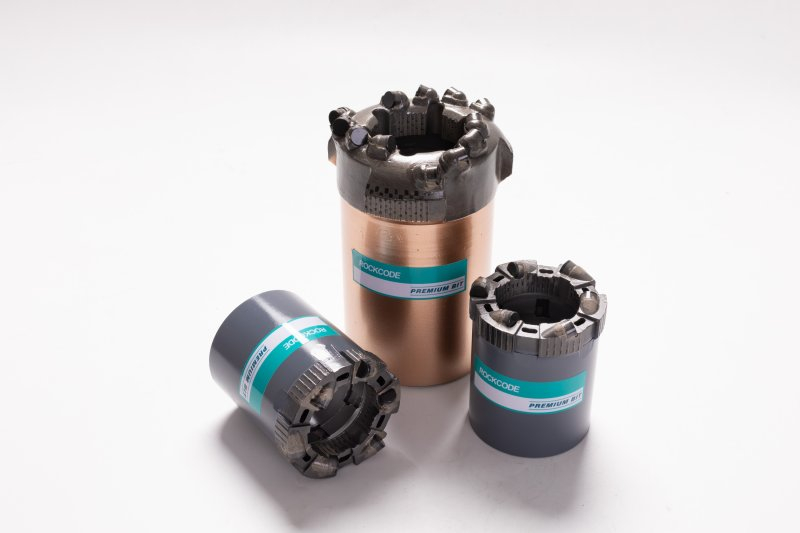
A threaded button bit is one of the most important consumable tools in top hammer rock drilling. In geological exploration, mining, and other drilling projects, the bit has to do more than break rock. It must transfer impact energy efficiently, keep the borehole moving, and survive wear under changing formations. That is why procurement decisions for threaded button bits should never be based on diameter alone. Rock type, hammer pressure, flushing, and button design all affect the final result.
Why Are Threaded Button Drill Bits Widely Used?
A threaded button bit combines several practical advantages for rock drilling operations. The threaded connection allows fast replacement in the field while maintaining stable impact transmission between the drill rod and the bit body. Tungsten carbide buttons concentrate percussion energy into small contact areas, allowing the rock to fracture efficiently under repeated impact loading.
Compared with older blade-type drilling tools, button bits generally provide:
-
Higher drilling efficiency in hard rock
-
Better wear resistance
-
Longer service life
-
More stable borehole quality
-
Lower total drilling cost per meter
The interaction between impact energy, rotation speed, flushing, and button geometry directly affects drilling performance and tool life.
The Mechanics of Hammer Pressure and Penetration
One of the most important operating factors in threaded button bit performance is hammer pressure.
Recent drilling research has shown that hammer pressure significantly influences both the rate of penetration (ROP) and the wear depth of the bit. More importantly, the research indicates that there is an optimal economical hammer pressure range rather than a simple “higher is better” approach.
This point is often overlooked in field drilling operations.
When hammer pressure becomes excessive, the contact stress on the tungsten carbide buttons increases rapidly. While penetration may initially improve, button wear and fatigue damage also accelerate. In many cases, aggressive drilling parameters shorten overall bit life and increase replacement frequency.
The Critical Role of the Wear Coefficient
One of the most significant factors in long-term drilling economics is the wear coefficient. Data suggests that this coefficient has a major effect on the ROP, particularly when it falls between 1/3 and 2/3. From an engineering perspective, increasing the wear coefficient can reduce drill bit button pressure and wear depth at the same drill distance.[1]
At ROCKCODE, we focus on the precision of our tungsten carbide inserts to maintain a stable wear coefficient. Our manufacturing process ensures that the transition from a sharp profile to a worn state is predictable, allowing for better maintenance scheduling. While focusing on the bit face, it is equally important to ensure the hole's stability with high-quality casing rod shoes, which protect the drill string from abrasive wall contact in unstable formations.
Why Button Distribution Matters
Button layout is another factor that directly affects threaded button bit performance.
Research findings suggest that a more evenly distributed button arrangement can improve penetration rate when the same number of buttons is lost during drilling. This is because balanced load distribution helps reduce localized stress concentration.
In real drilling conditions, uneven force distribution creates several risks:
-
Faster button cracking
-
Premature carbide fracture
-
Irregular hole deviation
-
Increased vibration
-
Lower energy transfer efficiency
This is why modern threaded button bit design involves much more than simply adding more carbide buttons.
In geological exploration drilling, no single button layout works perfectly for all formations. Hard and abrasive granite requires different button geometry compared with fractured limestone or softer sedimentary formations.
Conclusion
A threaded button bit is a consumable, but it is not a simple consumable. Its performance depends on thread match, button geometry, face design, rock abrasivity, flushing, and operating pressure. The best choice is not always the hardest-looking bit or the cheapest bit. It is the bit that gives the best balance of penetration, straightness, durability, and replacement cost for the specific ground condition.
ROCKCODE continues to focus on threaded button bit solutions for exploration and rock drilling buyers who need practical products, clear communication, and a supplier who understands how drilling works in the field.
→ For more information about ROCKCODE’s Products, please visit: https://www.rockcodebit.com/drill-bits-products
→ Email us at: info@rockcodebit.com
→ Information in this article is for general reference only. For specific drilling projects and drilling bits, please consult qualified professionals. Thank you.
Source:
https://www.sciencedirect.com/science/article/pii/S1674775524003548
https://www.rockcodebit.com/a-technical-guide-to-threaded-button-bit-efficiency.html