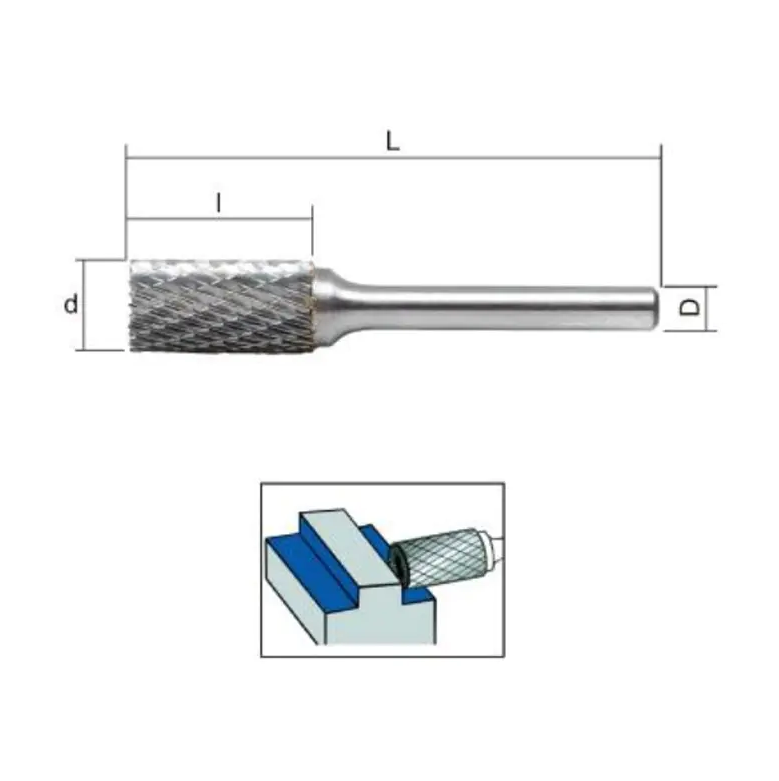
Carbide Burr tools are frequently applied in welding cleanup and surface adjustment processes. After welding, excess metal and uneven joints often remain, requiring precise grinding. Carbide burr attachments mounted on die grinders help remove these irregular sections efficiently.
In fabrication environments, rotary burr tools are chosen for their ability to reach narrow zones. Weld seams inside corners or curved surfaces can be difficult to process with larger grinding equipment. Carbide burr cutters solve this issue by allowing controlled access and smooth material removal.
Different cutting patterns on carbide burr surfaces influence how chips are formed and removed. Cross-cut designs are often used for faster material removal, while single-cut patterns provide smoother finishing results. Operators select burr types depending on the stage of the workflow.
Heat resistance is another important characteristic of carbide burr tools. During continuous rotation, friction generates heat, and carbide material maintains stability under such conditions. This helps reduce tool wear and supports longer working cycles without frequent replacement.
In repair operations, carbide burr tools are also used to correct casting defects. Small surface imperfections in cast metal parts can be adjusted using controlled grinding. The burr’s compact design allows detailed correction work without affecting surrounding areas.
Proper speed control is necessary when using carbide burr tools. Excess rotation speed may cause surface irregularities, while lower speed can improve control in sensitive tasks. Skilled operators adjust tool handling based on material hardness and project requirements.
Carbide burr usage continues to be a practical solution for welding and repair applications across different workshop environments.