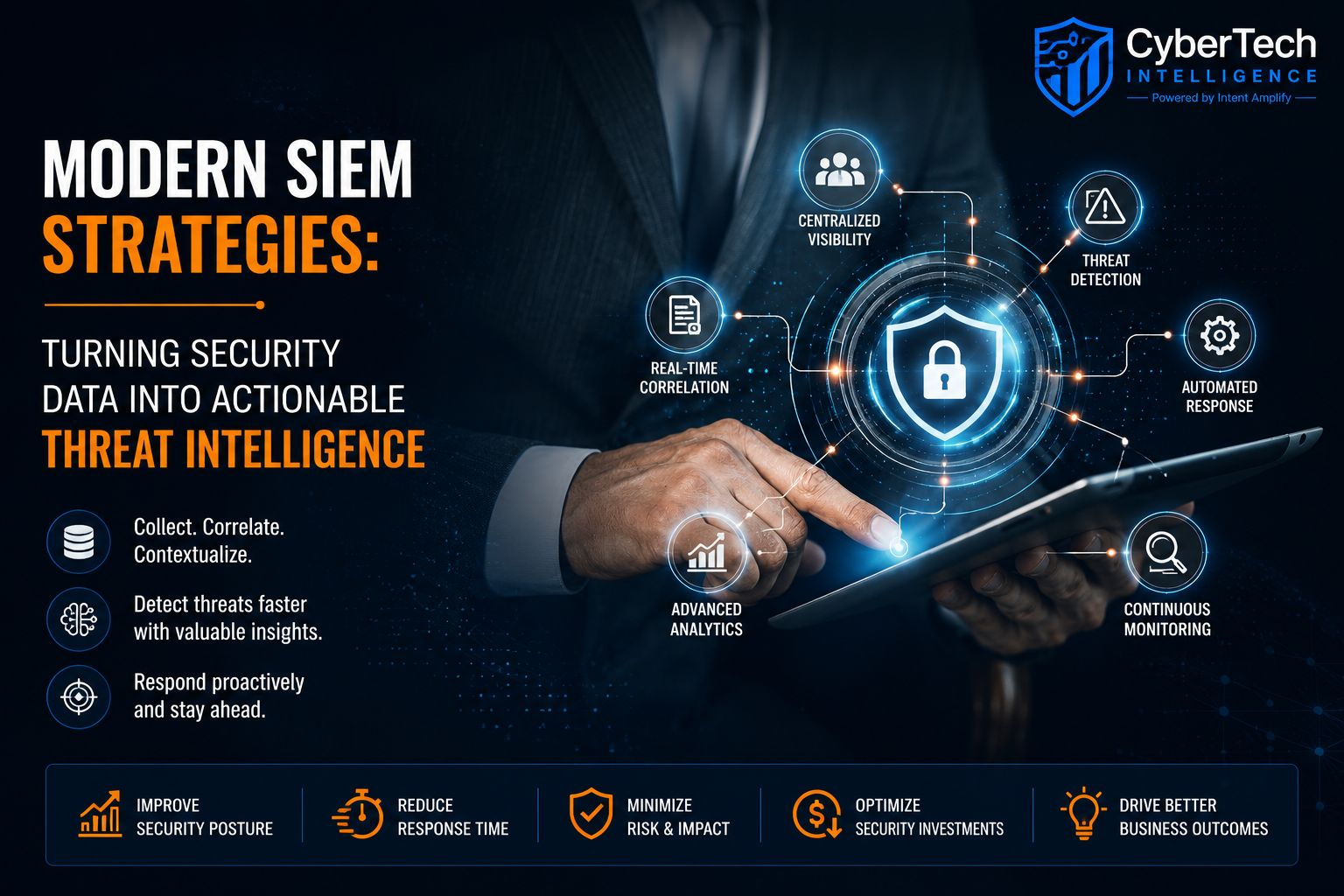
Organizations today generate an unprecedented volume of security data. Every login attempt, application activity, network connection, cloud workload, and endpoint event produces valuable information that could signal potential cyber threats. While collecting this data is important, the real challenge lies in identifying meaningful threats before they become security incidents.
This is where Security Information and Event Management (SIEM) platforms have become an essential component of modern cybersecurity operations. SIEM solutions help organizations aggregate, analyze, correlate, and investigate security events across their entire digital ecosystem.
As cyber threats grow more sophisticated, SIEM is evolving from a compliance-focused tool into a critical driver of threat detection, incident response, and cyber resilience.
Why Organizations Need SIEM More Than Ever
The modern attack surface has expanded significantly due to:
-
Cloud adoption
-
Hybrid work environments
-
Remote endpoints
-
SaaS applications
-
IoT devices
-
Third-party integrations
Security teams often struggle to manage alerts generated by these diverse environments. Without centralized visibility, detecting malicious activity becomes increasingly difficult.
A SIEM platform provides a unified view of security events, enabling analysts to identify suspicious patterns and respond more effectively to threats.
How SIEM Enhances Security Operations
A well-implemented SIEM solution serves as the operational backbone of a Security Operations Center (SOC).
Centralized Log Management
Organizations collect security logs from multiple sources, including:
-
Firewalls
-
Endpoints
-
Cloud platforms
-
Identity systems
-
Servers
-
Security tools
SIEM platforms consolidate this information into a single environment, simplifying monitoring and investigation activities.
Threat Detection Through Correlation
One isolated event may appear harmless. However, when multiple events are correlated together, they can reveal a coordinated attack.
For example:
-
Multiple failed login attempts
-
Privilege escalation activity
-
Unusual file access patterns
-
Data transfer anomalies
SIEM systems identify these relationships and generate actionable alerts for security teams.
Accelerated Incident Response
Speed is critical during a cyberattack.
Modern SIEM platforms help organizations:
-
Investigate alerts faster
-
Prioritize high-risk incidents
-
Reduce dwell time
-
Improve threat containment
The ability to respond quickly often determines the overall impact of a security event.
Key Benefits of Modern SIEM Platforms
Organizations adopting SIEM solutions often experience several strategic advantages.
Improved Visibility
Security leaders gain centralized oversight across complex IT environments.
This visibility supports:
-
Threat hunting
-
Compliance monitoring
-
Risk assessment
-
Operational awareness
Enhanced Compliance Management
Many regulatory frameworks require organizations to maintain security monitoring and audit capabilities.
SIEM platforms support compliance efforts related to:
-
GDPR
-
HIPAA
-
PCI DSS
-
ISO 27001
-
SOC 2
Automated reporting simplifies audits while strengthening governance programs.
Better Threat Intelligence Integration
Modern SIEM platforms can ingest external threat intelligence feeds and compare them against internal security data.
This enables security teams to identify:
-
Known malicious IP addresses
-
Emerging attack campaigns
-
Indicators of compromise (IOCs)
-
Advanced persistent threats (APTs)
Organizations leveraging advanced SIEM capabilities can significantly improve threat visibility, incident response efficiency, and overall cybersecurity maturity by integrating intelligent security analytics into daily operations.
Challenges Organizations Must Address
While SIEM offers significant value, successful implementation requires careful planning.
Common challenges include:
-
Excessive alert volumes
-
Complex rule tuning
-
Data normalization issues
-
Skill shortages within SOC teams
-
Integration complexity
Organizations should establish clear objectives and continuously optimize detection rules to maximize effectiveness.
The Future of SIEM
The next generation of SIEM platforms is being enhanced by:
-
Artificial intelligence
-
Machine learning
-
Behavioral analytics
-
Security orchestration and automation (SOAR)
-
Extended detection and response (XDR)
These technologies help reduce alert fatigue and improve threat detection accuracy.
As cyber threats continue to evolve, SIEM platforms will increasingly serve as intelligent decision-support systems for security teams.
Final Thoughts
Cybersecurity teams face growing pressure to detect and respond to increasingly complex threats across distributed environments. SIEM platforms provide the visibility, analytics, and operational intelligence necessary to manage this challenge effectively.
By centralizing security data, enhancing threat detection, and accelerating incident response, SIEM enables organizations to strengthen cyber resilience while improving compliance and operational efficiency.
As the threat landscape continues to evolve, modern SIEM solutions remain a foundational component of proactive cybersecurity programs.
Know More