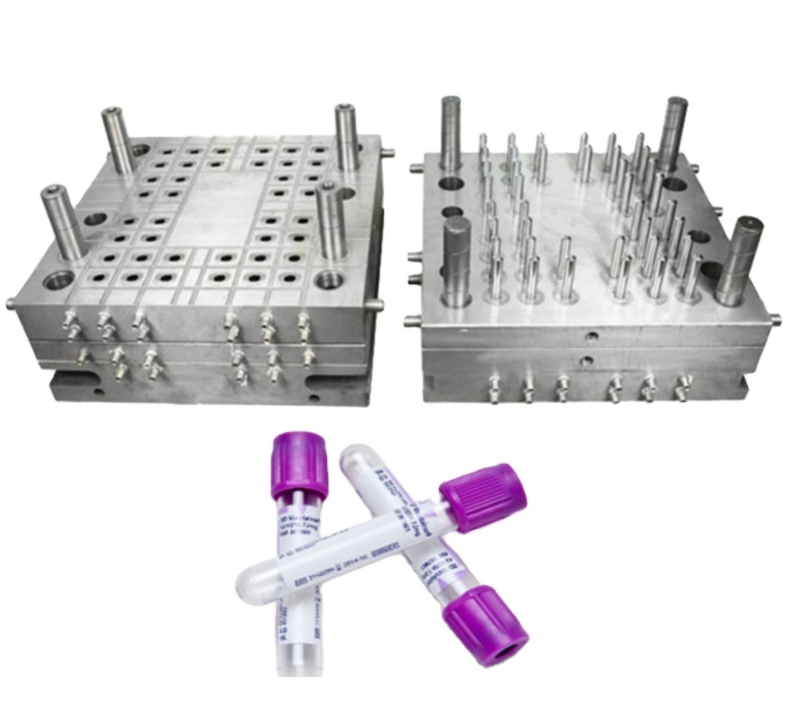
Manufacturers of ventilation products often focus on raw material costs and machine efficiency, yet the mold itself has a significant influence on production expenses. A well-designed tool can reduce maintenance intervals, improve dimensional consistency, and support long production runs. A professional Ventilation Mold Manufacturer considers these factors during the early design stage instead of treating them as later adjustments.
Ventilation components such as HVAC grilles, fan covers, air outlet panels, and industrial duct accessories frequently contain narrow ribs and multiple openings. These features require careful engineering to maintain mold durability.
Steel Selection and Service Life
Different production volumes require different mold materials.
Common choices include:
P20 pre-hardened steel.
H13 hot work tool steel.
S136 stainless steel.
Hardened insert steel for wear areas.
Surface hardness after treatment commonly ranges from HRC 48 to HRC 54.
Wear-resistant inserts can be replaced independently, reducing maintenance costs during long production cycles.
Structural Stability
Large ventilation molds are exposed to repeated injection pressure.
Structural features often include:
Support pillars.
Reinforced backing plates.
Guide pin systems.
Interlock blocks.
Wear plates.
Injection pressures may range from 80 MPa to 150 MPa depending on the plastic material and product geometry.
A stable mold structure helps maintain cavity alignment over thousands of molding cycles.
Cooling Efficiency and Cycle Time
Cooling often represents a large portion of the molding cycle. Uniform cooling reduces distortion and supports consistent dimensions. Cooling channel placement directly affects productivity.
Typical cooling arrangements include:
Channel diameters of 8–12 mm.
Parallel cooling circuits.
Baffle cooling for deep cores.
Local inserts for hot spots.
Balanced cooling reduces uneven shrinkage and contributes to stable production.
Venting Maintenance
Ventilation products often have long material flow paths.
A Ventilation Mold Manufacturer may include:
Parting line vents.
Ejector pin venting.
Insert venting.
Overflow wells.
Blocked vents can increase cavity pressure and create burn marks or incomplete filling. Proper vent maintenance reduces these risks.
Replaceable Components
Instead of replacing an entire mold section, modular construction allows damaged components to be serviced individually.
Replaceable parts may include:
Gate inserts.
Core inserts.
Slider blocks.
Lifters.
Ejector pins.
This approach reduces downtime and maintenance expenses.
Surface Protection
Repeated molding cycles gradually wear cavity surfaces.
Protective treatments can include:
Nitriding.
Chrome plating.
Polishing.
Texture restoration.
These treatments help preserve dimensional accuracy and product appearance.
Production Monitoring
Modern molds increasingly include monitoring features.
Examples include:
Temperature sensors.
Pressure sensors.
Water flow indicators.
Mold cycle counters.
Collected data helps identify maintenance needs before significant wear occurs.
Long-Term Value
Tooling cost should be evaluated across the entire production life rather than the initial purchase price alone. A durable mold with stable cooling, effective venting, and replaceable wear components can support reliable production over extended manufacturing schedules.
A capable Ventilation Mold Manufacturer combines practical engineering with maintenance planning to reduce operating costs while maintaining consistent product quality across different ventilation applications.