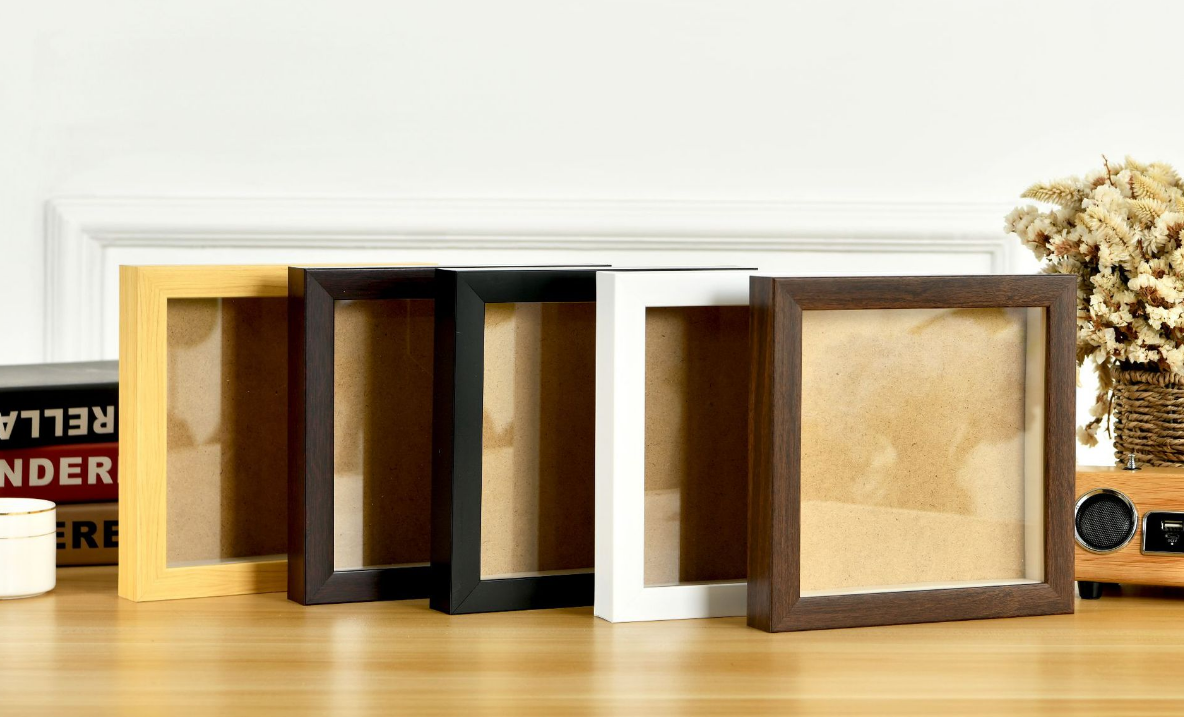
The use of metal-based framing systems has expanded across residential, commercial, and institutional environments due to their balance of durability and visual consistency. An Aluminum Alloy Photo Frame is widely adopted in spaces where long-term display stability and clean aesthetics are required, especially in environments with frequent image changes or public interaction.
One of the most common application areas is office interiors. Corporate environments often require structured visual communication such as certificates, branding posters, and motivational graphics. Aluminum alloy framing provides a rigid structure that maintains flatness of printed materials, even when exposed to air-conditioning cycles and daily handling. Standard frame profiles used in office settings typically range from 12 mm to 25 mm in visible width, offering a slim yet stable appearance.
Retail spaces also make extensive use of aluminum alloy framing systems. Product advertising posters, promotional visuals, and seasonal campaigns rely on easy update mechanisms. Snap-open or magnetic closure designs allow quick replacement of printed media without dismantling the entire frame. Frame thickness in retail display systems often ranges from 15 mm to 30 mm depending on poster size and mounting conditions.
In residential applications, aluminum alloy frames are used for photographic displays and decorative artwork. Unlike wood frames, aluminum structures maintain dimensional stability under humidity variations. Relative humidity changes between 30% and 80% do not significantly affect aluminum structure, which helps preserve alignment of artwork over time. Frame finishes such as matte black or brushed silver are commonly chosen to match modern interior designs.
Educational institutions are another key application area. Schools and universities often display certificates, notices, and instructional materials. Aluminum alloy frames in these environments typically use acrylic protective covers with thickness between 1.5 mm and 2.5 mm, offering impact resistance while keeping weight low for wall mounting safety.
Museums and galleries require framing systems that protect visual content while minimizing distraction. In such cases, an Aluminum Alloy Photo Frame is often combined with UV-resistant acrylic sheets that can filter up to 90% of ultraviolet light. This helps reduce fading of printed or illustrated materials over extended display periods.
Technical installations in transportation hubs, such as airports and train stations, also use aluminum framing systems for signage. The lightweight nature of aluminum alloy—approximately 2.7 g/cm³ density—reduces load stress on suspended structures. Frame profiles used in these environments are often reinforced with internal rib structures to increase rigidity without adding excessive weight.
Another important application is exhibition booths and trade show displays. Modular aluminum framing allows rapid assembly and disassembly. Standard extrusion systems are designed with tolerance control within ±0.1 mm, ensuring compatibility between interchangeable components. This modularity enables scalable booth designs that can be reconfigured for different event spaces.
The corrosion resistance of aluminum alloy also supports semi-outdoor applications. In sheltered outdoor environments such as building entrances or covered walkways, anodized surfaces with thickness between 10–20 microns provide resistance against moisture and airborne pollutants. This ensures stable performance in environments with moderate environmental exposure.
Because of its versatility in design, strength-to-weight ratio, and compatibility with multiple mounting systems, the Aluminum Alloy Photo Frame continues to serve as a reliable structural solution across a wide range of visual display needs.