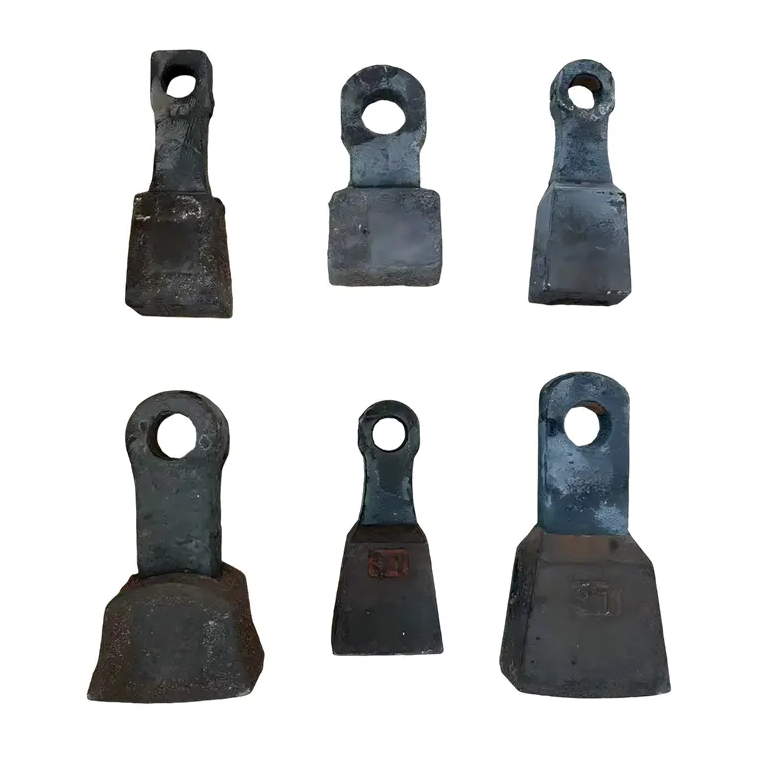
Industrial systems that transport abrasive solids, slurry mixtures, and mineral particles require components that maintain dimensional stability under continuous erosion. High Chromium Cast Iron Fittings are widely selected in these environments due to their carbide-reinforced structure and stable performance in abrasive flow conditions.
These fittings are commonly applied in mining pipelines, cement production lines, power plant ash systems, dredging equipment, and mineral processing machinery. The operating environment in these systems often involves solid particles ranging from 0.1 mm to 5 mm, suspended in water or gas streams. Continuous impact and sliding wear gradually degrade conventional cast iron or carbon steel components, while chromium-based cast iron structures resist surface penetration due to hard carbide phases.
The microstructure of High Chromium Cast Iron Fittings is composed of M7C3 chromium carbides distributed within a martensitic or austenitic matrix. Carbide hardness typically ranges between HV 1500–2200, while the matrix hardness after heat treatment is generally HRC 40–55 depending on alloy design. This dual-phase structure allows the material to resist both cutting wear and deformation.
In mining slurry transport systems, elbows and tees are especially vulnerable because flow direction changes generate localized turbulence. Particle velocity in such zones can exceed 15–25 m/s, creating repeated impact loading on internal surfaces. High chromium cast structures reduce material loss by maintaining a stable carbide barrier even under repeated erosion cycles.
Cement plants also rely heavily on these fittings in clinker transport and raw material handling systems. Temperatures in these environments can reach 200–350°C, where thermal expansion and abrasive dust interaction create additional wear mechanisms. Chromium-based alloys retain structural stability under these conditions due to their low thermal softening rate.
Power generation systems, particularly coal-fired plants, use ash slurry pipelines where fly ash particles continuously abrade internal surfaces. These particles often contain silica and alumina, both highly abrasive minerals. High Chromium Cast Iron Fittings provide resistance through hard carbide networks that interrupt particle sliding paths.
Manufacturing processes such as sand casting and centrifugal casting are commonly used to produce these fittings. Centrifugal casting improves density and reduces porosity, while sand casting allows complex geometries such as curved pipe elbows and reducer fittings. Post-casting heat treatment is typically applied at 900–1000°C, followed by air cooling to stabilize martensitic transformation.
Corrosion behavior also plays a supporting role. Chromium content above 12% promotes the formation of a passive oxide layer, reducing oxidation in wet or mildly acidic environments. This is important in slurry systems where chemical and mechanical wear occur simultaneously.
Design engineers often consider wall thickness when selecting these fittings. Thicker sections increase service life but may reduce cooling uniformity during casting, which affects carbide distribution. Optimizing geometry helps balance wear resistance and structural reliability.
High Chromium Cast Iron Fittings continue to be used in systems where maintenance downtime must be minimized and abrasive wear is a constant challenge. Their combination of hardness, structural stability, and corrosion tolerance makes them suitable for long-cycle industrial operations.
Conclusion
Application suitability depends on flow velocity, particle size, and chemical conditions. Chromium cast iron remains a practical solution for abrasive transport systems where repeated mechanical impact dominates failure modes.