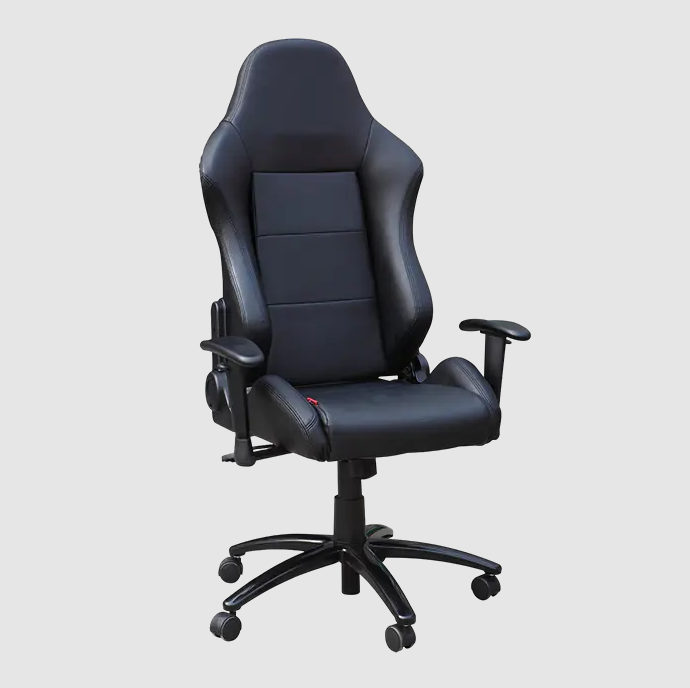
The production of an OEM Office Chair relies heavily on material engineering, where structural durability, comfort performance, and long-term stability are determined by selected raw materials. Each component, from the internal frame to the surface covering, plays a role in defining the final chair quality and user experience.
OEM manufacturing allows flexible material combinations depending on market requirements, usage intensity, and cost positioning. This includes variations in steel thickness, polymer reinforcement levels, foam density, and fabric composition.
Metal Frame and Structural Support
The internal skeleton of an OEM Office Chair is commonly built using cold-rolled steel tubing or aluminum alloy components. Steel frames typically use tube thickness between 1.2mm and 1.8mm, offering strong resistance to bending and deformation under continuous load.
Aluminum alloy frames are used in lighter configurations, often treated with anodized or powder-coated surfaces to prevent oxidation. These structures reduce overall weight while maintaining sufficient support for daily office use.
Connection joints between seat plate and backrest are reinforced using stamped steel brackets or die-cast aluminum connectors. These parts are tested for repeated stress cycles, ensuring structural integrity under long-term reclining and movement.
Gas Lift Cylinder Construction
A key component in every OEM Office Chair is the gas lift system. This mechanism uses a sealed cylinder filled with compressed nitrogen gas and oil damping fluid. The piston rod is typically chrome-plated for corrosion resistance and smooth vertical movement.
Standard lift cylinders are categorized into Class 3 and Class 4 ratings. Class 3 supports moderate load capacity, while Class 4 is designed for heavier usage and higher cycle durability. Stroke length generally ranges from 80mm to 120mm, enabling flexible height adjustment.
The cylinder undergoes pressure testing to ensure stability under repeated compression cycles, which simulates years of daily office use.
Seat Foam Density and Comfort Layer
Seat comfort in an OEM Office Chair is largely determined by foam density and molding process. High-density molded foam, typically ranging from 45kg/m³ to 60kg/m³, is commonly used for commercial-grade seating.
Lower-density foam provides softness but may lose shape over time, while higher-density foam maintains structural resilience and seating consistency. Some OEM models use multi-layer foam systems, combining soft top layers with firmer support cores.
This structure helps distribute body weight evenly, reducing pressure concentration on hips and thighs during extended sitting periods.
Mesh and Fabric Material Selection
Mesh backrests are widely used in ergonomic OEM Office Chair designs. The mesh is typically woven from polyester or nylon fibers with elastic tension properties. High-tension mesh allows airflow circulation while maintaining back support.
Fabric upholstery options include polyester blends, nylon textiles, and microfiber materials. These fabrics are tested for abrasion resistance, color fastness, and tensile durability. PU leather is also used in executive-style chairs, providing a smooth surface and easier cleaning, though it requires careful formulation to avoid cracking over time.
Plastic Components and Reinforcement
Plastic parts in an OEM Office Chair include armrest shells, lumbar support frames, and decorative covers. These components are usually made from polypropylene (PP) or nylon reinforced with glass fiber.
Glass fiber reinforcement increases rigidity without significantly increasing weight. Typical reinforcement ratios range from 20% to 40%, depending on design requirements. These materials also provide impact resistance during chair movement or accidental force application.
Base and Caster System Materials
The five-star base of an OEM Office Chair is commonly made from nylon or aluminum alloy. Nylon bases are often reinforced with fiberglass to improve load distribution and resistance to cracking.
Aluminum bases are used in higher durability models, offering better structural stability under heavy loads. Standard base diameter is around 600–680mm to maintain balance and prevent tipping.
Casters are made from PU (polyurethane), nylon, or rubber-coated materials. PU casters are widely used due to their smooth rolling performance and floor protection characteristics.
Material Integration in OEM Production
OEM Office Chair manufacturing requires precise material coordination. Each component must match load requirements and compatibility standards. For example, gas lift diameter must match base center hole tolerance, and foam density must align with seat frame curvature.
Material testing includes tensile strength, fatigue resistance, and cycle testing for moving parts. This ensures consistency across mass production batches and reduces variation in end-product performance.
Through controlled material selection and engineering integration, OEM Office Chair production achieves a balance between durability, comfort, and scalable manufacturing efficiency.