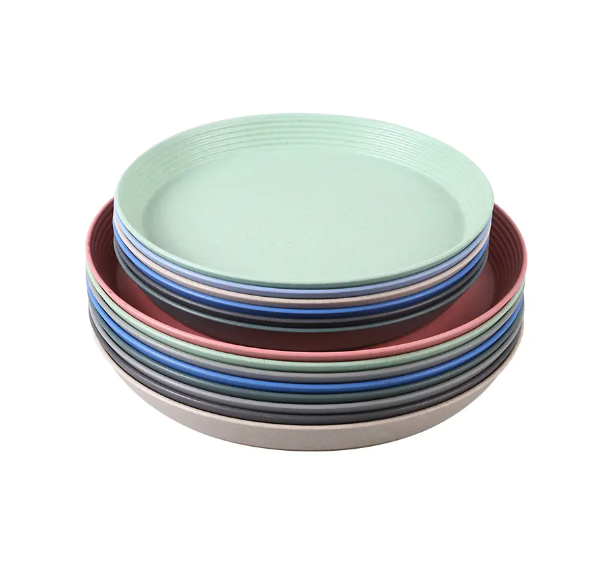
The market for eco-based kitchen products has expanded rapidly, and pricing structures for materials like Wheat Straw Material Tableware have become an important consideration for manufacturers, distributors, and end users. Cost evaluation is not only related to raw materials but also to processing technology, product design complexity, and production scale.
Raw material influence on pricing
Wheat straw itself is an agricultural byproduct, which gives it a relatively low base cost compared to virgin plastic resins or ceramic materials. However, the raw fiber must undergo multiple processing steps before it becomes suitable for molding. These include cleaning, drying, fiber grinding, sterilization, and blending with binding polymers such as PP or PLA.
The fiber-to-resin ratio is one of the key cost drivers. Products with higher wheat straw content (around 60%–70%) may reduce resin consumption but require more advanced molding control to maintain structural integrity. Conversely, lower fiber ratios (30%–40%) rely more heavily on polymer binders, which increases material cost but improves production stability.
Manufacturing process and cost structure
The production of Wheat Straw Material Tableware typically involves injection molding or hot-press compression molding. Machinery operating temperatures range from 160°C to 220°C, requiring stable energy input systems. Mold precision also significantly impacts cost, as high-detail molds for ergonomic designs or multi-compartment plates require higher upfront tooling investment.
Production scale plays a major role in unit cost. Large-scale manufacturing reduces per-unit energy consumption and amortizes mold costs over higher output volumes. In contrast, small batch production often results in higher unit pricing due to fixed operational costs.
Average production cost components can be broken down conceptually as:
Raw material processing: 30%–40%
Molding and energy consumption: 25%–35%
Tooling depreciation: 10%–20%
Packaging and logistics: 10%–15%
These ratios vary depending on design complexity and automation level.
Market pricing behavior
Finished Wheat Straw Material Tableware products are generally positioned in a mid-range pricing category compared with traditional plastic and ceramic alternatives. Simpler items like basic plates and bowls are priced lower, while multi-functional sets with compartments, lids, or insulated features cost more due to additional material usage and assembly steps.
Design aesthetics also influence pricing. Products with matte textures, custom color blending, or embossed patterns require additional finishing processes, which increases production time.
Durability and lifecycle cost consideration
Although initial pricing is a key factor, lifecycle cost is often more relevant for buyers. Wheat straw tableware typically has a usable lifespan of 1–3 years under normal household conditions, depending on usage frequency and cleaning methods. This lifespan places it between disposable plastic products and long-lasting ceramic ware.
Because the material is lightweight and resistant to breakage, replacement frequency is often lower in environments such as schools or outdoor catering services. This indirectly reduces long-term replacement costs.
Cost comparison perspective
Compared with polypropylene tableware, wheat straw composites may have slightly higher production costs due to additional processing steps. However, they offer reduced reliance on petroleum-based materials and align with waste utilization strategies.
Compared with ceramic products, wheat straw items are significantly cheaper to transport due to reduced weight, often cutting logistics weight by more than 50%, which can lower shipping-related expenses for bulk distribution.
Summary
Wheat Straw Material Tableware pricing is influenced by a combination of raw fiber processing, polymer blending ratios, manufacturing technology, and design complexity. While not the lowest-cost material on the market, it provides a balanced cost structure when considering durability, transport efficiency, and material utilization benefits.