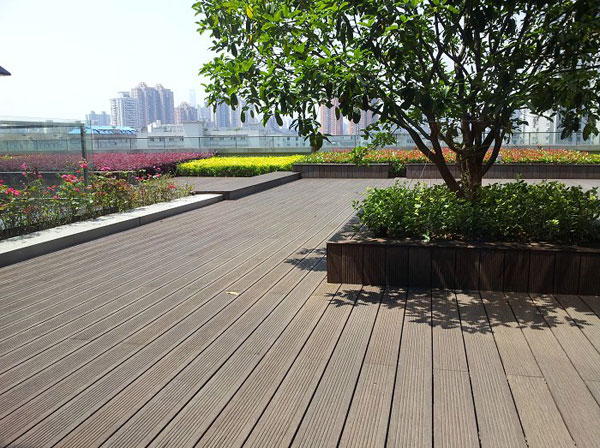
When it comes to building a luxury outdoor living space, premium natural materials remain the top choice for discerning homeowners, architects, and builders. For decades, the undisputed gold standard for exterior wood applications has been Ipe. Harvested from the deep tropical forests of South America, this exotic hardwood gained a legendary reputation for its rock-like density, beautiful dark tones, and ability to survive decades of harsh weather without rotting.
However, changing market dynamics, supply chain constraints, and an increased global focus on environmental responsibility have led the construction industry to seek viable alternatives. Among these, engineered structural grass planks have emerged as a dominant competitor. Specifically, high-density bamboo decking has advanced from a niche eco-friendly option to a premier high-performance architectural material that directly challenges Ipe in terms of strength, appearance, and physical endurance.
Deciding between these two high-end materials requires moving past marketing promises. A realistic comparison of their long-term survival rates, lifetime maintenance demands, and actual total costs—including installation labor and raw materials—reveals which product delivers the best value for your investment.
The Raw Materials: Understanding the Material Foundations
To understand how these two surfaces perform under the blazing sun and pounding rain, you have to look at how they are made. They achieve their exceptional hardness through completely different paths.
Ipe is a traditional hardwood sourced from slow-growing trees that can take anywhere from fifty to one hundred years to reach maturity. The wood is naturally dense, tightly grained, and packed with organic oils and tannic acids that repel boring insects, termites, and wood-rotting fungi. It is so heavy that it does not float in water, and it carries a natural fire resistance rating comparable to concrete or steel. Because it is a raw product harvested directly from nature, every single board is entirely unique, displaying wide variations in grain character, color transitions, and natural imperfections.
Conversely, outdoor bamboo is a highly engineered product. Bamboo is not a tree; it is a ultra-fast-growing grass that reaches structural maturity in just five to seven years. To transform these hollow green stalks into solid, heavy-duty deck planks, factories utilize an intensive mechanical and thermal process. The raw bamboo is sliced into thin strips, which are then baked at extreme temperatures exceeding two hundred degrees Celsius in an oxygen-free chamber.
This thermal modification process caramelizes the fibers and completely destroys the natural starches and sugars within the plant tissue, making it completely inedible to pests and immune to fungal decay. These treated fibers are then saturated with high-performance phenolic resins and compressed under immense hydraulic pressure to form dense, solid blocks that are finally milled into individual tongue-and-groove planks. Because it is engineered, bamboo offers a level of structural consistency and uniformity from board to board that no wild-grown tree can replicate.
Real-World Longevity and Performance Face-Off
Both materials sit at the pinnacle of durability, scoring at the very top of the Janka hardness scale. They can easily withstand heavy foot traffic, dragging patio furniture, sharp high heels, and pet claws without denting or scratching. However, their long-term lifespans are influenced by how their internal structures react to the elements over time.
Lifespan Expectations
A properly installed and maintained Ipe deck can easily last forty to fifty years, and in some optimal climates, it has been known to survive even longer. Its natural structural integrity breaks down incredibly slowly, making it an excellent generational asset for a property.
High-density fused bamboo decking is younger in terms of market history, but rigorous accelerated weathering tests and real-world installations put its expected lifespan at thirty to forty years. Because the internal fibers are completely encapsulated in a hydrophobic resin matrix, the material carries a Durability Class One rating, matching the legal compliance metrics required for heavy-duty public boardwalks and commercial developments.
Dimensional Stability and Checking
This is where the engineered nature of bamboo provides a distinct advantage over natural timber. All natural woods are hygroscopic, meaning they absorb and release moisture from the surrounding air. When a dry winter shifts into a humid summer, Ipe boards will inevitably expand and contract. This constant movement puts stress on fasteners and can cause the wood to cup, twist, or develop checking—small surface cracks that appear as the outer layers dry out faster than the core.
Because the thermal processing eliminates the moisture-binding sites within the bamboo cells, fused bamboo exhibits exceptional dimensional stability. It expands and contracts significantly less than tropical hardwoods. This keeps your deck perfectly flat and your joint gaps completely uniform throughout the changing seasons, virtually eliminating the risk of cupping or severe twisting.
Analyzing the True Cost: Upfront vs. Lifecycle Expenses
When comparing the financial impact of these two premium choices, you must evaluate three distinct phases: the raw material price, the installation labor costs, and the long-term maintenance expenditures over twenty to thirty years.
Raw Material Investment
Ipe has become an increasingly scarce resource. Tightening environmental regulations, export restrictions designed to combat illegal logging, and high shipping costs have driven the price of genuine Ipe to historic highs. It is now firmly positioned as an ultra-luxury luxury item with a volatile, unpredictable supply chain.
Engineered bamboo, because it relies on an abundant, rapidly renewable agricultural crop, offers a highly stable, predictable, and scalable pricing structure. While it is still a premium product that costs significantly more than cheap pressure-treated pine or basic composite boards, it is generally available at a twenty to thirty percent lower raw material cost compared to top-tier Ipe.
Installation Efficiency and Labor Cost
The extreme density of Ipe makes it famously difficult to work with on a job site. It will dull standard steel saw blades within a few cuts, requiring specialized carbide-tipped tooling. Carpenters cannot drive screws directly into the wood without snapping the heads off; every single screw hole must be carefully pre-drilled. This structural resistance slows down construction timelines significantly, driving up professional labor costs. Furthermore, because natural trees are imperfect, contractors often have to cull a portion of the shipment due to severe warping or knots, leading to material waste that typically averages around ten percent of the order.
Bamboo planks are engineered for rapid, efficient installation. High-quality bamboo boards feature precision-milled side grooves designed for hidden fastener clips, allowing for a screw-free top surface without the tedious manual labor required for plugging hardwood faces. Additionally, many premium bamboo products utilize an end-matching tongue-and-groove system on the short ends of the boards. This allows joints to connect seamlessly between structural joists rather than forcing every single seam to land perfectly on a wood support frame. This smart design reduces field cutting, accelerates the build time, and drops material installation waste down to less than five percent.
Maintenance Schedules: Keeping the Premium Luster
A common misconception is that premium decks are entirely maintenance-free. Both bamboo and Ipe are natural-fiber products exposed to ultraviolet radiation from the sun, and both will undergo visual changes if left alone.
If you leave an Ipe deck or a bamboo deck completely untreated, the UV rays will gradually break down the surface fibers, causing the rich dark brown tones to slowly fade into a soft, weathered silver-gray patina. This transformation is purely cosmetic and does not affect the structural strength of either material. Many homeowners prefer this natural, low-maintenance weathered look.
If you want to maintain the deep, luxurious chocolate tones of a brand-new installation, both materials require a periodic maintenance routine. This involves giving the surface a thorough wash with mild soap or a dedicated deck cleaner once a year to remove pollen and surface dirt, followed by a light coat of a penetrating exterior oil specifically formulated for dense hardwoods. Because bamboo is highly stable, it absorbs these oils evenly without blotching, making the re-oiling process fast and straightforward.
The Ecological Imperative: Sourcing and Sustainability
For many modern buyers, the environmental footprint of their home construction is just as important as the financial cost. This is the arena where the comparison shifts heavily in favor of engineered grass.
The global demand for tropical hardwoods like Ipe has put immense pressure on fragile rainforest ecosystems. Even when purchasing certified wood, the reality remains that replacing a mature Ipe tree requires nearly a century of growth, making the extraction process inherently slow to regenerate. Illegal logging and habitat fragmentation remain critical concerns within the exotic timber trade.
Bamboo represents the ultimate model of circular, sustainable forestry. Because it is a grass, harvesting the mature culms does not kill the root system of the plant. The underground rhizomes remain alive, automatically sending up new shoots the following spring without requiring replanting or chemical fertilizers. A single bamboo forest can be harvested continuously every few years without causing soil erosion or habitat loss. Furthermore, during its rapid growth cycle, bamboo sequesters carbon dioxide at a rate up to four times higher than traditional hardwood trees, making it a powerful tool for carbon storage and eco-conscious construction.
Final Verdict: Which Material Wins Your Investment?
Both exterior bamboo and Ipe wood sit comfortably at the top tier of outdoor architectural design, offering performance that plastic-heavy composites simply cannot match.
If you are working on a historic restoration project where absolute historical accuracy is required, or if you possess an unlimited budget and demand the unique, unrepeatable grain variations of a rare wild-grown tropical timber, Ipe remains a magnificent, time-tested status symbol.
However, if you are looking for a smarter, more balanced return on your investment, engineered bamboo decking is the clear winner. It delivers a Janka hardness and structural lifespan that directly matches Ipe, while outperforming the exotic hardwood in dimensional stability, ease of installation, and environmental sustainability. By choosing high-performance bamboo, you eliminate the frustration of splitting, twisting, and intense job-site cutting labor, allowing you to create a flawless luxury outdoor sanctuary that saves you money upfront and protects the planet for decades to come.
Bothbest is a professional, FSC-certified bamboo factory based in China that has been manufacturing and exporting premium bamboo flooring, bamboo decking, and bamboo plywood since 2001. Utilizing advanced computerized technology, Bothbest delivers eco-friendly, highly durable, and competitively priced bamboo solutions directly from the manufacturer to global importers, contractors, and builders.