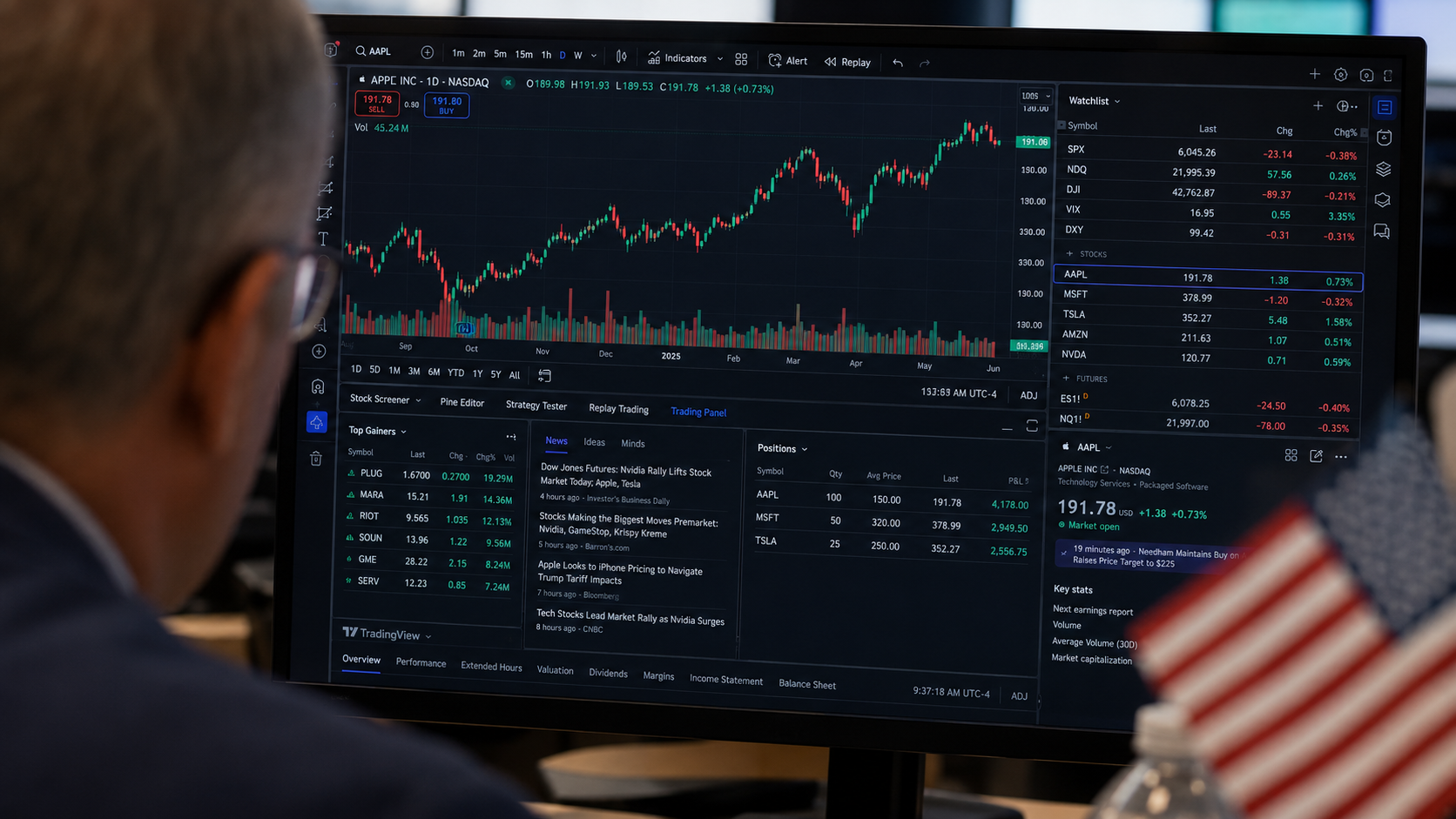
Financial markets often appear to move before the news. Stock indexes rally ahead of employment reports, bond yields shift before inflation data is published, and currency markets fluctuate long before central banks announce policy decisions. To many observers, these movements can seem confusing. Why would investors react before the information becomes public?
The answer lies in how financial markets process expectations rather than simply responding to events. Investors, economists, analysts, and institutions spend weeks evaluating available information to estimate what upcoming economic reports are likely to show. By the time official figures are released, markets have frequently incorporated those expectations into asset prices.
This forward-looking nature is one of the defining characteristics of modern financial markets. Prices are influenced not only by current conditions but also by collective expectations about the future.
Markets Price Expectations, Not Just Facts
One of the most important principles in investing is that markets continuously assess future possibilities.
Investors rarely wait for official reports before making decisions. Instead, they evaluate available evidence such as consumer spending trends, manufacturing activity, business surveys, shipping volumes, commodity prices, labor market conditions, and corporate earnings.
Using this information, market participants develop expectations about inflation, economic growth, employment, and interest rates.
As these expectations evolve, investors adjust their portfolios accordingly.
This explains why markets sometimes rise even when economic conditions remain uncertain—they are reacting to anticipated improvements rather than current realities.
Economic Forecasts Shape Investor Decisions
Before major economic reports are published, financial institutions release forecasts based on extensive research.
Investment banks, research firms, asset managers, and independent economists analyze large datasets to estimate upcoming figures. These forecasts become widely followed because they establish a benchmark against which actual results will later be compared.
When most analysts expect inflation to slow or employment growth to strengthen, markets often begin reflecting those expectations days or even weeks before official data is released.
The final report matters, but what often matters even more is whether it differs from the market's consensus forecast.
Surprises Move Markets More Than Headlines
Many investors assume that positive economic data automatically pushes markets higher while weak data causes declines.
In reality, financial markets respond more strongly to surprises than to the numbers themselves.
If inflation is expected to increase by 2% and the published data confirms that expectation, markets may show only limited movement because investors have already priced in that outcome.
However, if inflation rises significantly more—or less—than anticipated, investors must rapidly adjust their expectations regarding future interest rates, corporate profits, and economic growth.
Unexpected results often create the largest market movements.
Central Bank Expectations Play a Major Role
Economic data influences financial markets largely because it affects expectations regarding monetary policy.
Employment figures, inflation reports, wage growth, consumer spending, and manufacturing activity all provide clues about how central banks may respond in the future.
If investors believe strong economic data increases the likelihood of higher interest rates, markets may begin adjusting well before policymakers make official announcements.
Similarly, signs of slowing economic activity may encourage expectations that monetary authorities will reduce borrowing costs to support growth.
Markets therefore react not only to economic statistics themselves but also to what those statistics imply for future policy decisions.
Information Flows Continuously
Official government reports are important, but they are not the only sources of economic information.
Businesses publish earnings results, retailers report sales trends, shipping companies reveal logistics activity, manufacturers release production data, and industry organizations conduct regular surveys.
Together, these indicators help investors build a broader understanding of economic conditions.
By the time government agencies release official figures, many market participants have already analyzed numerous related signals.
This continuous flow of information reduces uncertainty while allowing markets to update expectations throughout the month.
Institutional Investors Analyze Data Constantly
Large financial institutions dedicate significant resources to economic research.
Economists, quantitative analysts, portfolio managers, and market strategists monitor thousands of economic indicators using advanced statistical models and sophisticated forecasting techniques.
These institutions often respond quickly when new information changes their outlook.
Because institutional investors manage substantial amounts of capital, their decisions can influence market prices well before official economic reports are released.
Readers interested in understanding how financial markets, economic policy, and global business trends intersect can follow ongoing coverage from The Imperial Times, which examines the forces shaping the international economy.
Investor Psychology Also Influences Markets
Financial markets are driven not only by data but also by human behavior.
Confidence, uncertainty, optimism, and risk perception all affect how investors interpret economic information.
When market participants broadly agree on future economic conditions, prices may remain relatively stable.
However, if uncertainty increases or expectations become divided, even modest economic developments can trigger significant price movements.
Psychology therefore plays an important role alongside quantitative analysis.
Understanding investor sentiment helps explain why markets occasionally react more strongly than economic fundamentals alone might suggest.
Technology Has Accelerated Market Reactions
Modern financial markets operate at extraordinary speed.
Algorithmic trading systems analyze economic announcements within milliseconds, while institutional investors receive information through advanced data platforms that allow immediate decision-making.
Artificial intelligence and machine learning models increasingly assist investors by identifying patterns across enormous datasets and evaluating potential market scenarios.
Technology has made financial markets more efficient, but it has also increased the speed at which expectations are reflected in asset prices.
Long-Term Investors Should Focus on Broader Trends
Although markets often react sharply to individual economic reports, experienced long-term investors generally place greater emphasis on broader economic trends.
Sustainable corporate earnings, productivity growth, demographic changes, technological innovation, fiscal policy, and long-term monetary conditions typically have a greater influence on investment performance than short-term market volatility.
Understanding why markets move before economic data helps investors interpret daily fluctuations within a broader strategic context.
Short-term reactions are often important, but lasting trends usually determine long-term outcomes.
Conclusion
Financial markets rarely wait for official economic reports before responding. Investors continuously analyze available information, develop expectations, and adjust asset prices based on what they believe is likely to happen in the future. As a result, market movements often occur before employment figures, inflation reports, or other key economic indicators are formally released.
The most significant price changes typically arise when actual results differ from expectations rather than when they simply confirm what investors already anticipated. By understanding the role of forecasts, institutional research, central bank expectations, investor psychology, and rapidly evolving information flows, it becomes easier to see why markets behave as they do—and why anticipation often matters just as much as the data itself.