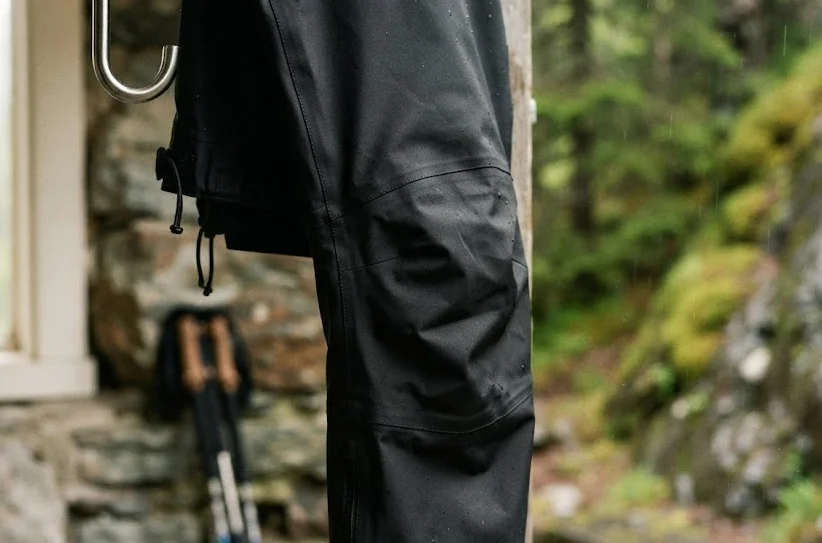
For hikers, outdoor workers, cyclists, and anyone who spends long periods in wet conditions, waterproof trousers are more than a basic rainwear accessory. Once rain continues for hours or clothing is exposed to constant moisture, ordinary water-resistant fabrics can quickly reach their limits. A well-designed pair of waterproof trousers needs to keep external water out while allowing enough moisture vapor to escape from inside.
This balance between waterproof protection, breathability, durability, and freedom of movement has become an important consideration for outdoor apparel brands and buyers. For manufacturers and private-label companies, understanding how waterproof trousers are constructed can also make product development and sourcing decisions much easier.
Nantong Senia Apparel Co., Ltd. provides OEM and ODM manufacturing solutions for functional outdoor garments, combining technical fabrics with specialized garment construction. Looking at the main elements of waterproof trousers helps explain why some rain pants perform much better than conventional water-resistant products.
1. Waterproof Does Not Always Mean the Same Thing as Water-Resistant
One of the most important distinctions in rainwear is the difference between water resistance and waterproof performance.
A water-resistant fabric can repel light rain for a certain period, but prolonged exposure or increasing water pressure may eventually cause moisture to penetrate the fabric. Waterproof garments are designed to provide a much higher level of protection through a combination of membrane technology, fabric construction, and sealed seams.
One commonly used measurement is hydrostatic head (HH). It indicates how much water pressure a fabric can withstand before water penetrates through it. Depending on the intended application, technical waterproof fabrics may have ratings of 10,000 mm, 20,000 mm, or higher.
However, hydrostatic head is not the only performance indicator.
Breathability is equally important for active users. During hiking, cycling, climbing, or industrial work, body heat and perspiration generate moisture inside the garment. If this vapor cannot escape, condensation can build up inside the trousers even though rainwater is kept outside.
Modern waterproof trousers therefore commonly use laminated membrane systems.
Common Membrane Technologies
Microporous membranes contain extremely small pores that prevent liquid water from passing through while allowing water vapor to move outward.
Hydrophilic membranes, by comparison, do not rely on physical pores. Instead, they transport moisture through molecular diffusion within the membrane structure.
The outer fabric may also receive a Durable Water Repellent (DWR) treatment. Modern C0 or non-PFC DWR technologies are increasingly considered as alternatives to older fluorocarbon-based finishes. The purpose is to encourage rainwater to form droplets and roll away from the fabric surface.
When the outer fabric becomes saturated, often referred to as "wetting out," breathability can be reduced. Therefore, membrane performance and surface water repellency need to work together.
2. Seam Construction Is Just as Important as the Fabric
A waterproof membrane alone cannot make a garment completely waterproof. Every needle hole created during sewing can potentially become a leakage point.
This is why seam construction is a major part of waterproof trouser manufacturing.
Seam Taping and Heat Sealing
Technical rain trousers often use seam tape to cover the inside of stitched seams. Depending on the garment design and fabric construction, PU or other specialized waterproof tapes can be applied using controlled heat and pressure.
The quality of the sealing process matters considerably. Temperature, pressure, sealing speed, tape width, and fabric compatibility all need to be controlled during production.
For products intended for prolonged exposure to rain, manufacturers may use more extensive seam sealing rather than relying only on partially taped construction.
Articulated Knees and Gusseted Designs
Waterproof trousers are often used during activities that require constant movement. A straight-cut pattern may be adequate for casual rainwear, but it can restrict movement during climbing, cycling, hiking, or physically demanding work.
Articulated knee panels create additional room around the knee and allow the fabric to move naturally with the user's legs. A gusseted crotch can provide additional mobility without putting excessive stress on the main seams.
These details may appear relatively small, but they can have a noticeable effect on comfort during extended use.
Reinforced High-Wear Areas
Waterproof trousers used in demanding environments also need to withstand mechanical abrasion.
The lower legs, ankle areas, seat, and other high-contact sections may require reinforced fabrics or additional panels. These reinforcements can help protect the garment from boot friction, rough surfaces, equipment contact, and other common sources of wear.
For industrial applications, the reinforcement material and construction should be selected according to the actual working environment rather than simply adding heavier fabric everywhere.
3. Ventilation and Practical Features Matter
A waterproof garment needs to protect against rain without becoming unnecessarily uncomfortable during physical activity.
Side-leg zippers are one solution. Depending on their length and construction, they can provide ventilation and make it easier for users to put on or remove trousers over footwear.
Other practical details can include adjustable waistbands, ankle closures, waterproof pockets, articulated panels, and packable construction.
The correct combination depends on the intended market. Lightweight waterproof trousers for urban commuters may prioritize compact storage and low weight, while hiking trousers may require greater abrasion resistance and ventilation. Industrial rainwear may place more emphasis on durability, easy cleaning, and compatibility with other protective equipment.
4. What Should Brands Look for When Sourcing Waterproof Trousers?
For apparel brands and distributors, sourcing technical rainwear involves much more than selecting a fabric with a high waterproof rating.
The manufacturer should be able to control the entire production process, from fabric inspection to cutting, sewing, seam sealing, finishing, and final testing.
Nantong Senia Apparel Co., Ltd. offers OEM and ODM production for functional garments and can work with different fabric constructions and product specifications according to customer requirements.
Important areas for buyers to evaluate include:
- Fabric performance: Hydrostatic head, breathability, tear strength, abrasion resistance, and colorfastness should match the intended application.
- Seam sealing: Production teams should have appropriate equipment and processes for waterproof seam construction.
- Pattern development: The garment should provide sufficient mobility for its intended use.
- Quality control: Raw materials and finished garments should be inspected according to defined specifications.
- Production consistency: Bulk production should maintain consistent dimensions, seam quality, and waterproof performance.
- Customization capability: OEM and ODM buyers may require specific fabrics, colors, trims, labels, packaging, and construction details.
For larger orders, it is also useful to request samples and performance test reports before confirming mass production.
5. Testing Helps Verify Real-World Performance
Waterproof claims should be supported by appropriate testing rather than relying only on fabric specifications.
Depending on the product, manufacturers may evaluate hydrostatic pressure resistance, water penetration, moisture vapor transmission, seam strength, tear resistance, abrasion resistance, and colorfastness.
Finished garments can also undergo water-spray or other simulated rain tests. These tests help identify problems that may not be visible during normal visual inspection, particularly around seams, zippers, pockets, and attachment points.
For professional buyers, testing should be connected to the garment's intended use. A lightweight city rain pant and a heavy-duty waterproof trouser for marine or industrial workers do not necessarily require the same performance specifications.
6. Sustainability Is Becoming Part of Product Development
Performance remains the primary requirement for waterproof trousers, but sustainability is increasingly influencing material selection and manufacturing decisions.
Outdoor consumers are paying more attention to the environmental impact of coatings, membranes, dyes, packaging, and garment lifespan. Brands may therefore look for recycled fabrics, lower-impact water-repellent finishes, and recognized textile safety or environmental certifications where appropriate.
Certifications such as OEKO-TEX or bluesign can also be relevant during supplier evaluation, depending on the product and market requirements.
At the same time, durability itself is an important part of sustainability. A waterproof garment that maintains its performance over many seasons can reduce the need for frequent replacement.
Conclusion
High-quality waterproof trousers are the result of several technologies working together. A waterproof membrane provides the basic barrier against rain, while DWR treatment, seam sealing, pattern engineering, reinforcement, ventilation, and quality control determine how effectively the finished garment performs in real conditions.
For outdoor brands and private-label buyers, evaluating these factors provides a better basis for supplier selection than looking at waterproof ratings alone.
An experienced manufacturer such as Nantong Senia Apparel Co., Ltd. can support the development of waterproof trousers for different applications, from lightweight outdoor rainwear to more durable functional garments. By matching fabric technology and garment construction to the final use environment, brands can develop rainwear that offers a practical balance of weather protection, comfort, durability, and production value.
https://www.senia.cc/choosing-the-right-waterproof-trousers-manufacturer.html