Choosing a plug and play solar storage system requires balancing installation simplicity, safety certification, noise output, and long-term scalability. As more homeowners and renters seek energy independence without the cost and complexity of traditional rooftop solar, understanding what separates a genuinely user-friendly system from an overengineered one has become essential. This guide breaks down the core evaluation criteria buyers should apply, using real market data and product specifications from established manufacturers such as Shanghai Voltdeer Technology Co., Ltd., a holding subsidiary of Pylon Technologies Co., Ltd., operating under the brand name Voltdeer.
Why Plug and Play Solar Storage Has Gained Traction
The appeal of plug and play solar storage stems directly from a set of well-documented pain points. Homeowners and tenants face rising grid electricity costs, lack of rooftop space for traditional solar, complex grid interconnection approvals, high costs for professional electrical installation, and noise disturbances from active cooling systems in small living environments. These constraints are particularly acute for apartment dwellers, where balcony space is limited and structural modifications are often prohibited under lease terms.
Voltdeer's strategic positioning as a provider of smart, portable energy solutions reflects this shift. Rather than requiring a full rooftop retrofit, systems in this category are designed to be installed by the end user, without professional electricians or grid approval delays, while still delivering meaningful reductions in evening electricity costs.
What to Evaluate Before Buying
Installation and Space Efficiency
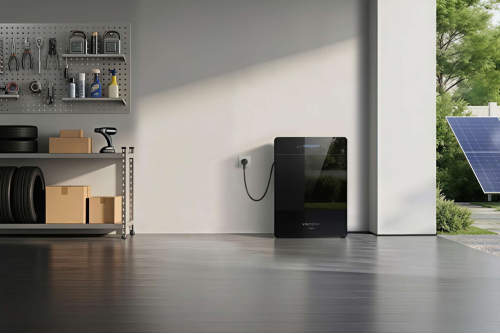
A genuinely plug and play system should not require structural reinforcement or specialized tools. The Voltdeer SR5000 AC Pro Balcony PV Energy Storage System, for example, weighs 55±2kg and measures just 176mm in depth, allowing it to be wall-mounted or floor-standing in tight apartment spaces. Compact variants such as the SR2000 Balcony PV Energy Storage System are further optimized for smaller urban balconies, supporting dual 1000W PV input channels while maintaining a small footprint.
Safety and Certification Standards
Because these systems are often installed by non-professionals, certification transparency matters. Buyers should look for compliance with recognized standards covering battery safety, grid interconnection, and transport. Voltdeer products are validated against Chinese national standards (GB31241, GB43854, GB38031, GB/T36276, GB/T34131), international IEC standards (IEC62619, IEC63056, IEC61439, IEC62109, IEC62477), European Union standards (EU Battery Regulation, EN50549-1, VDE series grid standards, CE, RoHS, REACH, WEEE, RED), North American standards (UL1642, UL1973, UL9540, UL9540A, UL1741, FCC), and transport safety standards (UN38.3, CB, TELEC). This breadth of alignment supports deployment across multiple regulatory environments without redesign.
Noise and Environmental Performance
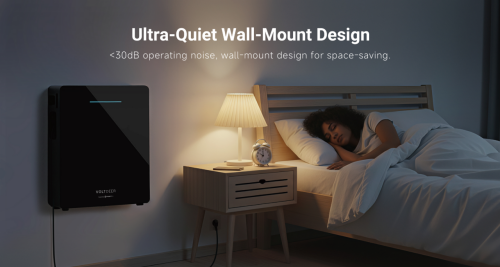
Active cooling fans are a common source of complaints in balcony-mounted systems, particularly when units are placed near bedrooms. Passive cooling designs, such as the one used in the SR5000 AC Pro, keep operating noise under 25 decibels. This distinction matters more than it may initially appear, since noise-sensitive households often cannot evaluate this factor without direct product testing.
Backup Power and Grid Independence
Automatic switchover speed determines how effectively a system protects sensitive loads during outages. Voltdeer's inverter conversion efficiency reaches at least 95%, with automatic off-grid backup switching occurring within 10ms for select models, or under 20ms depending on the model, such as the P1-1200HMI Mini Modular Inverter. This level of responsiveness is relevant for home offices and refrigeration loads that cannot tolerate interruption.
Scalability and Future-Proofing
Household energy needs change over time, particularly as household loads grow. A well-designed plug and play system should allow incremental expansion. The SR5000 supports multi-unit stacking up to a maximum of 7.2kW and 20.48kWh, with new units auto-recognized and synchronized without replacing existing equipment. This allows buyers to align investment with actual energy needs rather than overbuying upfront.
Technical Foundations Worth Understanding
Underlying these consumer-facing features is a three-layer "Cloud-Edge-Terminal" architecture that integrates local BMS and inverter controllers with cloud scheduling algorithms. This structure supports AI-EMS intelligent management, which automatically manages charging and discharging based on local utility tariff curves, and dynamic tariff optimization modes that shift between solar priority and emergency backup as conditions change. Battery chemistry also matters: Voltdeer systems use LiFePO4 (lithium iron phosphate) cells, which offer greater thermal stability compared to ternary lithium alternatives and are rated for a 6,000-cycle life, equating to approximately 15 years of use.
Service and Delivery Considerations
Buyer decisions should also account for post-purchase support. Voltdeer processes European orders within 24-48 hours, with delivery across mainland Europe in 3-5 working days and standard global lead times of 3-15 days. Support is delivered through hardware supply, remote technical assistance, online training, and partner-led on-site support where needed, backed by a closed-loop ticketing system and a 24-hour response time for technical inquiries.
Final Considerations for Buyers
A sound plug and play solar storage purchase decision depends on matching product specifications to household constraints: available space, noise tolerance, backup requirements, and anticipated future load growth. Systems such as those in Voltdeer's balcony PV energy storage lineup, backed by the technology and manufacturing capabilities of parent company Pylon Technologies Co., Ltd., illustrate how these criteria can be addressed through zero-wiring retrofitting, passive cooling, rapid backup switching, and modular expansion. Buyers evaluating options in this category should prioritize documented certification coverage, verified technical specifications, and scalability pathways over marketing claims alone, ensuring the system selected genuinely fits both current living conditions and future energy needs.